
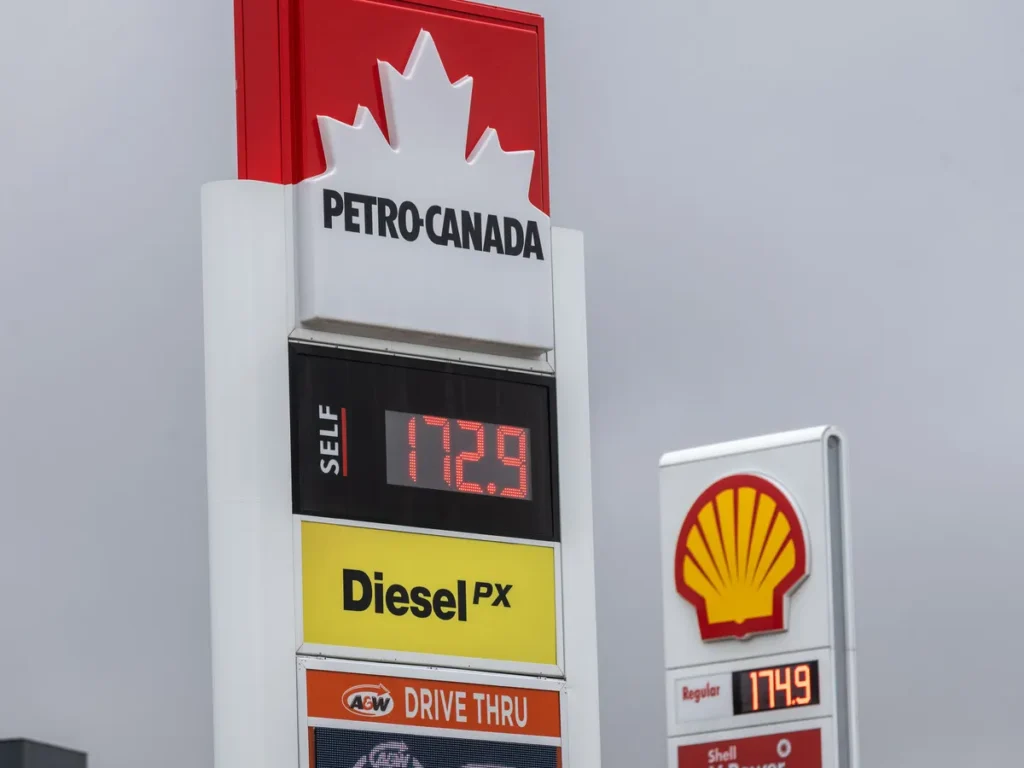
Why Your Gas Tax Savings Are Disappearing This Summer
If you’ve been filling up your tank recently, you might have noticed a confusing trend. On one hand, the federal government’s temporary gas tax cut was supposed to save you money. On the other, the numbers on the pump don’t seem to reflect the promised relief. Where did those savings go? The answer lies in a predictable, yet often overlooked, annual ritual: the switch to summer-blend gasoline.
This seasonal change, mandated for environmental reasons, comes with a significantly higher production cost. Experts now say that this increased expense is effectively cancelling out the temporary tax break, leaving Canadian drivers wondering if they’re seeing any benefit at all.
The Promise of Relief: Understanding the Federal Fuel Charge Cut
First, let’s recap the policy that was meant to put money back in drivers’ pockets. In response to soaring cost-of-living pressures, the federal government paused the carbon price, often referred to as the fuel charge, on gasoline and diesel. This wasn’t a minor adjustment; it was a full suspension of the levy that adds roughly 14 to 17 cents per litre to the price at the pump, depending on your province.
The intention was clear and immediate: to provide direct financial relief to households and businesses struggling with high fuel costs. For a driver filling a 50-litre tank, this could mean a saving of $7 to $8.50 per fill-up—a meaningful amount over the course of a summer of road trips, commuting, and errands.
The Seasonal Switch You Never See Coming
Just as this tax break took effect, another powerful market force was swinging into action. Every year, between April and September, refineries across North America are legally required to stop producing winter-grade gasoline and switch to a summer-blend fuel. This isn’t an arbitrary choice; it’s a critical environmental regulation.
Winter gasoline is formulated to evaporate more easily, ensuring reliable cold-starts for your engine. However, those same volatile compounds contribute to ground-level ozone and smog, which are worse during the hot summer months. To combat this, the summer blend is chemically altered to be less volatile. It’s better for air quality, but it’s also more expensive and complex to manufacture.
Why Summer Gasoline Costs More to Make
The price difference between the two blends isn’t trivial. Industry analysts estimate that producing summer-grade gasoline can add anywhere from 5 to 15 cents per litre to the base refining cost. This premium stems from several key factors:
- Complex Refining Process: Creating the less-volatile blend requires additional refining steps and different, often more expensive, components.
- Supply and Logistics: The entire system—refineries, pipelines, and terminals—must undergo a costly and time-consuming transition, flushing out winter fuel to make way for the summer blend. This constrains supply during the switchover period.
- Storage Limitations: Summer blend cannot be produced and stored in large quantities year-round due to its specific seasonal nature, limiting economies of scale.
The Net Effect: A Financial Tug-of-War at the Pump
Here’s where the story converges for your wallet. As the federal tax cut took 17 cents off the price, the annual introduction of summer-blend gasoline began adding a substantial amount back on. This created a direct financial tug-of-war, with the seasonal price increase eroding, and in many cases completely negating, the promised tax relief.
Energy analysts describe it as a case of “one step forward, one step back.” The temporary tax cut lowered the baseline price, but the standard, predictable summer price surge arrived right on schedule, pushing costs back toward their pre-cut levels. For consumers, the net effect is minimal to no noticeable savings, making the well-intentioned policy feel invisible.
Beyond the Blend: Other Factors Keeping Prices High
While the summer blend is the primary culprit swallowing the tax savings, it’s not acting alone. Broader global and regional market pressures are also propping up prices:
- Global Crude Oil Volatility: The price of Brent and WTI crude, the international benchmarks, remains sensitive to geopolitical conflicts, OPEC+ production decisions, and global demand forecasts.
- Refining Capacity: Tight refining margins and limited capacity, especially in North America, mean that even small disruptions can lead to price spikes at the pump.
- Regional Competition and Taxes: Provincial taxes, distribution costs, and local market competition still form a significant portion of the final price you pay.
What Can Drivers Do? Navigating High Summer Fuel Prices
With the tax break effectively neutralized, being a savvy driver is more important than ever. You can’t control the blend or the global price of oil, but you can adapt your habits to stretch your fuel budget:
- Shop Around: Use fuel price comparison apps to find the best price in your area, as stations can vary by several cents per litre.
- Drive Efficiently: Aggressive acceleration and high speeds are major fuel wasters. Aim for smooth, consistent driving and observe speed limits.
- Maintain Your Vehicle: A well-tuned engine, properly inflated tires, and clean air filters can improve your fuel efficiency by up to 5-10%.
- Reduce Idling: Modern engines do not need to “warm up” for long periods. If you’re stopped for more than 60 seconds (except in traffic), turn off the engine.
- Plan Your Trips: Combine errands to avoid multiple cold starts and shorter journeys, which are less efficient.
The Bottom Line: A Lesson in Market Realities
The situation this summer serves as a clear lesson in how complex energy markets operate. Well-meaning fiscal policy can be quickly overshadowed by entrenched, non-negotiable market fundamentals like seasonal fuel regulations.
The federal tax cut provided a temporary buffer, but it could not suspend the laws of chemistry, environmental policy, or refinery economics. The annual summer blend transition is a fixed cost in the North American fuel system, one that consumers bear every year.
As you watch the digits spin at the gas station this season, understand that the missing savings aren’t an accounting error or a broken promise in the traditional sense. They are a vivid illustration of how multiple forces—political, environmental, and economic—collide to determine the final price you pay. The tax break gave, and the summer blend took away, leaving drivers once again navigating the expensive road of summer travel.

