
Progressive Leaders Unite in Barcelona to Counter Trump’s Criticism of Spain
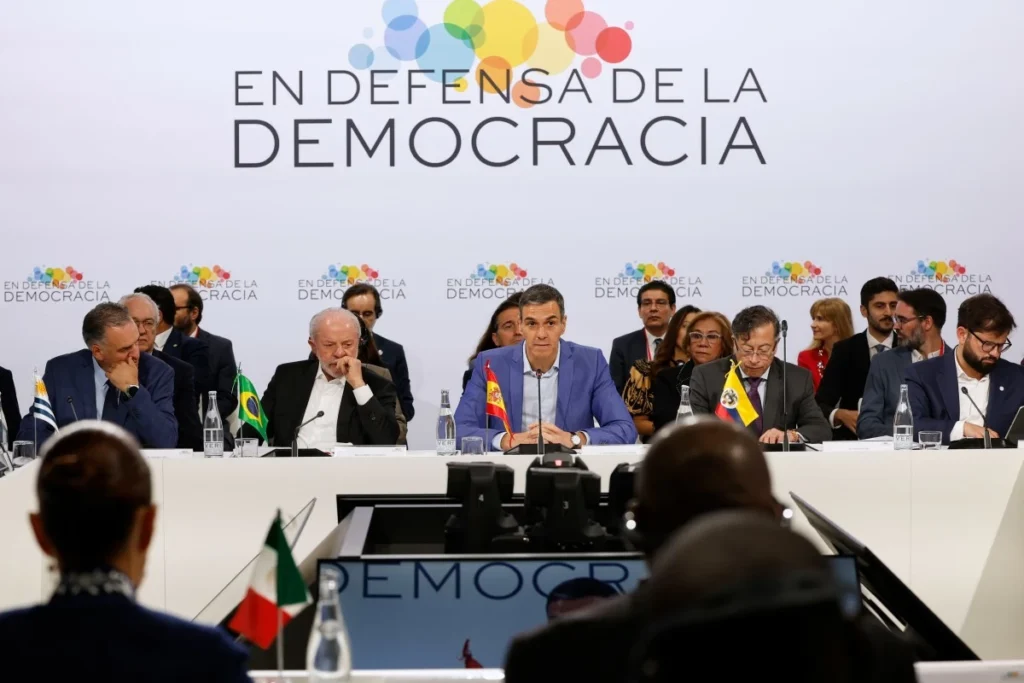
In a powerful display of international solidarity, prominent progressive leaders from across Europe and beyond gathered in Barcelona this weekend. The rally, a vibrant defense of democratic values, served as a direct response to recent attacks on Spain’s government and judiciary by former U.S. President Donald Trump. The event transformed the Catalan capital into a focal point for a growing political movement that sees itself as a bulwark against the rise of right-wing populism and the erosion of institutional norms.
The convergence in Barcelona underscores a deepening political fault line, where the tactics and rhetoric of figures like Trump are increasingly met with organized, cross-border opposition from the center-left. This was not merely a local Spanish affair but a strategic gathering meant to send a message on the global stage.
The Catalysts: Trump’s Provocation and a European Response
The immediate spark for the mobilization was a series of social media posts from Donald Trump, who launched a vehement critique of Spain’s Socialist Prime Minister, Pedro Sánchez. Trump accused Sánchez of undermining the United States and made controversial statements regarding Spain’s judiciary, particularly in relation to ongoing investigations.
Trump’s allegations centered on two key points:
- That Prime Minister Sánchez was acting against American interests.
- Interference in Spain’s independent judicial processes, which many observers saw as an attempt to delegitimize legal proceedings that could involve political allies.
These comments were perceived not just as criticism of a political figure, but as an assault on the sovereignty and democratic integrity of a NATO ally. For European progressives, it represented a familiar pattern: a playbook of attacking democratic institutions, spreading disinformation, and challenging the rule of law.
Barcelona’s Stage: A Symbolic and Strategic Venue
Choosing Barcelona as the rallying point was deeply symbolic. The city, and the broader region of Catalonia, has been at the heart of complex debates about democracy, self-determination, and constitutional order within Spain. By standing together in Barcelona, leaders aimed to project unity and a shared commitment to resolving internal disputes through dialogue and democratic means, countering narratives of fragmentation often exploited by populists.
The location also signaled strength. Catalonia remains a stronghold for progressive and left-wing parties in Spain, making it an ideal platform to demonstrate popular support for the values under fire.
A Coalition of Voices: Who Stood Together
The rally featured a notable roster of political figures, creating a snapshot of the modern progressive alliance in Europe.
The keynote presence was Spanish Prime Minister Pedro Sánchez, who framed the event as a defense of democracy against “reactionary” forces seeking to roll back social progress. He was joined by other heavyweights of the European left, including:
- German Chancellor Olaf Scholz: Representing the EU’s largest economy, his attendance emphasized the pan-European concern over transatlantic attacks on democracy.
- Portuguese Prime Minister António Costa: A key Iberian ally, reinforcing the message of regional solidarity.
- Leaders from the Green and Social Democrat factions in the European Parliament: Highlighting the institutional fight within the EU’s governing bodies.
- Influential progressive voices from Latin America: Their participation broadened the scope to a global defense of democratic norms against authoritarian-leaning leaders.
Core Messages: Defending Democracy, Rule of Law, and Social Progress
The speeches from the rally coalesced around several unifying themes, forming a manifesto of sorts for the opposition to Trump-style politics.
1. Unwavering Support for Independent Institutions: Leaders unanimously defended the necessity of judicial and media independence. They argued that attacks on courts and the press are the first step in eroding democratic accountability.
2. Rejection of “Fake News” and Disinformation: A significant portion of the discourse was devoted to committing to factual public debate and condemning the deliberate spread of falsehoods for political gain.
3. Commitment to International Alliances: Contrary to Trump’s “America First” doctrine, the rally championed robust multilateral cooperation through the EU and NATO, stressing that shared democratic values are the true foundation of these partnerships.
4. A Progressive Policy Agenda: The defense of democracy was tied to a positive vision: combating climate change, protecting workers’ rights, advancing gender equality, and ensuring social justice. The argument was that strong democracies deliver for their people.
The Broader Implications: A New Front in a Global Political Struggle
This event in Barcelona is likely more than a one-off reaction. It signals the formalization of a coordinated, international progressive front. For years, right-wing populist movements have successfully networked across borders, sharing strategies and offering mutual support. The Barcelona rally suggests the center-left is now adopting a similar playbook of international mobilization.
The strategic goals of this coalition appear to be:
- To create a clear, public counter-narrative to populist nationalism.
- To bolster embattled leaders like Sánchez by demonstrating broad international backing.
- To energize their voter bases ahead of critical elections, including the upcoming European Parliament elections and national votes across the continent.
- To reassure the public that democratic institutions, though imperfect, are worth defending vigorously.
Challenges and Criticisms
The rally was not without its critics. Some on the right dismissed it as a publicity stunt for politicians facing domestic difficulties. Others pointed out the inherent tensions within the “progressive” tent, noting that differences on issues like immigration, fiscal policy, and EU integration persist. Furthermore, the choice of Barcelona risked reopening sensitive wounds about Catalonia’s political status within Spain, a complexity that opponents were quick to highlight.
Conclusion: A Defining Moment for Democratic Solidarity
The gathering of progressive leaders in Barcelona marks a significant moment in contemporary geopolitics. It moves the response to Trumpism and similar movements beyond diplomatic statements and into the realm of public, political theater and coalition-building. By rallying in defense of Spain’s democracy, these leaders were ultimately defending a set of principles they see as under threat globally.
The event underscores a fundamental shift: political battles are no longer confined by national borders. As attacks on democratic norms become coordinated, so too must the defense. Whether this nascent progressive international can maintain its unity, translate rallying cries into policy, and effectively communicate its vision to a skeptical public remains to be seen. But one message from Barcelona was clear: a fightback is being organized, and its leaders believe the future of democratic governance depends on its success.

