Saskatchewan Deploys Drone Detection Tech to Stop Prison Drug Smuggling
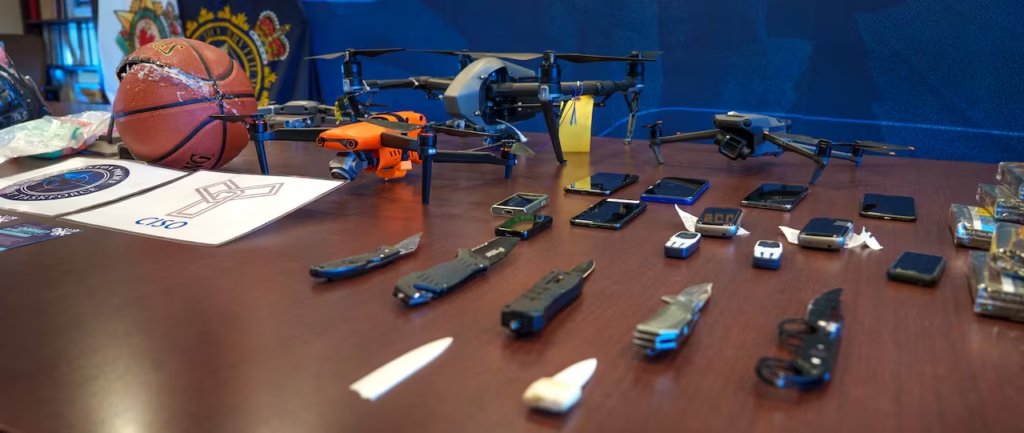
In a high-tech bid to secure its correctional facilities, the Government of Saskatchewan is launching a pilot project to deploy sophisticated drone detection systems at its prisons. This initiative directly targets the growing and dangerous trend of using unmanned aerial vehicles (UAVs) to smuggle drugs, weapons, and other contraband over prison walls. The move underscores a significant shift in correctional security, as authorities adapt to counter evolving threats from the sky.
The Rising Threat from Above
For years, prison security focused on perimeter fences, vehicle checks, and visitor screenings. However, the advent of inexpensive, commercially available drones has created a new vulnerability. Smugglers can now bypass traditional security measures with relative ease, flying packages directly into prison yards or attaching them to specific windows.
This method of delivery is alarmingly effective and poses multiple severe risks:
- It floods institutions with illegal narcotics, fueling addiction and violence among inmates.
- It can introduce weapons, creating immediate dangers for staff and prisoners.
- It undermines rehabilitation efforts and the safety of the entire correctional environment.
The Saskatchewan government’s decision to test detection technology is a proactive response to this clear and present danger, aiming to shut down this illicit aerial supply line before it can cause further harm.
How the Drone Detection Technology Works
The specific technology being piloted acts as an electronic sentinel. It’s designed to identify, track, and alert authorities to unauthorized drone activity in the protected airspace around a prison.
Key Capabilities of the System:
- Radio Frequency (RF) Scanning: The system constantly monitors the radio spectrum for signals used to control drones. By detecting these unique communication links, it can identify a drone’s presence often before it’s visually spotted.
- Radar and Sensor Integration: Some advanced systems use radar to detect the physical presence of a small moving object, providing another layer of confirmation and tracking data.
- Direction Finding and Pilot Location: A critical function is not just finding the drone, but locating the ground-based pilot. By triangulating the control signal, the technology can provide authorities with an estimated location of the smuggler, enabling potential interception.
- Real-Time Alerts: When a threat is identified, the system sends immediate alerts to prison security personnel, giving them the crucial time needed to respond, secure areas, and coordinate with law enforcement.
This multi-layered approach transforms a prison’s defense from a purely physical barrier to an intelligent, aware system capable of countering modern technological threats.
The Pilot Project and Provincial Strategy
Saskatchewan’s pilot project will involve installing this detection technology at selected provincial correctional facilities. The data and experiences gathered during this trial phase will be invaluable.
The goals of the pilot are multifaceted:
- Assess the real-world effectiveness and reliability of the technology in various conditions.
- Determine optimal placement of sensors for maximum coverage.
- Develop and refine response protocols for security teams upon receiving an alert.
- Evaluate cost-effectiveness and long-term viability for a broader rollout.
This initiative is part of a larger, $1.2 million investment announced by the province to combat the smuggling of contraband into all its correctional centers. While the drone detection tech is a headline component, the funding also supports enhanced perimeter security, improved cell searches, and upgraded body scanner technology for visitors and staff. This holistic strategy recognizes that security requires a multi-pronged approach, addressing both old and new methods of smuggling.
Challenges and Considerations
While promising, the deployment of drone detection technology is not without its challenges. Prisons are often located in areas with complex radio frequency environments, which could lead to false alarms from legitimate signals. Differentiating between a hobbyist drone flying near a prison and an actual smuggling attempt will be a key operational hurdle.
Furthermore, the technology is primarily a detection and deterrent tool. It identifies the threat and, by its very presence, aims to discourage attempts. However, it does not physically stop or disable drones. Effective response still relies on human security teams and coordination with local police to apprehend pilots. Some more advanced systems offer “mitigation” capabilities like signal jamming, but these are heavily regulated and may not be part of the initial Saskatchewan pilot due to legal and technical complexities.
A National Trend in Corrections Security
Saskatchewan is not alone in this fight. Correctional services across Canada and around the world are grappling with the drone smuggling issue. Federal institutions under the Correctional Service of Canada (CSC) have also been testing and deploying similar detection systems. The Saskatchewan pilot contributes to a growing body of knowledge and practice in this field, setting a precedent for other provinces to follow.
The adoption of this technology represents a necessary evolution. As smugglers innovate, so too must the systems that protect some of society’s most secure facilities. It’s a digital-age arms race where surveillance and detection are the first lines of defense.
Looking Ahead: The Future of Prison Security
The success of Saskatchewan’s pilot project could mark a turning point. If effective, widespread implementation of drone detection will become a standard feature of prison infrastructure. Looking forward, we may see further integration with other smart security systems, automated alerting to law enforcement, and even the development of safe, approved counter-drone measures for critical infrastructure.
Ultimately, this move is about more than just stopping drones; it’s about upholding the safety, security, and integrity of the correctional system. By investing in cutting-edge technology, Saskatchewan aims to protect its staff, inmates, and the public from the consequences of prison contraband. It sends a clear message to those who would exploit technology for crime: the walls just got smarter, and the sky is no longer an unguarded frontier. The ongoing battle for secure corrections is taking flight, and authorities are determined to gain the upper hand.