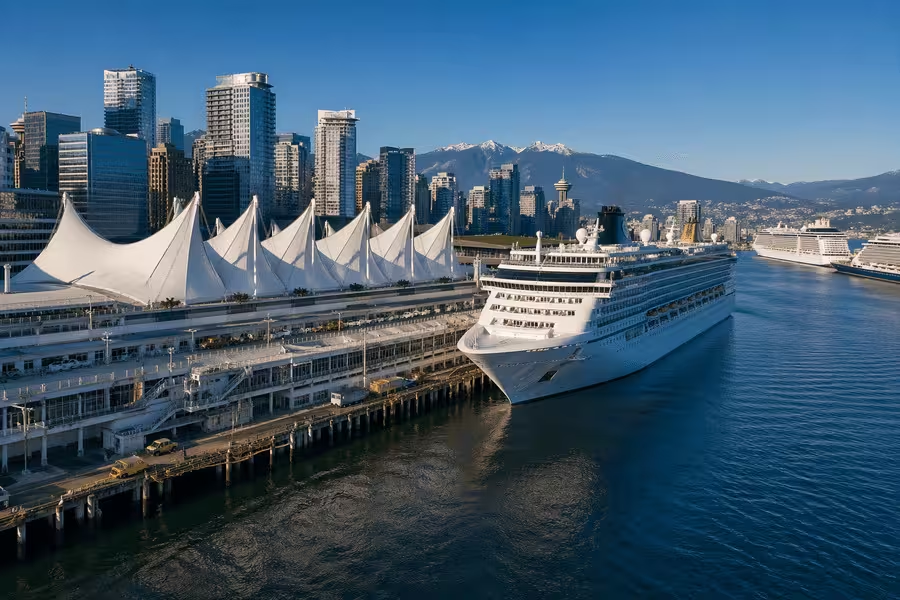
Vancouver Port Welcomes Record 1.4 Million Cruise Passengers as Canada Place Celebrates 40 Amazing Years
As the crisp Pacific breeze fills the sails of the iconic white roof, Vancouver’s waterfront is preparing for a season unlike any other. The Port of Vancouver, with its world-famous Canada Place cruise terminal at its heart, is gearing up to shatter all previous records by welcoming an unprecedented 1.4 million cruise travellers in a single year. This extraordinary milestone coincides with a celebration that resonates far beyond the maritime industry: Canada Place is turning forty. The synergy of a record-breaking cruise season and four decades of architectural and cultural significance marks a pivotal moment for the city, the province, and the entire West Coast tourism sector. What once began as the Canada Pavilion for Expo 86 has evolved into the premier homeport for Alaska-bound adventures, a gateway that now defines Vancouver’s identity on the global stage. This is not just a story of numbers; it is a salute to resilience, innovation, and the enduring allure of the sea.
A Historic Milestone: Canada Place Turns 40
To truly appreciate the magnitude of this moment, one must first look back to May 2, 1986. On that day, the world descended upon Vancouver for Expo 86, a world’s fair dedicated to transportation and communication. The architectural centerpiece, designed by Eberhard Zeidler, was a daring structure featuring five majestic Teflon-coated fiberglass sails rising above a sprawling pier. Initially intended as a temporary symbol for the expo, Canada Place quickly became so beloved that it was reimagined as a permanent multi-purpose landmark. In the forty years since, those white sails have become as emblematic of Vancouver as the North Shore Mountains themselves. From hosting global summits and conferences in its East Building to serving as the region’s busiest cruise ship terminal, Canada Place has seamlessly woven itself into the urban fabric. The 40th anniversary is not merely a nostalgic reflection but a testament to visionary city planning that transformed a pier into Canada’s premier gateway.
Breaking Down the Numbers: The 1.4 Million Passenger Milestone
The 1.4 million passenger figure represents a monumental leap forward and cements Vancouver’s status as a titan of the global cruise industry. To contextualize this record, it is essential to understand how the cruise traffic has scaled dramatically over the last decade, bouncing back with incredible force following the global travel pause.
Growth Trajectory and Recovery
Before the pandemic, the Port of Vancouver consistently hosted between 800,000 and 1 million cruise passengers annually. However, the post-pandemic rebound defied even the most optimistic projections. In 2023, the terminal recorded approximately 1.25 million revenue passengers, a historic high at the time. Now, surging past the 1.4 million threshold represents a year-over-year growth of roughly 12%, a pace rarely seen in mature cruise markets. This jump is driven by a combination of factors: the return of major cruise lines deploying larger, state-of-the-art vessels to the Alaska market, an extended shoulder season with ships arriving earlier in the spring and departing later in the fall, and unprecedented consumer demand for nature-based expedition cruising.
Ship Calls and Capacity
The record passenger volume is supported by nearly 330 ship calls throughout the season. What is particularly fascinating is the evolution of the ship demographics. While the legacy cruise vessels of the early 2000s carried a few thousand guests, the new vessels navigating under the Lions Gate Bridge—such as the Royal Caribbean Quantum-class or the Norwegian Prima-class—bring significantly higher capacities without sacrificing environmental performance. A single Saturday turnaround at Canada Place can now see over 12,000 passengers embarking and disembarking, a logistical ballet that the port authority and its partners have perfected over forty years.
The Iconic Canada Place: More Than Just a Terminal
While the cruise terminal occupies the primary function for leisure travelers, the significance of Canada Place’s physical footprint cannot be overstated. The structure is a marvel of mixed-use design. The rooftop is not just a visual icon; it houses the FlyOver Canada flight simulation ride, drawing hundreds of thousands of visitors annually. Beneath the sails lies the Pan Pacific Hotel, which offers a unique cruise ship check-in experience where luggage travels via a secured underground system directly to the vessels. The World Trade Centre office complex buzzes with business activity, while the Vancouver Convention Centre East physically links to the structure, creating a seamless corridor of commerce and tourism. This vertical integration means that the 1.4 million cruise travelers do not merely pass through an industrial shed; they experience a vibrant living landmark that offers shopping, dining, and entertainment the moment they arrive.
Economic Ripple Effect: Fueling the Local Economy
The arrival of 1.4 million cruise passengers is an economic engine of extraordinary magnitude for Vancouver and British Columbia. The total economic impact of a single cruise season extends far beyond the terminal boundaries, injecting vitality into hundreds of local businesses.
- Direct Spending: According to industry estimates, the average cruise passenger spends several hundred dollars in the homeport city on accommodation, dining, retail, and attractions before or after their voyage. With 1.4 million travelers, direct spending could easily surpass $1 billion.
- Job Creation: A season of this scale supports tens of thousands of jobs across the hospitality, transportation, and service sectors. Longshore workers, tour bus operators, hotel staff, and restaurant teams all see a significant lift from the consistent flow of visitors.
- Supply Chain Demand: From local farmers supplying fresh salmon to the ships’ galleys to florists designing lobby arrangements for the Pan Pacific, the supply chain benefitting from the cruise industry is profound and diverse.
- Gateway to Canada: A substantial percentage of passengers arrive via Vancouver International Airport (YVR), often spending a few nights in the city before sailing to Alaska. This “fly-cruise” traffic positions Vancouver not just as a port, but as a must-visit destination in its own right.
Sustainability and Green Initiatives at the Port
Celebrating forty years of operation while achieving a record throughput demands a responsible environmental ethos. The Port of Vancouver has been a leader in maritime sustainability, and the 1.4 million passenger milestone is undergirded by rigorous green policies.
Shore Power: Canada Place was one of the first cruise terminals in the world to offer shore power, a technology that allows ships to plug into the local hydroelectric grid and shut down their diesel engines while docked. By leveraging British Columbia’s clean, renewable electricity, the terminal eliminates thousands of tonnes of greenhouse gas emissions annually. During this record year, a vast majority of homeporting ships will connect to shore power, drastically improving air quality for the nearby Downtown Eastside and Gastown neighborhoods.
Waste Management and Water Quality: The port enforces stringent zero-discharge policies within its jurisdiction. No treated or untreated blackwater, greywater, or garbage is permitted to be discharged while ships are at berth or in the inner harbor. Instead, a comprehensive reception facility ensures that recyclable materials are diverted from landfills. The port’s ECHO Program continues to research and implement measures to protect the local marine life, particularly the endangered Southern Resident killer whales, by managing underwater vessel noise in critical foraging areas.
Enhanced Passenger Experience: What Cruisers Can Expect
Handling 1.4 million passengers requires more than just a long dock. The Vancouver Fraser Port Authority has invested heavily in perfecting the choke points of the cruise journey, turning potential stress into effortless anticipation.
Seamless US Customs Pre-Clearance
A defining feature that sets Vancouver’s terminal apart is the presence of US Customs and Border Protection (CBP). Passengers bound for Alaska clear US immigration before they even step on the ship. This innovation means that when the vessel arrives at its first Alaskan port—often the territorial capital of Juneau or the salmon-rich Ketchikan—guests can simply walk off and begin exploring immediately without queuing for border checks. This “one-stop” system is a massive competitive advantage over other West Coast homeports.
Digital Innovations and Logistics
The terminal has embraced a digital-first approach. Facial recognition technology and enhanced mobile check-in are streamlining the embarkation process, cutting wait times significantly. For guests staying at the Pan Pacific Vancouver, the “luggage valet” service remains a highlight: bags are collected directly from the hotel room and whisked through a subterranean conveyor system directly onto the vessel, appearing magically outside the stateroom door.
Looking Ahead: Vancouver’s Cruise Future Beyond 40
As Canada Place blows out the candles on its 40th birthday cake, the focus is already shifting to the future of cruising in British Columbia. While the 1.4 million passenger figure is a ceiling for the current terminal footprint, the port authority is exploring how to manage growth sustainably. Demand for the Alaska itinerary is virtually unlimited; the journey through the Inside Passage is often described as a bucket-list essential by travelers worldwide.
Industry leaders point toward the potential for year-round cruising. While the Alaska season traditionally runs from April to October, milder winters and the rise of expedition cruising to the Pacific Northwest and California are opening doors for off-season itineraries. The continued development of the Waterfront Hub will likely see even greater connectivity between the terminal, public transit, and urban entertainment districts. With Canada Place’s sails standing proudly as the backdrop, Vancouver is not just celebrating a record year; it is laying the keel for a future where the city remains the undisputed jewel of the Pacific cruise circuit for generations to come.
The convergence of an architectural ruby anniversary and a record 1.4 million cruise travelers tells a story deeper than just a successful tourism metric. It illustrates a city’s ability to transform a temporary fairground into a permanent engine of cultural connection and economic prosperity. As the gangways lower and the ship horns echo across Burrard Inlet this season, they will resound not only as a welcome to global explorers but as a proud symphony for a city that has navigated four decades of change with its sails always set toward the horizon.