
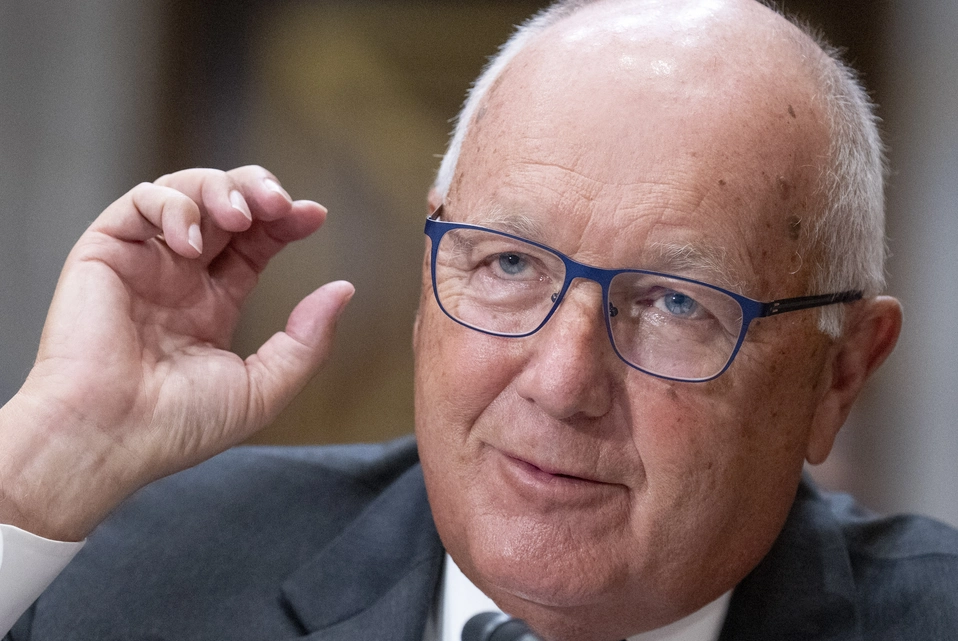
The atmosphere was charged in the nation’s capital as the newly confirmed U.S. Ambassador to Canada, a key political ally of former President Donald Trump, faced his first major public grilling before a Canadian parliamentary committee. The session, which had been highly anticipated since his arrival in Ottawa, laid bare the complex and often tense dynamics shaping the critical bilateral relationship under the new administration in Washington.
For over two hours, lawmakers from across the political spectrum pressed the envoy on a wide range of contentious issues, from trade and defense spending to climate policy and diplomatic rhetoric. The hearing offered a rare, unfiltered look at how Trump’s “America First” doctrine is being translated into policy on the ground with America’s closest neighbor and largest trading partner.
A Diplomatic Debut Under the Microscope
The ambassador’s appearance before the House of Commons Standing Committee on Foreign Affairs and International Development was more than a routine diplomatic formality. It served as a crucial litmus test for the future of the U.S.-Canada relationship. From the outset, it was clear that Canadian parliamentarians had done their homework, arriving with pointed questions that went beyond pleasantries.
Core Points of Contention
The questioning quickly zeroed in on several key areas of potential friction:
- Trade and Economic Security: With the United States-Mexico-Canada Agreement (USMCA) up for its scheduled review, MPs sought assurances that the U.S. would not seek aggressive renegotiations or impose new tariffs on Canadian goods, particularly softwood lumber and agricultural products. The ambassador’s responses were closely parsed for any hint of future economic pressure.
- Defense and NATO Commitments: A major line of inquiry focused on Washington’s expectations for increased Canadian defense spending. Lawakers questioned whether the Trump administration’s persistent calls for NATO allies to meet the 2% of GDP spending target would become a condition for continued robust U.S. security cooperation in North America.
- Climate Policy and Energy: The stark divergence between Canada’s carbon pricing framework and the U.S. administration’s deregulatory energy approach was a hot topic. Questions probed how the two countries would collaborate—or clash—on cross-border energy projects and international climate forums.
- The Tone of the Relationship: Several committee members referenced past inflammatory rhetoric from Washington directed at Canadian leaders and policies. They explicitly asked the ambassador if his mandate was to foster collaboration or to deliver tough, transactional demands.
Navigating the “America First” Mandate in a Partnership
A central theme of the hearing was how the ambassador plans to balance his unwavering loyalty to the Trump administration’s agenda with the necessity of maintaining a functional, special relationship with Canada. The envoy emphasized mutual respect and the deep economic ties that bind the two countries, but also made clear that U.S. national interests, as defined by the current administration, would be his guiding principle.
He argued that a strong, prosperous United States benefits Canada and that clear-eyed negotiations ultimately strengthen the partnership. This framing—that toughness is a form of respect—is a hallmark of the Trumpian diplomatic approach, but it remains a difficult sell in a capital accustomed to a more traditionally diplomatic tone.
The Elephant in the Room: Political Volatility
While focused on policy, the shadow of U.S. domestic politics loomed large. Committee members were acutely aware that the ambassador’s directives could shift based on the political winds in Washington. This uncertainty complicates long-term planning on everything from military procurement to integrated supply chains. The ambassador sought to project stability, but the underlying current of unpredictability was a subtext to nearly every exchange.
Canadian Strategy: Firm Politeness with Underlying Steel
The Canadian committee members demonstrated a unified, strategic approach: polite, professional, but unflinching in their pursuit of clarity. There was a clear effort to pin down U.S. positions on concrete issues rather than engage in ideological debates. This reflected a broader Canadian strategy of “principled pragmatism”—standing firm on core interests like the rules-based international order and multilateralism, while seeking to preserve vital economic and security ties.
The hearing also revealed a bipartisan consensus in Ottawa on the importance of the relationship. While opposition MPs were often more pointed in their criticism, governing party members also asked firm, detailed questions, signaling that protecting Canadian interests is a national priority, not a partisan one.
What This Means for the Future of U.S.-Canada Relations
This first major parliamentary confrontation sets the stage for the coming years. It indicates that the relationship will likely be characterized by:
- Transactional Engagements: Each file—from dairy market access to Arctic sovereignty—may be treated as a distinct negotiation rather than part of a broad, harmonious partnership.
- Increased Diplomatic Friction: Public disagreements, like those witnessed in the committee, may become more common as Canada defends its policies on climate, digital taxation, or foreign policy.
- A Stress-Tested Alliance: The fundamental bonds of NATO and NORAD will endure, but they will be constantly stress-tested by debates over burden-sharing and strategic priorities.
- The Crucial Role of Subnational Ties: With federal relations potentially strained, connections between U.S. states and Canadian provinces, as well as business and industry links, will become even more vital as stabilizing forces.
Conclusion: A New Chapter of Managed Disagreement
The ambassador’s tough questioning in Ottawa marks the definitive end of an era of automatic alignment. It inaugurates a new, more complex chapter where the special relationship must be constantly reaffirmed and negotiated. While both sides have an immense stake in maintaining functional ties—with over $2 billion in trade crossing the border daily—the assumption of shared values and objectives can no longer be taken for granted.
The success of this diplomatic tenure will not be measured by the absence of conflict, but by the ability to manage inevitable disagreements without causing lasting damage to the intricate web of ties that connect the two nations. For Canada, the strategy is clear: engage directly, defend interests firmly, and prepare for a relationship where nothing is simply “special” by default—it must be earned and proven, day by day, committee hearing by committee hearing.

