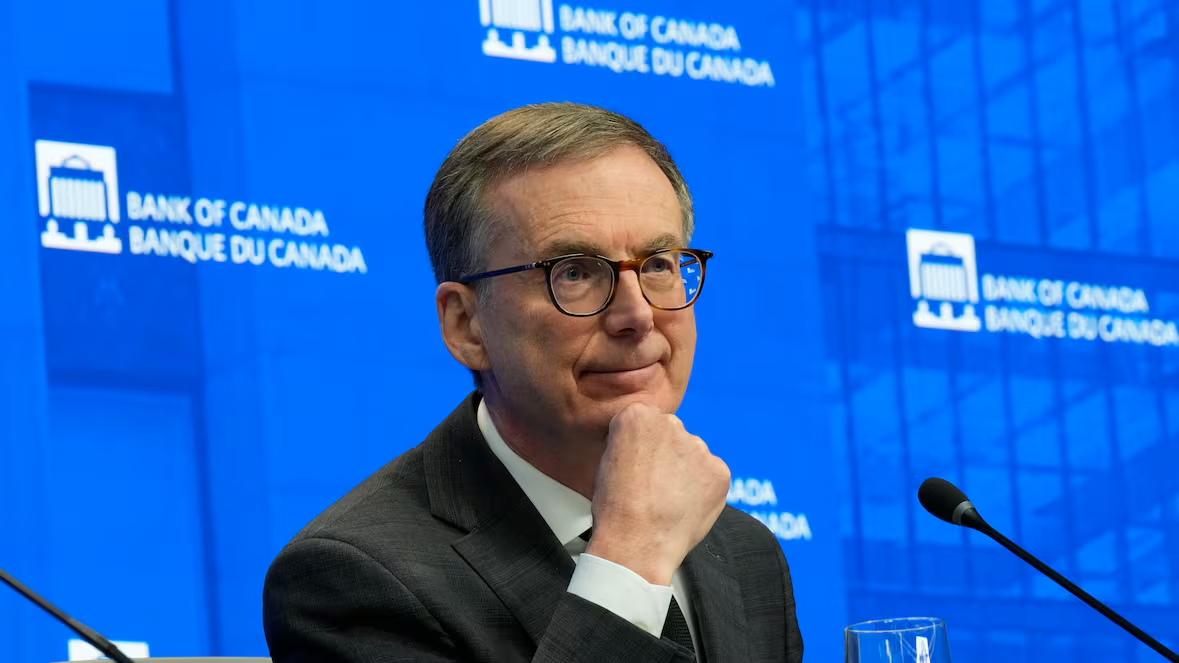
The Bank of Canada has once again decided to hold its benchmark interest rate steady at 5.0%. This marks the fourth consecutive meeting where Governor Tiff Macklem and his team have chosen a patient, wait-and-see approach. While the announcement itself wasn’t a shock to most economists, the implications ripple out far beyond Bay Street, directly impacting the finances of everyday Canadians. If you’re wondering what this prolonged pause means for your mortgage, savings, and spending power, you’re in the right place.
Decoding the Bank’s “Hold” Signal
The central bank’s primary weapon against high inflation is the interest rate. By raising rates, they cool an overheated economy by making borrowing more expensive. Conversely, holding or cutting rates stimulates spending and investment. The decision to maintain the rate at 5.0% is a clear signal that the Bank believes its previous hikes are working, but the job isn’t quite finished.
In their statement, the Bank noted that the Canadian economy is no longer in a state of excess demand. Growth has stalled, with GDP essentially flat through the middle of 2023. More importantly, inflation is trending in the right direction. The Consumer Price Index (CPI) has fallen from its peak of 8.1% to 3.1% as of October. However, the Bank remains concerned about underlying, “sticky” inflation in areas like shelter costs, which continue to rise rapidly.
This creates the delicate balancing act we’re now witnessing: the Bank wants to avoid tipping the economy into a severe recession by hiking too much, but it also cannot declare victory on inflation too soon. The “hold” is a strategic pause to let the existing high rates continue to work through the system.
Key Factors Behind the Decision
- Slowing Economic Growth: The economy is weaker than forecast, reducing demand-side inflationary pressure.
- Progress on CPI: Headline inflation is within sight of the 2% target, but core measures remain elevated.
- Global Uncertainty: Concerns about global economic slowdowns and geopolitical events influence caution.
- High Household Debt: The Bank is acutely aware that further rate hikes would intensify strain on heavily indebted Canadians.
Direct Impact on Your Mortgage and Housing Market
For homeowners and prospective buyers, the rate hold is a moment of cautious relief, but not an all-clear signal.
For Variable-Rate Mortgage Holders
If you have a variable-rate mortgage or a home equity line of credit (HELOC), your payment will remain unchanged for now. This provides much-needed stability after a punishing 18 months of relentless payment increases. However, there is no indication of imminent rate cuts, meaning these higher payments are the new normal for the foreseeable future. Your financial breathing room isn’t expanding, but the pressure has temporarily stopped increasing.
For Fixed-Rate Seekers and New Buyers
Fixed mortgage rates are influenced more by bond yields than the Bank’s overnight rate. The hold, coupled with a slightly more dovish tone from the Bank, could lead to a modest easing in fixed rates offered by lenders. This might open a small window of opportunity for those looking to lock in. For first-time buyers, the pause may bring a slight psychological boost, but affordability remains severely challenged by high prices and elevated borrowing costs overall. The housing market is likely to remain subdued, with modest price corrections or stagnation in many markets.
What This Means for Savers and Investors
The high-rate environment has a silver lining for savers.
High-Interest Savings Accounts (HISAs) and GICs
The rate hold means the golden era for savers continues. Banks and alternative financial institutions will keep offering attractive rates on High-Interest Savings Accounts (HISAs) and Guaranteed Investment Certificates (GICs). It’s an excellent time to shop around for the best rates and park your emergency fund or short-term savings. Consider laddering GICs to take advantage of current rates while maintaining some liquidity.
Stock and Bond Markets
Investors are parsing the Bank’s language for hints about the future. The acknowledgment of slowing growth suggests corporate earnings could face headwinds, creating volatility in stock markets. For bonds, the end of the hiking cycle is generally positive. The message for investors remains: stay disciplined, diversified, and focused on your long-term plan, rather than trying to time the market based on central bank announcements.
Implications for Everyday Spending and Debt
The Bank’s decision filters down to your daily budget in several ways.
Credit card and line of credit rates are at record highs and are not coming down anytime soon. This makes carrying a balance more expensive than ever, underscoring the critical need to pay down this type of high-interest debt aggressively.
For major purchases like a car or a renovation, financing costs remain steep. The hold suggests you have time to save more for a larger down payment rather than taking on a big loan at a high rate. Consumer spending is expected to remain weak as higher costs on essentials and debt servicing leave less disposable income for discretionary items.
Looking Ahead: When Will Rates Finally Drop?
This is the million-dollar question. The Bank has explicitly stated it is prepared to raise the policy rate further if needed. However, most economists and market forecasts now point to the second or third quarter of 2024 as the most likely timeframe for the first rate *cut*. The Bank will need to see several more months of data confirming that inflation is sustainably headed back to 2%.
The path forward is data-dependent. A resurgence in inflation, strong job numbers, or robust consumer spending could delay cuts. A sharper-than-expected economic downturn could bring them forward.
Your Financial Action Plan in a “Hold” Environment
Given this outlook, here’s how you can navigate the current financial landscape:
- Stress-Test Your Budget: Assume high rates are here for at least another 6-12 months. Can your budget withstand it? Build a larger emergency buffer.
- Attack High-Interest Debt: Prioritize paying off credit cards and variable-rate loans. This is the most effective return on investment you can get right now.
- Lock in Savings Rates: If you have cash you won’t need immediately, consider locking in a GIC rate before they potentially start to fall.
- Consult a Professional: If you’re nearing a mortgage renewal or making a major financial decision, speak with a qualified financial advisor or mortgage broker to model different scenarios.
- Stay Informed, Not Reactive: Avoid making drastic financial decisions based on a single headline. Follow the economic data, not the speculation.
The Bank of Canada’s decision to hold rates is a pause, not a pivot. It offers a plateau of stability after a steep climb, giving households a chance to adjust to the new financial reality. While the path to lower rates appears to be on the horizon, it is not yet guaranteed. By understanding what this hold truly means, you can make informed, strategic decisions to protect your wallet and position yourself for whatever comes next.