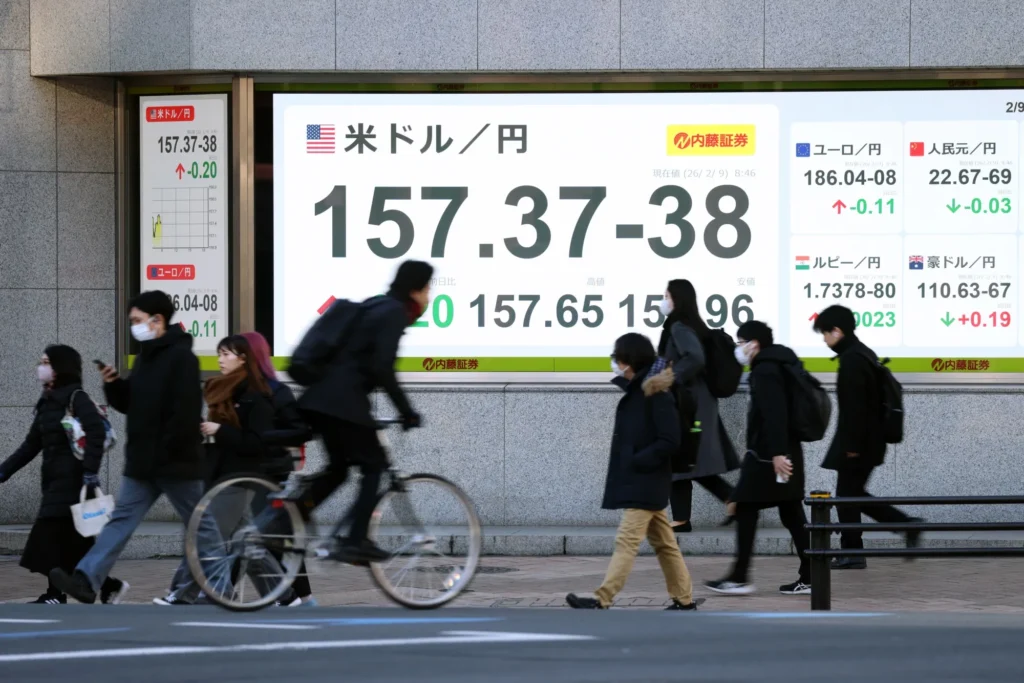
Japan’s Chief Currency Diplomat Atsushi Mimura has called for heightened vigilance in monitoring financial markets, emphasizing the need to respond swiftly to excessive volatility in the foreign exchange (forex) market. His remarks come amid renewed fluctuations in the Japanese yen, shifting global interest rate expectations, and persistent geopolitical uncertainty.
Mimura’s statement underscores Japan’s commitment to maintaining stability in currency markets as global economic conditions remain fragile. With the yen experiencing periodic sharp movements against the US dollar and other major currencies, Japanese authorities are closely tracking speculative activity and market dynamics.
Yen Volatility Triggers Policy Attention
Recent sessions have seen notable swings in the USD/JPY exchange rate, prompting concerns about speculative pressure and capital flow imbalances. The yen’s movements are heavily influenced by:
- Diverging global interest rate policies
- US Federal Reserve signals
- Bank of Japan monetary adjustments
- Inflation trends in major economies
- Investor risk sentiment
Mimura stressed that excessive currency volatility can disrupt trade flows, corporate planning, and financial stability.
Japan has historically intervened in currency markets when rapid depreciation threatened economic equilibrium. While no immediate intervention has been announced, officials are signaling readiness to act if necessary.
Role of Japan’s Currency Diplomacy
As Japan’s top currency official, Mimura plays a central role in coordinating with:
- The Ministry of Finance
- The Bank of Japan
- International financial authorities
- G7 and G20 economic forums
Currency diplomacy involves both domestic monitoring and international coordination to prevent disorderly market conditions.
Mimura’s comments reflect Japan’s broader strategy of careful forex market monitoring, rather than abrupt policy shifts.
Global Interest Rates and Market Pressure
The current forex environment is shaped by global central bank policies. The US Federal Reserve’s interest rate stance, alongside policy signals from the European Central Bank and other monetary authorities, continues to influence capital flows.
Higher US yields typically strengthen the dollar, placing depreciation pressure on the yen. Meanwhile, Japan’s accommodative monetary framework has historically kept domestic yields lower compared to Western economies.
This policy divergence often results in sharp movements in the yen exchange rate, increasing the importance of real-time market monitoring.
Impact on Japan’s Economy
Currency fluctuations have a direct impact on Japan’s economy:
- A weaker yen boosts export competitiveness
- A stronger yen lowers import costs
- Rapid swings create uncertainty for businesses
- Energy import costs are heavily currency-dependent
Japan, as a resource-importing nation, remains sensitive to exchange rate shifts that influence energy and commodity prices.
Mimura emphasized that stable currency movements aligned with economic fundamentals are preferable to speculative-driven volatility.
Market Reaction to Mimura’s Statement
Following Mimura’s remarks, traders interpreted the message as a signal that Japanese authorities are prepared to intervene if market conditions become disorderly.
Financial analysts observed:
- Increased caution in yen trading
- Short-term stabilization in currency markets
- Heightened focus on official commentary
Historically, verbal warnings from Japan’s currency diplomat have preceded direct intervention when volatility intensified.
However, analysts stress that monitoring statements do not automatically indicate imminent action.
Coordination with the Bank of Japan
While the Ministry of Finance oversees currency intervention, the Bank of Japan (BOJ) plays a critical role in shaping broader monetary conditions.
Recent adjustments in Japan’s yield curve framework have influenced bond markets and currency performance. The balance between domestic monetary normalization and external market pressures remains delicate.
Mimura’s vigilance call aligns with Japan’s cautious approach to policy shifts, ensuring that financial stability remains a priority.
International Trade and Currency Stability
Japan’s export-driven economy relies heavily on stable exchange rates. Industries such as:
- Automotive manufacturing
- Electronics production
- Machinery exports
- Technology components
depend on predictable currency conditions for pricing and global competitiveness.
Sudden yen appreciation or depreciation can alter corporate earnings forecasts and disrupt international contracts.
By emphasizing vigilance in forex market monitoring, Japan aims to safeguard its trade competitiveness while avoiding unnecessary currency shocks.
Geopolitical Risks and Safe-Haven Flows
The yen has historically been considered a safe-haven currency during global crises. However, recent shifts in interest rate differentials have altered traditional patterns.
Geopolitical tensions, energy market instability, and global inflation concerns contribute to unpredictable currency flows.
Mimura acknowledged that authorities are carefully analyzing global risk factors to prevent abrupt currency misalignments.
What Could Happen Next?
Market participants will closely monitor:
- Upcoming US inflation data
- Federal Reserve policy decisions
- Bank of Japan monetary updates
- Global economic indicators
If volatility increases significantly, Japan could consider:
- Direct currency market intervention
- Coordinated international policy discussions
- Additional policy guidance
For now, Mimura’s message serves as a firm reminder that authorities remain actively engaged in maintaining orderly markets.
Final Analysis
Japan’s Chief Currency Diplomat Atsushi Mimura’s call for vigilance in market monitoring highlights the delicate balance facing global forex markets.
As the yen navigates interest rate divergence, geopolitical risks, and shifting investor sentiment, Japanese authorities are reinforcing their readiness to act against excessive volatility.
Currency stability remains vital for Japan’s export economy, financial markets, and broader economic resilience. With global uncertainties persisting, vigilant monitoring and strategic coordination will remain central to Japan’s financial strategy in the months ahead.
The coming weeks will determine whether verbal caution is sufficient—or whether direct intervention becomes necessary to protect market stability.