
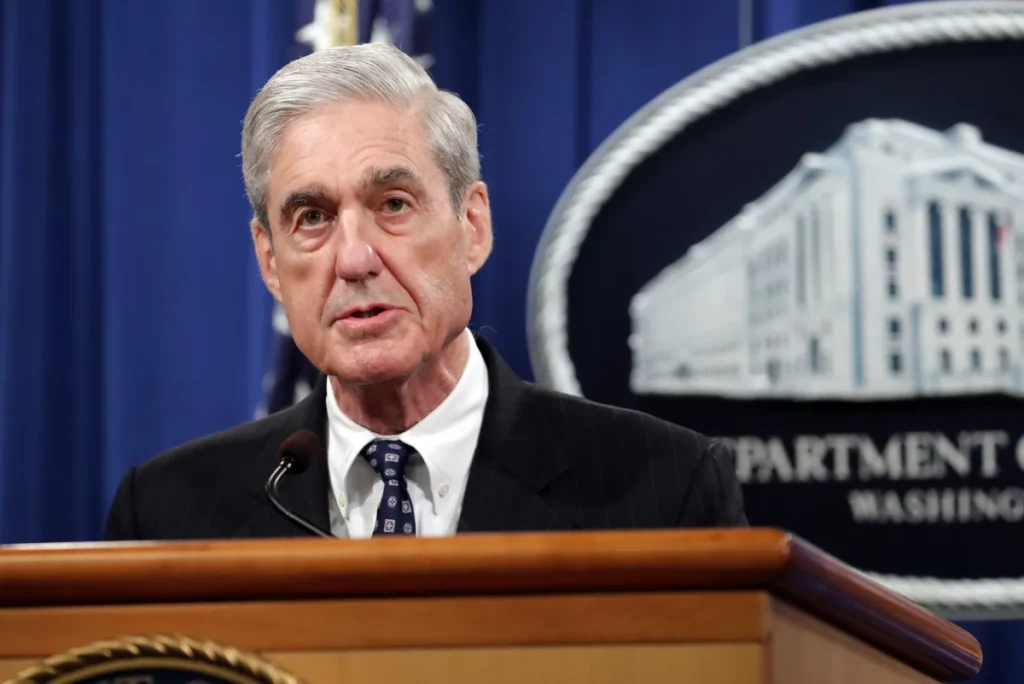
Robert Mueller, Former FBI Director and Russia Probe Head, Dies
The world of American law enforcement and politics is in mourning following the announcement of the death of Robert Mueller, the former FBI director who led the highly consequential investigation into Russian interference in the 2016 U.S. election. Mueller, a figure synonymous with integrity and a by-the-book approach to justice, passed away at the age of 80. His career, spanning over five decades, was defined by a steadfast commitment to the rule of law, leaving a complex and indelible legacy on the nation’s history.
A Life of Service: From Marine to FBI Director
Robert Swan Mueller III’s path to becoming one of the most respected figures in Washington was forged in discipline and duty. Born in New York City in 1944, Mueller’s character was shaped early by his service as a Marine officer during the Vietnam War, where he was awarded the Bronze Star and Purple Heart for valor. This military background informed his entire career—a career marked by an unwavering sense of responsibility and a quiet, relentless work ethic.
After graduating from law school, Mueller served as a prosecutor, handling everything from street crime to complex financial fraud. His reputation for fairness and tenacity led to appointments as U.S. Attorney and within the Department of Justice. In a moment of crisis for the nation, just one week before the terrorist attacks of September 11, 2001, Mueller was sworn in as the sixth Director of the Federal Bureau of Investigation.
Steering the FBI Through Its Darkest Hour
Mueller’s tenure at the FBI was defined by the immediate and overwhelming challenge of transforming the bureau to confront the new threat of global terrorism. Tasked with preventing another catastrophic attack on American soil, he overhauled the agency’s priorities, shifting its focus from traditional crime-fighting to intelligence gathering and counterterrorism. His leadership during this tumultuous period was widely praised for its focus and effectiveness, earning him bipartisan respect and an unprecedented extension of his term by President Barack Obama.
The Special Counsel: A Defining and Divisive Assignment
In May 2017, Mueller was called out of retirement for what would become the most scrutinized assignment of his life. Appointed as Special Counsel by the Department of Justice, he was tasked with investigating Russian interference in the 2016 presidential election and any potential links or coordination between the Trump campaign and Russian officials.
For the next 22 months, Mueller and his team operated with characteristic silence and diligence. The investigation resulted in:
- 37 indictments and seven guilty pleas or convictions, including those of key Trump campaign officials like Paul Manafort, Rick Gates, and Michael Flynn.
- Detailed findings on a sweeping Russian effort to influence the election through hacking and social media manipulation.
- A complex legal analysis regarding obstruction of justice, which did not exonerate President Donald Trump but also did not recommend criminal charges, citing longstanding Justice Department policy against indicting a sitting president.
The Weight of the Report and Its Aftermath
When the Mueller Report was finally released in redacted form in April 2019, it became an instant historical document. Mueller’s meticulous, 448-page report painted a detailed picture of a foreign power’s attack on American democracy but left the political and legal consequences to Congress and the court of public opinion. His televised statement, in which he emphasized that his report was his testimony and that he would not go beyond its written words, was a final testament to his belief in process over personality.
The investigation made Mueller a lightning rod for political controversy. He was hailed as a hero by those who believed he uncovered critical truths, and vilified as the head of a “witch hunt” by others. Through it all, he remained a stoic, inscrutable figure, refusing to be drawn into the political fray.
The Legacy of Robert Mueller: Integrity in an Age of Noise
Robert Mueller’s legacy cannot be confined to the two years of the Russia probe. He represented an older, perhaps fading, ideal of public service: non-partisan, discreet, and rooted in an unshakeable fidelity to the facts and the law. In an era of intense political polarization and noisy media cycles, his silent, methodical approach was both a rebuke and a reminder.
His career arc—from war hero to prosecutor to the steward of the FBI post-9/11—reflects a lifetime of answering the call during moments of national peril. The Special Counsel investigation, for all its controversy, was an extension of that same call to duty.
A Final Assessment
In the wake of his passing, tributes have poured in from across the political spectrum, highlighting the deep respect he commanded from those who worked with him. He is remembered not for flamboyance or self-promotion, but for the quiet power of his example. Robert Mueller was a man who believed in institutions, in the rule of law, and in doing the job before him without fear or favor. His death marks the end of a chapter in American legal history and leaves a void defined by a rare and steadfast integrity.
As the nation reflects on his life and contributions, the story of Robert Mueller serves as a powerful narrative about the weight of duty and the complex, often thankless, pursuit of justice in a democracy. He was, as many have noted, the right man for two of the most difficult jobs in Washington, not because he sought them, but because he embodied the principles they required.

