Canadian Bankers Huddle Over Anthropic’s New AI Model Mythos
A ripple of apprehension has spread through the highest echelons of Canadian finance. In a move that underscores the profound impact artificial intelligence is having on global industries, executives from Canada’s largest banks and top financial regulators recently convened for a private, high-stakes meeting. The catalyst? The impending arrival and potential implications of Anthropic’s new AI model, codenamed “Mythos.”
This isn’t just another tech update. The gathering signals a pivotal moment where theoretical AI risks are colliding with practical, systemic concerns for one of the world’s most stable financial sectors. The conversation has shifted from “if” AI will disrupt finance to “how to navigate the specific disruption a model like Mythos might bring.”
Why Mythos Has Canadian Finance on Edge
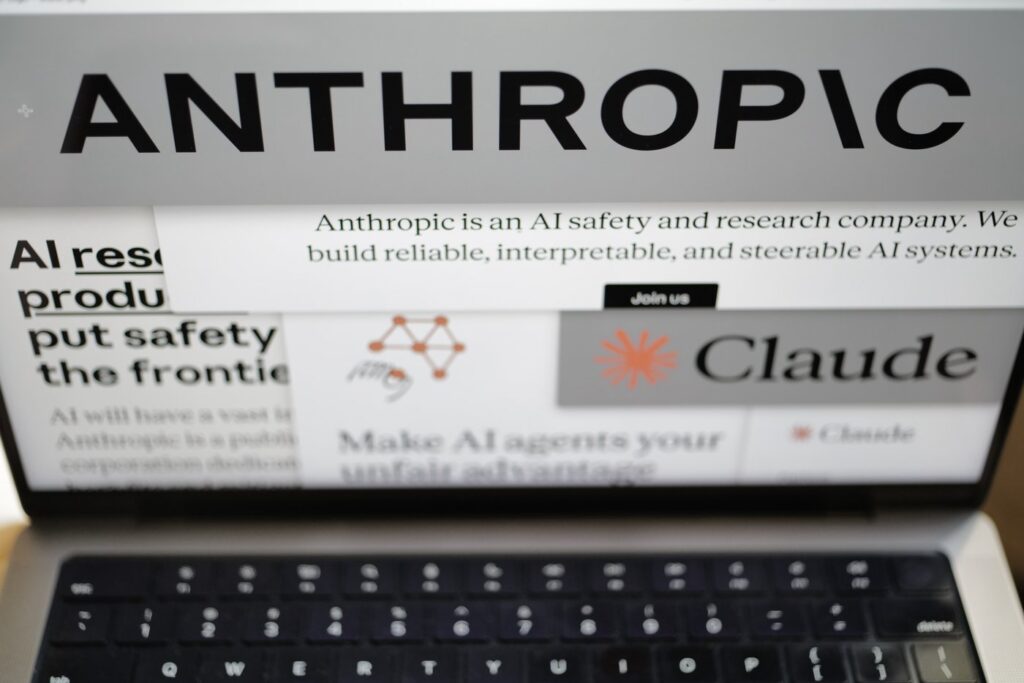
Anthropic, a leading AI safety and research company, has built its reputation on developing powerful, constitutionally-aligned models like Claude. While details on Mythos remain closely guarded, industry speculation suggests it represents a significant leap in capability, particularly in areas like complex reasoning, strategic analysis, and autonomous task execution.
For Canadian bankers and regulators, the concerns are multifaceted and deeply practical:
1. Systemic Risk and Unpredictable Markets
The core fear is that advanced AI models could amplify market volatility. Imagine multiple institutions deploying AI agents that can execute trades, analyze global news, and adjust strategies in milliseconds. A model as sophisticated as Mythos could potentially:
- Identify and exploit market inefficiencies at a scale and speed impossible for humans.
- Create unpredictable feedback loops if multiple AIs react to each other’s actions.
- Interpret ambiguous data or news in unforeseen ways, triggering cascading sell-offs or bubbles.
The 2010 “Flash Crash” is a haunting precedent, and regulators are keenly aware that AI could make such events more frequent and severe.
2. The Cybersecurity Arms Race Escalates
Financial institutions are prime targets for cyberattacks. A more powerful AI model is a double-edged sword.
- Defensive Power: Mythos could be trained to proactively find network vulnerabilities, detect sophisticated fraud patterns, and neutralize phishing campaigns in real-time.
- Offensive Threat: In the wrong hands, the same capabilities could be used to engineer flawless social engineering attacks, develop novel malware, or find zero-day exploits in critical financial infrastructure.
The meeting likely focused on how to foster the defensive use of such AI while collaboratively strengthening national and institutional shields against AI-powered threats.
3. Job Displacement and Strategic Overhaul
Beyond immediate risk, there’s strategic anxiety. AI models capable of deep analysis threaten to reshape entire departments.
- Roles in risk assessment, compliance reporting, mid-level analysis, and even certain customer strategy functions could be augmented or replaced.
- Banks must decide whether to be early adopters, risking reputation and stability, or laggards, risking competitive irrelevance.
The huddle was as much about future-proofing Canada’s financial workforce as it was about managing technological risk.
The Regulatory Conundrum: Innovation vs. Stability
Canada’s regulators, including the Office of the Superintendent of Financial Institutions (OSFI) and the Bank of Canada, face a classic innovation dilemma. Their mandate is to ensure the safety and soundness of the financial system. How do they regulate a technology that is:
- Opaque: Even developers can’t always explain why a complex AI model makes a specific decision.
- Evolving Rapidly: Regulatory frameworks can take years to draft; AI evolves in months.
- Dual-Use: Inherently capable of both stabilizing and destabilizing markets.
The private meeting suggests regulators are seeking to get ahead of the curve. Key discussion points certainly included:
- Developing “sandbox” environments to test new AI models in controlled, simulated financial ecosystems.
- Exploring mandatory transparency or “explainability” standards for AI used in critical financial decision-making.
- Creating inter-bank protocols for communicating about AI-driven market anomalies or coordinated cyber defenses.
Canada’s Position in the Global AI Finance Race
This proactive huddle is telling. It positions Canada not as a passive observer, but as a potential leader in responsible financial AI integration. Unlike a purely reactive stance, this gathering shows an intent to shape the rules of engagement.
Canada’s banking sector, known for its conservatism and resilience, has a unique opportunity. By collaboratively developing guardrails and best practices for models like Mythos, it could export a framework for safe, ethical, and stable AI adoption in finance worldwide. The alternative—a fragmented, every-bank-for-itself approach—invites the very systemic risks they fear.
The Path Forward: Vigilance and Collaboration
The meeting over Anthropic’s Mythos is not an endpoint, but a starting gun. It marks the moment when Canadian finance moved from abstract AI discussion to concrete, coordinated preparation. The path forward will be built on:
- Continuous Dialogue: Making these executive-regulator summits a regular fixture, not a one-off crisis response.
- Investment in AI Literacy: Ensuring decision-makers at all levels, from the C-suite to compliance officers, understand the capabilities and limitations of next-gen AI.
- Public-Private Partnership: Leveraging Canada’s strong AI research community (in hubs like Toronto and Montreal) to develop auditing tools and safety standards specific to financial applications.
The arrival of powerful AI models like Mythos is inevitable. The question for Canada’s financial guardians is no longer *if* they will change the game, but *how*. By huddling now, they aim to ensure that this transformative technology strengthens, rather than undermines, the trust and stability upon which the entire financial system depends. The world will be watching to see if this model of proactive collaboration becomes the new mythos for the age of AI in finance.