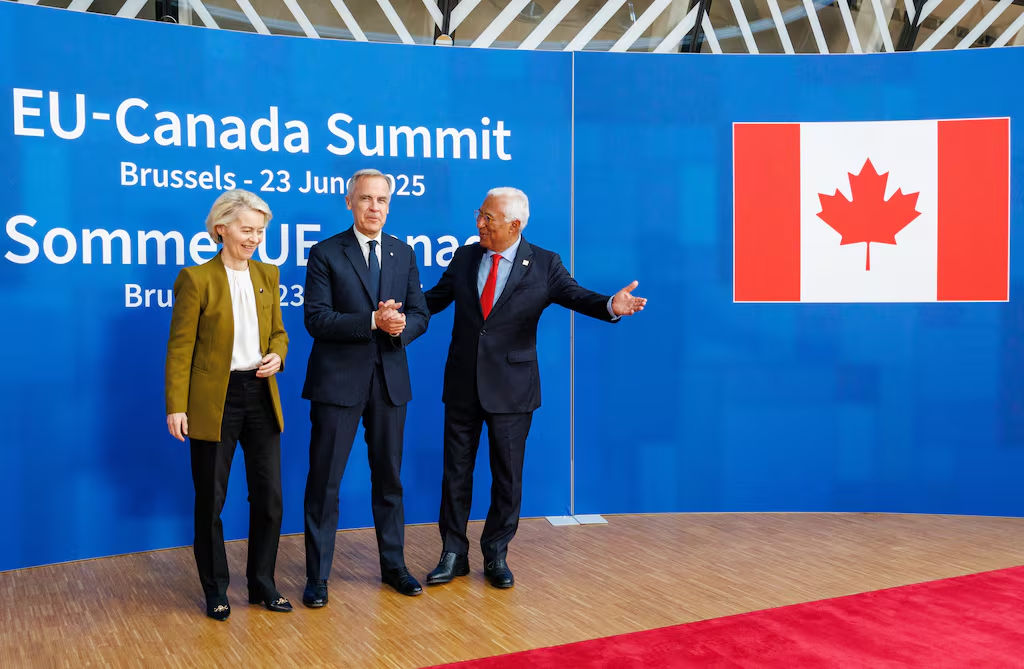
Canada Eyes EU Loans to Fund New Fighter Jets and Submarines
In a bold strategic maneuver, Canada is exploring a novel financial pathway to modernize its aging military hardware. According to recent reports, Ottawa is actively considering leveraging loan facilities from the European Union to underwrite the colossal costs of acquiring next-generation fighter aircraft and submarines. This potential pivot toward European capital signals a significant shift in how Canada might fund its most critical defense procurements, intertwining financial pragmatism with deep geopolitical considerations.
Navigating the High Cost of Modern Defense
The Canadian Armed Forces are at a crossroads. The Royal Canadian Air Force’s fleet of CF-18 Hornets, some of which are over four decades old, is rapidly approaching the end of its service life. Similarly, the Royal Canadian Navy’s Victoria-class submarines, purchased second-hand from the UK in the 1990s, are increasingly costly to maintain and operate. Replacing these assets with modern, capable platforms is a multi-billion dollar endeavor, one that competes directly with other national priorities like healthcare, infrastructure, and climate initiatives.
The sheer scale of these projects—often cited as the most expensive in Canadian peacetime history—demands creative financing solutions. Enter the European Union’s financing mechanisms, such as those offered by the European Investment Bank (EIB). Traditionally focused on infrastructure and green projects within the EU, these loan facilities could provide Canada with access to substantial capital at favorable rates, easing the immediate fiscal burden on the federal treasury.
Why the European Union? A Strategic Alignment
This exploration is more than just a banking exercise; it’s a profound statement of strategic alignment. By seeking EU financing, Canada is deepening its institutional and defense ties with Europe at a pivotal moment. Several key factors make this partnership logical:
The Fighter Jet Frontier: A Crowded Field
Canada’s Future Fighter Capability Project aims to procure 88 new aircraft. While the U.S.-built F-35 remains a strong contender, European options are very much in the race. The potential for EU loans could make European platforms more financially attractive.
Key European contenders include:
The availability of EU financing could tip the scales by addressing one of the biggest hurdles: upfront cost. A favorable loan package linked to a European bid could present a compelling “total package” to Canadian decision-makers.
Revitalizing the Undersea Fleet: A Monumental Task
The project to replace Canada’s submarines is arguably even more complex and costly. New submarines are not just ships; they are long-endurance, strategic assets crucial for sovereignty patrols in the Arctic, Atlantic, and Pacific. European shipyards are world leaders in conventional (diesel-electric) submarine technology, which is well-suited to Canada’s needs.
Potential partners and benefits:
Financing such a multi-decade, technology-intensive program through EU instruments could make the project more manageable, potentially allowing for a larger fleet or more advanced technology insertion over the build period.
Challenges and Considerations on the Path Forward
While the EU loan concept is innovative, it is not without its hurdles. Canada would need to navigate several complex issues:
A Strategic Inflection Point for Canadian Defense
Canada’s exploration of EU loans for fighter jets and submarines represents a potential watershed moment. It is a move born of necessity, acknowledging the astronomical costs of modern military readiness, but it is also a move of strategic foresight.
By potentially partnering with Europe on financing, Canada is doing more than just shopping for favorable interest rates. It is signaling a commitment to a broader, more diversified alliance structure. It is opening the door to deeper industrial and technological collaboration with European partners. And it is seeking a sustainable model to equip its armed forces with the tools they need to defend North American sovereignty, uphold NATO commitments, and assert its presence in an increasingly contested Arctic.
The road ahead is long and filled with technical, financial, and political challenges. However, this innovative approach demonstrates that Canada is seriously rethinking the paradigms of defense procurement. The decisions made in the coming months will not only determine the shape of the Royal Canadian Air Force and Navy for the next half-century but will also redefine Canada’s place within the transatlantic defense community. The mission to secure Canada’s future defense capabilities has entered a new and fascinating phase.