
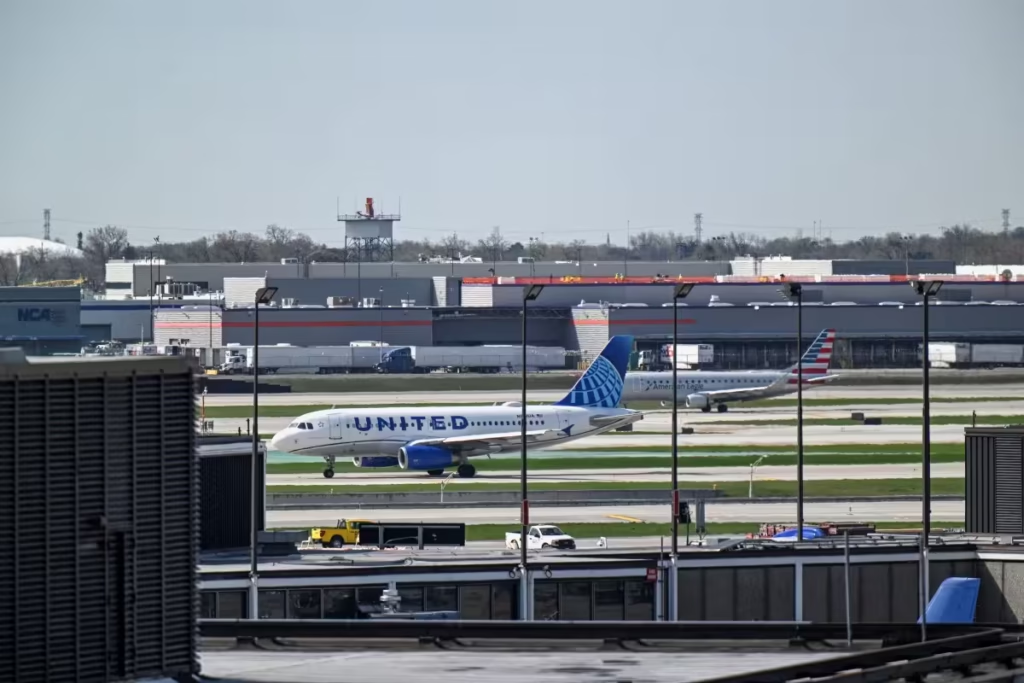
Flights Resume Between Haiti and Dominican Republic in May 2024
After a tense period of closure lasting over a month, the skies between the Dominican Republic and Haiti are officially reopening. In a significant move aimed at restoring vital connectivity, authorities from both nations have confirmed that commercial airspace will be accessible again starting in May 2024. This decision marks a pivotal step towards normalizing relations and addressing the severe logistical and humanitarian challenges created by the shutdown.
A Closure Rooted in Regional Tensions
The decision to close the airspace in late March 2024 did not occur in a vacuum. It was a direct response to the escalating gang violence and profound political instability in Haiti, which reached a critical point following the resignation of Prime Minister Ariel Henry. The Dominican government, sharing the island of Hispaniola with its neighbor, cited grave security concerns as the primary reason for the suspension of all air and sea travel.
For weeks, the closure stranded travelers, separated families, and severely hampered the flow of essential goods, including critical medical supplies and humanitarian aid. The economic impact was immediate, affecting tourism, trade, and the many Haitians who work in the Dominican Republic and rely on air travel to visit family or conduct business.
The Path to Reopening: Diplomacy and Security
The reopening is the result of sustained diplomatic engagement between Santo Domingo and Port-au-Prince. Key to this progress was the establishment of a new transitional governing council in Haiti, which provided a fragile but recognized point of contact for the Dominican authorities. While the security situation in Haiti remains extremely volatile, the formation of this council offered a framework for dialogue.
Crucially, the agreement to reopen the airspace includes enhanced security protocols. Both nations have committed to stringent checks and coordination to ensure that the resumption of flights does not compromise regional security. This includes measures to verify passenger manifests and ensure that air travel is used for its intended civil purposes.
What the Resumption Means for Travelers and Commerce
The restoration of flights is a beacon of hope for thousands. Here’s a breakdown of the immediate implications:
- Reuniting Families and Communities: The most immediate human impact will be the ability for divided families to reunite. The Haitian diaspora in the DR, and vice versa, relies heavily on this route.
- Humanitarian Corridor in the Sky: Perhaps most critically, reopening the airspace creates a reliable channel for international aid organizations to transport personnel and supplies directly into Haiti. This is vital for addressing the country’s deepening hunger and health crises.
- Economic Lifeline: Commerce between the two nations, though often imbalanced, is significant. The resumption of flights will facilitate business travel, the movement of specialized goods, and provide a boost to related service industries on both sides of the border.
- Cautious Optimism for Tourism: While tourist travel to Haiti remains negligible, the route is important for connecting international flights. It also allows for the small but dedicated group of travelers, researchers, and NGO workers to move more freely.
A Fragile Normalcy: Challenges and Considerations
It is essential to view this reopening not as a solution to the deep-rooted crisis in Haiti, but as a necessary adjustment to a prolonged emergency. The airspace reopening is a tactical decision to alleviate acute pressure, not a sign that stability has returned.
Significant challenges persist:
- The security situation in Haiti, particularly around Port-au-Prince’s Toussaint Louverture International Airport, remains a major concern. Gang influence in parts of the capital could still pose indirect risks.
- Ground transportation from the airport into the city or other parts of Haiti is perilous, limiting the practical utility of arriving by air for many.
- The underlying political and social crisis in Haiti continues unabated. Flights provide access, but they do not solve the fundamental issues of governance, violence, and poverty.
Looking Ahead: A Barometer for Bilateral Relations
The management of this air corridor will serve as a key barometer for the complex and often strained relationship between the Dominican Republic and Haiti. The Dominican government has been unequivocal in its stance, prioritizing its national security while facing international calls to support its neighbor.
The successful, secure, and sustained operation of flights will require continuous high-level communication and cooperation between aviation and security authorities of both countries. Any security incident linked to the air travel could prompt another swift closure.
Furthermore, this move puts the spotlight on the newly formed Haitian Transitional Presidential Council. Its ability to maintain a functioning civil aviation authority and provide basic security guarantees for the airport perimeter is a basic test of its operational capacity.
A Step Forward, But a Long Journey Remains
The resumption of flights between the Dominican Republic and Haiti in May 2024 is a welcome and necessary development. It is a pragmatic response to the unsustainable conditions created by a complete shutdown. By re-establishing this link, the two nations are choosing managed engagement over total isolation, recognizing that a complete severance causes its own form of collateral damage.
For the international community, it underscores the importance of supporting Haiti’s fragile transitional authorities in restoring basic state functions. For the people of Hispaniola, it is a tentative sigh of relief—a chance to reconnect, deliver aid, and maintain a thread of normalcy in a region that has seen far too little of it lately. The open skies are a symbol of hope, but everyone is watching closely, knowing that the winds of change in Haiti remain unpredictable and strong.

