
How the Iran Conflict is Straining American Households and Budgets
For years, the American public has grappled with the rising cost of living, a steady pressure on wallets and kitchen tables. Now, a new and potent factor has entered the equation, amplifying financial strain from coast to coast: the ongoing conflict with Iran. What was once a distant geopolitical tension has become a direct line to the gas pump, the grocery store, and the monthly utility bill, forcing families to make difficult choices in an already challenging economic landscape.
The Gas Pump: The Most Visible Economic Casualty
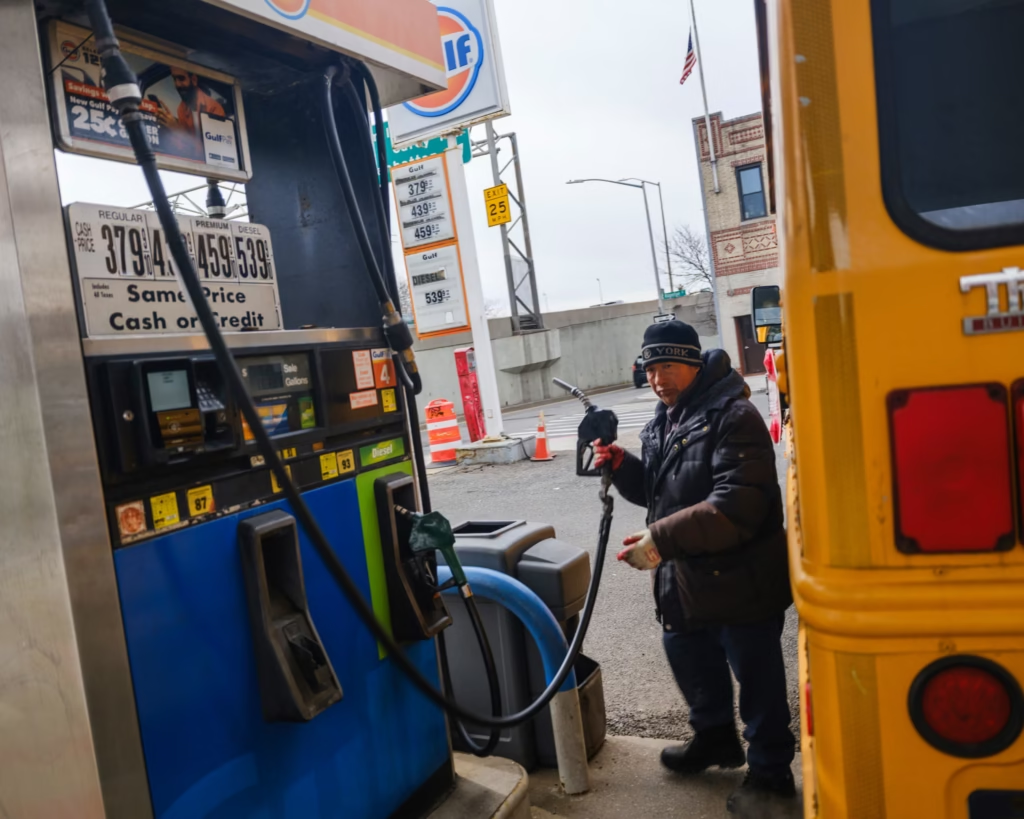
The most immediate and visceral impact for everyday Americans is at the filling station. Global oil markets are exquisitely sensitive to instability in the Middle East, a region responsible for a significant portion of the world’s crude supply. The conflict with Iran, a major oil producer situated in the strategically vital Strait of Hormuz, has triggered waves of volatility.
Every flare-up, every sanction, and every threat to shipping lanes sends shockwaves through the market, translating directly to higher prices per gallon. For the average commuter, this means an extra $20, $30, or even $50 tacked onto their weekly transportation budget. For delivery drivers, truckers, and small businesses reliant on logistics, these increases are not just an inconvenience; they are a direct threat to profitability and operational viability. The “pain at the pump” is no longer just a political slogan—it’s a daily financial reality draining household reserves.
The Ripple Effect: From Energy to Everything Else
The damage, however, does not stop at the gas station. The increased cost of energy is a primary driver of broader inflation. It acts as a tax on the entire economy, raising the cost of producing and transporting virtually every good and service.
Grocery Aisles Feeling the Squeeze
Walk into any supermarket, and the evidence is clear. The price of food continues to climb, and the conflict is a key contributor. Higher diesel costs make it more expensive to transport food from farms to processing plants to stores. Fertilizer production, which is energy-intensive, becomes costlier. These increased production and logistics expenses are inevitably passed on to consumers.
- Staple items like bread, milk, and eggs see incremental but persistent increases.
- Produce and perishables, which require refrigerated transport, become notably more expensive.
- Overall grocery bills are stretching family budgets thin, forcing cuts in quality, quantity, or both.
Home Heating and Cooling Costs Skyrocket
For many households, especially in regions with harsh winters or hot summers, energy costs are a major line item. The conflict has driven up the price of natural gas and heating oil, leading to daunting utility bills. Families are faced with the impossible choice between staying warm (or cool) and covering other essentials like medication or car repairs. This “heat or eat” dilemma, once associated with the most vulnerable, is creeping into middle-class realities.
The Hidden Costs: Defense Spending and Economic Uncertainty
Beyond the direct consumer impact, the financial strain of the Iran conflict operates on a macro level, with long-term consequences for every taxpayer and investor.
Increased defense and security expenditures, funded by taxpayer dollars, are being funneled toward the crisis. This massive allocation of public funds represents an opportunity cost—money that is not being invested in domestic infrastructure, education, healthcare, or debt reduction. While national security is paramount, the trade-off is a gradual erosion of investment in the nation’s own economic foundation.
Furthermore, geopolitical instability breeds market uncertainty. Stock markets react negatively to prolonged conflict, affecting retirement accounts (401ks, IRAs) and investment portfolios. This erosion of wealth and future security adds a layer of psychological and financial stress, causing consumers and businesses to pull back on spending, which can slow economic growth.
Coping Strategies for Strapped Households
In the face of these compounded pressures, American families are adopting a range of strategies to cope, often reinventing their approach to personal finance.
Budgeting and Cutting Back
The first line of defense is a return to rigorous budgeting. People are scrutinizing every expense, leading to significant behavioral shifts:
- Drastic reduction in discretionary spending: Dining out, entertainment subscriptions, and non-essential travel are often the first items cut.
- Strategic driving and carpooling: Consolidating trips, using public transit where available, and embracing remote work to save on fuel.
- Energy conservation at home: Lowering thermostats, being vigilant about turning off lights and electronics, and investing in efficiency upgrades where possible.
The Rise of Side Hustles and Gig Work
For many, cutting back isn’t enough. To bridge the gap between stagnant wages and rising costs, a growing number of Americans are turning to the gig economy. Driving for ride-share services, delivering food, freelancing, or selling goods online has become a necessary supplement to primary income. While this provides crucial cash flow, it often comes without benefits and adds to the time and stress burden on individuals.
A Sustained Economic Headwind
The conflict with Iran has moved from the foreign policy section of the news to the business and lifestyle sections. It is no longer an abstract debate but a concrete force reshaping the American economic experience. The strain on household budgets is multifaceted, hitting families through direct energy costs, inflated prices for essentials, and a cloud of broader economic uncertainty.
As long as the geopolitical tension persists, its economic repercussions will continue to reverberate through American life. The resilience of the American household is being tested not by a single recession, but by a prolonged period of compounded pressures where global conflict directly dictates local financial reality. Navigating this new normal requires adaptability, resilience, and a sober understanding that the wallet is now on the front lines of a distant war.

