
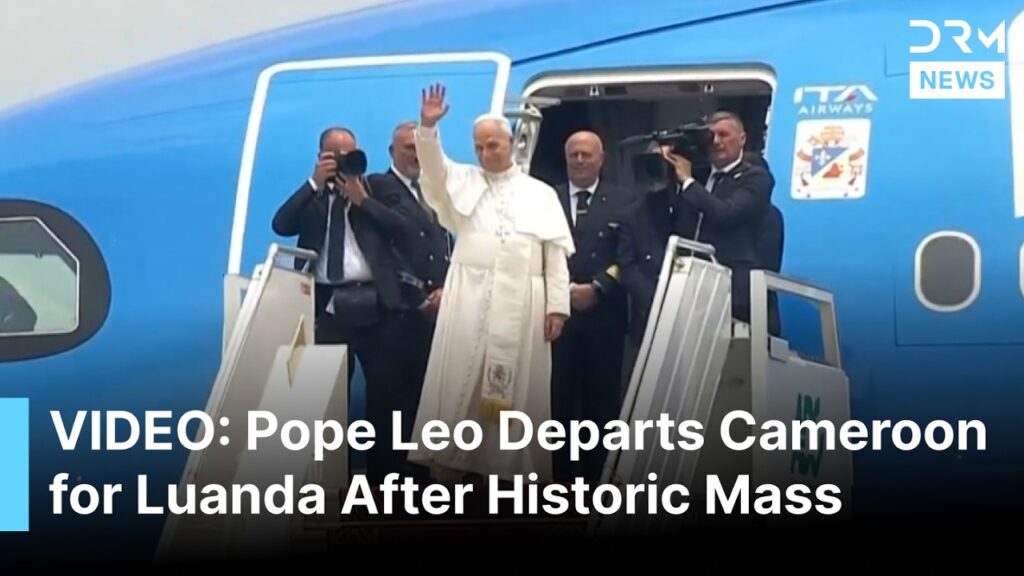
Pope Francis Concludes Historic Cameroon Mass Before Angola Journey
The vibrant sounds of worship echoed across Yaoundé’s Amadou Ahidjo Stadium as Pope Francis brought his historic visit to Cameroon to a spiritual crescendo. Celebrating a final, unifying Mass for tens of thousands of faithful, the Pontiff solidified a message of hope, reconciliation, and peace for the Central African nation before embarking on the next leg of his journey to Angola.
This visit, marking his 40th Apostolic Journey and his second to sub-Saharan Africa, was laden with significance. It served as a powerful gesture of solidarity with a region often facing complex challenges, and its concluding ceremony was a testament to the enduring strength of the Catholic community there.
A Final Blessing for Cameroon: Unity and Hope
Under a bright morning sky, a sea of pilgrims dressed in white and yellow—the colors of the Vatican flag—gathered to receive the Holy Father’s final blessing on Cameroonian soil. The atmosphere was one of pure jubilation, with traditional hymns blending with the rhythmic beats of local music.
In his homily, Pope Francis centered his message on the Gospel call to love and forgiveness. He urged the Cameroonian people, a nation with significant linguistic and cultural diversity, to see these differences not as divisions but as a strength.
“You are called to be artisans of communion, champions of a uniquely African model of reconciliation, justice, and peace,” he proclaimed, his words translated into local languages. He specifically addressed the youth, encouraging them to resist the temptations of despair and corruption and to become leaders who build a future founded on integrity and hope.
The Mass was more than a religious service; it was a national moment. It provided a platform for the Pope to reiterate his heartfelt appeals for an end to the violence in the country’s troubled Anglophone regions, a plea he made directly to authorities in earlier meetings.
Key Themes of the Papal Visit to Cameroon
Throughout his three-day stay, several critical themes emerged that defined the Pope’s mission:
- Peace and Reconciliation: A constant, urgent call for dialogue to resolve the conflict affecting the Northwest and Southwest regions.
- Interreligious Harmony: Praise for Cameroon’s model of peaceful coexistence between Christians and Muslims.
- Youth and the Future: Direct engagement with young people, challenging them to be active, ethical citizens.
- Environmental Stewardship: Connecting faith with the responsibility to protect the continent’s rich natural heritage.
Looking Ahead: The Journey to Angola
With the final “Amen” in Cameroon, Pope Francis’s focus immediately turned westward across the continent to the Republic of Angola. His departure from Yaoundé’s Nsimalen International Airport was marked by a formal send-off by Cameroonian President Paul Biya and other dignitaries, closing a chapter deemed a success by both Vatican and local church officials.
The Angolan leg of this Apostolic Journey carries its own profound historical weight. Angola, a nation with a deep Catholic tradition, is still healing from the wounds of a decades-long civil war and navigating the complexities of economic inequality and social transformation.
What to Expect as the Pope Arrives in Angola
The papal itinerary in Angola is packed with symbolic encounters designed to inspire and challenge:
- Meetings with Political Leaders: Discussions with President João Lourenço will likely center on social justice, corruption, and the path of national development.
- Dialogue with Civil Society: A scheduled meeting with cultural and civic representatives will highlight the role of education and culture in building a just society.
- Focus on the Marginalized: As is his custom, Pope Francis will dedicate time to meet with the poor and with inmates at a local prison, embodying the Church’s “preferential option for the poor.”
- Empowering the Young: A major youth gathering is anticipated to be a highlight, echoing his Cameroon message but within the specific context of Angola’s demographic reality.
The Pope’s visit to Angola is also a return to the footsteps of Pope St. John Paul II, who visited in 1992, a pivotal moment as the country attempted to transition to peace. Pope Francis’s journey seeks to reinvigorate that message of reconciliation for a new generation.
A Lasting Impact for the African Church
Pope Francis’s dual-nation tour is a clear strategic emphasis on Africa, home to the Catholic Church’s most rapidly growing population. By choosing Cameroon and Angola, he spotlighted two nations at critical junctures, offering the moral authority of the papacy as a support for peace and an encouragement for ethical leadership.
The image of the elderly Pope, persevering through his well-documented mobility challenges to travel thousands of miles, itself sent a powerful message of priority and pastoral love. It demonstrated that the global South, and Africa in particular, is central to the present and future of Catholicism.
For the faithful in Cameroon, the memories of the open-air Mass and his fatherly presence will resonate for years. They now pass the symbolic torch to their Angolan brothers and sisters, who await their own moment of papal encounter. As Pope Francis’s plane touched down in Luanda, the second phase of this historic journey began—a continuation of a mission to preach peace, ignite hope, and affirm the vibrant, resilient faith of the African continent.
This Apostolic Journey reaffirms that the message of the Gospel, delivered amidst the specific joys and struggles of local communities, remains a potent force for unity and positive change. The world now watches as Pope Francis brings his mission of fraternity and faith to the people of Angola.

