Iran’s Qalibaf Emerges as Potential US Backchannel Amid Regional War
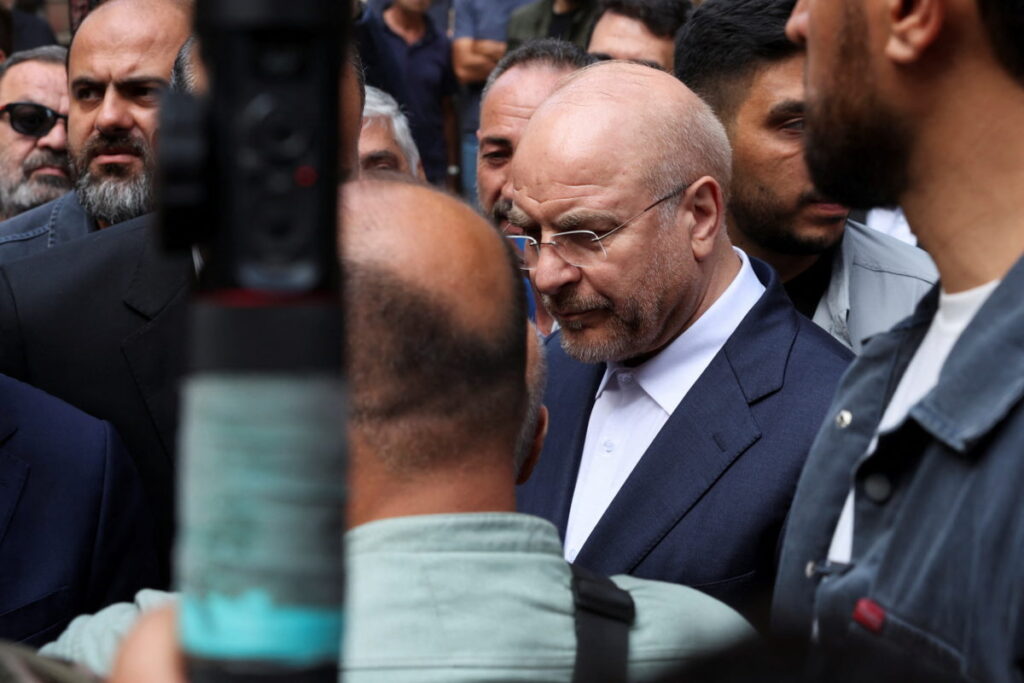
As the shadow of conflict lengthens across the Middle East, a surprising and potentially significant diplomatic figure is being whispered about in international corridors: Mohammad Bagher Qalibaf, the Speaker of Iran’s Parliament. Amidst the thunder of regional war, the notion of a backchannel is gaining traction, and Qalibaf’s name is increasingly floated as a possible, albeit unconventional, point of contact for the United States. This development highlights the desperate search for off-ramps and the complex, often opaque, nature of Iran’s political power structures.
Who is Mohammad Bagher Qalibaf?
To understand why Qalibaf is being considered, one must first look at his unique profile within the Islamic Republic’s hierarchy. He is not a typical, firebrand ideologue often seen on the international stage. His career is a tapestry woven from military, security, and pragmatic administrative threads.
Key Aspects of Qalibaf’s Profile:
- The IRGC Veteran: A former commander of the Islamic Revolutionary Guard Corps (IRGC) Air Force, Qalibaf carries significant credibility within Iran’s most powerful military and security institution.
- The Pragmatic Manager: As the long-serving Mayor of Tehran (2005-2017), he earned a reputation as a competent technocrat focused on infrastructure and urban development, often presenting himself as a problem-solver.
- The Political Survivor: A perennial presidential candidate, Qalibaf has consistently been a major player in Iran’s conservative political establishment, demonstrating an ability to navigate its treacherous waters.
- The Strategic Speaker: His position as Parliament Speaker gives him a high constitutional profile and a platform to shape national discourse, while also offering a degree of insulation from the direct day-to-day foreign policy of the presidency.
This combination of deep security ties and a reputation for pragmatic governance makes him a compelling, if controversial, figure for potential backchannel discussions.
The Urgent Context: A Region in Flames
The speculation around Qalibaf does not exist in a vacuum. It emerges from a dangerously volatile regional context. The ongoing war in Gaza, involving Iran’s ally Hamas, and the escalating tit-for-tat strikes between Iranian-backed militias and U.S. forces have created a tinderbox. The direct Iranian missile and drone attack on Israel in April 2024 marked a historic and perilous escalation, shattering long-standing deterrence thresholds.
In such an environment, the risk of a full-scale, direct confrontation between the United States and Iran—a scenario both sides have publicly sought to avoid for decades—is higher than ever. The classic diplomatic channels are either frozen, overloaded, or deemed politically untenable. This creates a critical need for alternative lines of communication to manage crises, clarify red lines, and prevent unintended escalation from spiraling into all-out war.
Why a Backchannel? And Why Now?
Official negotiations between Washington and Tehran are virtually non-existent, bogged down by deep mutual distrust, the collapse of the JCPOA (Iran nuclear deal), and intense domestic political pressures in both capitals. A backchannel offers several potential advantages:
- Deniability: Conversations can be held discreetly, allowing both sides to explore options without public commitment or political fallout.
- Speed: It can bypass bureaucratic hurdles, enabling faster communication during a fast-moving crisis.
- Substance: It can allow for more frank and exploratory discussions than formal statements.
Qalibaf’s potential role is seen as a way to engage with a figure who has the ear of the Supreme Leader’s inner circle and the IRGC, the very institutions that control Iran’s strategic regional posture and nuclear file.
The Complex Calculus: Advantages and Major Hurdles
The idea of engaging Qalibaf is fraught with complexity. Analysts are divided on its feasibility and wisdom.
Potential Advantages:
- Direct Line to Power: Successfully communicating with Qalibaf could mean messages are delivered directly to the centers of real power in Iran, including the Supreme Leader’s office and the IRGC command.
- Crisis Management: He could serve as a vital conduit to de-escalate immediate flashpoints, such as clashes in Syria or Iraq, or to signal intentions during a crisis.
- Testing Ground: It could be a way to gauge whether there are any factions within the Iranian power structure genuinely interested in dialing down tensions.
Significant Hurdles and Risks:
- The Sanctions Shadow: Qalibaf himself is under U.S. sanctions for his alleged role in human rights abuses and support for the IRGC. Any formal engagement would require navigating these legal barriers.
- Political Vulnerability: In the hyper-charged political atmosphere of Washington, any revelation of backchannel talks with a sanctioned IRGC veteran could trigger a fierce backlash.
- Authority Question: While influential, Qalibaf is not the ultimate decision-maker. The Supreme Leader, Ayatollah Khamenei, holds final authority over foreign and security policy. There is no guarantee Qalibaf could deliver on any understandings.
- Empowerment Dilemma: Engaging him could inadvertently strengthen his political position domestically, a outcome the U.S. may not desire.
Historical Precedent and the Path Ahead
The use of backchannels is not new in U.S.-Iran relations. The most famous example was the secret talks in Oman, facilitated by intermediaries, that paved the way for the 2015 nuclear negotiations. Those talks involved mid-level diplomats and security officials operating far from the public eye.
The Qalibaf proposition is different in scale and profile. It suggests exploring communication at a much higher political level, but with a figure whose background is intrinsically linked to the very institutions the U.S. designates as terrorist entities.
The path forward is uncertain and perilous. For the Biden administration, the primary imperative is preventing a regional war. If intelligence suggests Qalibaf could reliably pass messages to the Supreme Leader’s office and help establish basic rules of engagement to avoid direct conflict, the potential benefits might outweigh the risks. However, any such channel would likely remain a tightly held secret, focused solely on crisis management and escalation control, not on broader diplomatic normalization.
A Signal in the Noise
The mere fact that Qalibaf’s name is being discussed in this context is revealing. It signals a few critical realities:
- The situation in the region is considered dangerously unstable, requiring creative and risky diplomatic thinking.
- There is a recognition within some circles that engaging only through public threats and military posturing is insufficient to prevent catastrophe.
- The internal dynamics of Iran’s leadership are complex, and the West may be seeking to identify potential points of leverage within its power structure beyond the Foreign Ministry.
Whether Mohammad Bagher Qalibaf becomes a functional backchannel remains to be seen. What is clear is that as the drums of war grow louder, the search for any line of communication that might avert a historic clash between the United States and Iran has become one of the world’s most urgent and delicate diplomatic challenges. The emergence of his name is a testament to the gravity of the moment and the stark choices ahead.