
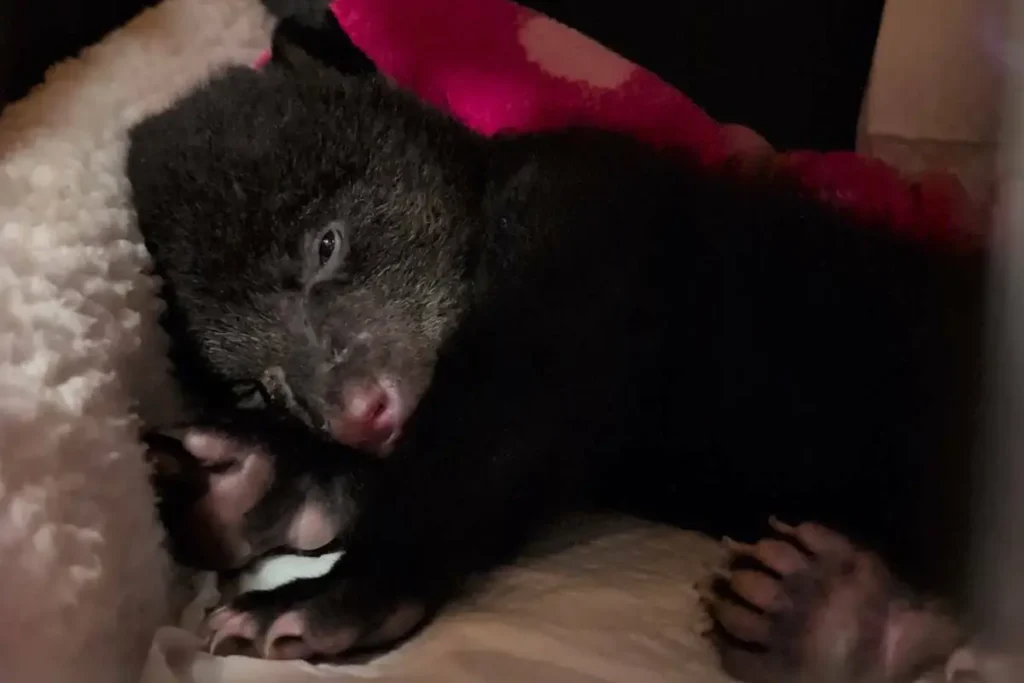
Orphaned Bear Cub Rescued Near Kamloops on World Bear Day
A heartwarming rescue on a symbolically significant day has given a vulnerable black bear cub a second chance at life. On March 24, 2026—internationally recognized as World Bear Day—conservation officers in British Columbia executed a delicate rescue of a tiny, orphaned bear cub found alone and in distress near Heffley Lake, just north of Kamloops.
The operation underscores the critical intersection of human compassion, wildlife expertise, and the broader goals of global bear conservation celebrated on this particular day.
A Cry for Help in the Wilderness
The saga began when local residents near Heffley Lake reported persistent, distressed cries coming from the lakeshore area. Concerned that the sounds were not from a typical forest animal, they alerted the BC Conservation Officer Service (BCCOS). Officers responded promptly, locating the source of the whimpers: a small, underweight black bear cub, estimated to be only a few months old, shivering and alone.
A thorough search of the surrounding area revealed no signs of the cub’s mother. Given the cub’s young age, poor body condition, and the prolonged absence of its mother, officers made the difficult determination that the cub was likely orphaned. Without intervention, it would not survive in the wild.
“Finding a cub this young alone is always a serious situation,” reported one of the attending conservation officers. “Their survival depends entirely on their mother for food and protection. With no mom in sight after an extensive wait and search, we knew we had to step in for this little one’s sake.”
A Delicate Rescue on a Meaningful Date
The rescue itself was a carefully managed operation. Officers safely secured the frightened cub, which was then transported for an immediate veterinary assessment. The timing was poignant, as the rescue unfolded on World Bear Day, an annual event dedicated to raising awareness about all bear species, the threats they face, and the conservation efforts worldwide to protect them.
World Bear Day emphasizes:
- The importance of bear habitats and ecosystems.
- The threats of climate change, habitat fragmentation, and human-wildlife conflict.
- The global efforts in bear research, rehabilitation, and conservation.
The rescue of the Heffley Lake cub served as a real-world, local embodiment of the day’s very purpose: taking direct action to ensure the survival and well-being of bear populations.
From Rescue to Rehabilitation: The Cub’s New Journey
Following the rescue, the cub was taken to a specialized wildlife veterinary facility. The initial exam confirmed the cub was dehydrated, malnourished, and suffering from mild hypothermia. After receiving vital fluids and care, the next step was placement in a professional rehabilitation setting.
The cub has been transferred to one of BC’s licensed wildlife rehabilitation centres, where it will receive around-the-clock care. The goal of rehabilitation is strict: to provide wild animals with the care and skills they need to be returned to their natural habitat without becoming habituated to humans.
The rehabilitation process for an orphaned bear cub is intensive and lengthy:
- Initial Stabilization: Addressing immediate medical needs, providing warmth, and initiating a specialized milk formula diet.
- Growth and Development: The cub will be raised in a quiet, naturalistic enclosure with minimal human contact, often alongside other orphaned cubs to encourage natural bear behaviours.
- Wild Skills Preparation: As it grows, the cub will be offered natural foods like berries, greens, and fish, and given complex environments to explore, fostering the foraging and problem-solving skills essential for survival in the wild.
If all goes well, the plan is for the cub to be released back into a suitable wild habitat in the fall, when it has grown significantly and natural food sources are abundant.
Why Was the Cub Alone? Understanding the Risks
The incident near Heffley Lake prompts an important question: what happened to the cub’s mother? While the exact cause may never be known, conservation officers note several potential dangers bears face in the region, especially in early spring when they first emerge from hibernation.
Common threats to adult bears, which can lead to orphaning of cubs, include:
- Vehicle collisions on highways.
- Legal and illegal hunting activities.
- Defence of life or property (DLP) killings when bears become habituated to human food sources.
- Natural causes, such as disease or predation.
This situation serves as a critical reminder for residents and visitors in bear country to be proactive in preventing conflicts. Securing garbage, removing bird feeders in spring, and managing fruit trees and other attractants are the most effective ways to keep bears wild and safe—and families together.
A Symbol of Hope on World Bear Day
The story of the Heffley Lake cub resonated deeply with the public, merging a local animal rescue with a global message of conservation. On a day meant to celebrate bears, this single act of saving a life highlighted the tangible difference that vigilant citizens and dedicated professionals can make.
Wildlife rehabilitation is a complex, costly, and emotionally demanding field, but successes like this one provide immense motivation. The cub represents not just an individual life saved, but a contribution to the genetic diversity and health of BC’s black bear population.
How You Can Support Bear Conservation
Inspired by this rescue? World Bear Day is an ideal time to reflect on how we can all contribute to a safer future for bears.
- Be Bear Aware: Educate yourself on bear safety and securing attractants around your home or camp. A fed bear is a dead bear.
- Support Rehabilitation: Consider donating to or volunteering with licensed wildlife rehabilitation centres that bear the cost of raising orphaned cubs for months.
- Advocate for Habitat: Support land-use policies and organizations that protect critical wildlife corridors and natural bear habitats from unsustainable development.
- Report Wildlife in Distress: If you see an animal that appears orphaned or injured, do not approach it. Contact the BCCOS RAPP line (Report All Poachers and Polluters) or your local wildlife authority immediately.
The orphaned cub rescued near Kamloops now carries a story of human kindness and a second chance. Its journey from a cold lakeshore to a rehabilitation pen is a powerful testament to the spirit of World Bear Day—a reminder that coexistence is possible and that every individual effort in conservation matters. As this little bear grows stronger, it carries with it the hope for its own wild future and for the enduring place of bears in the landscapes we share.

