
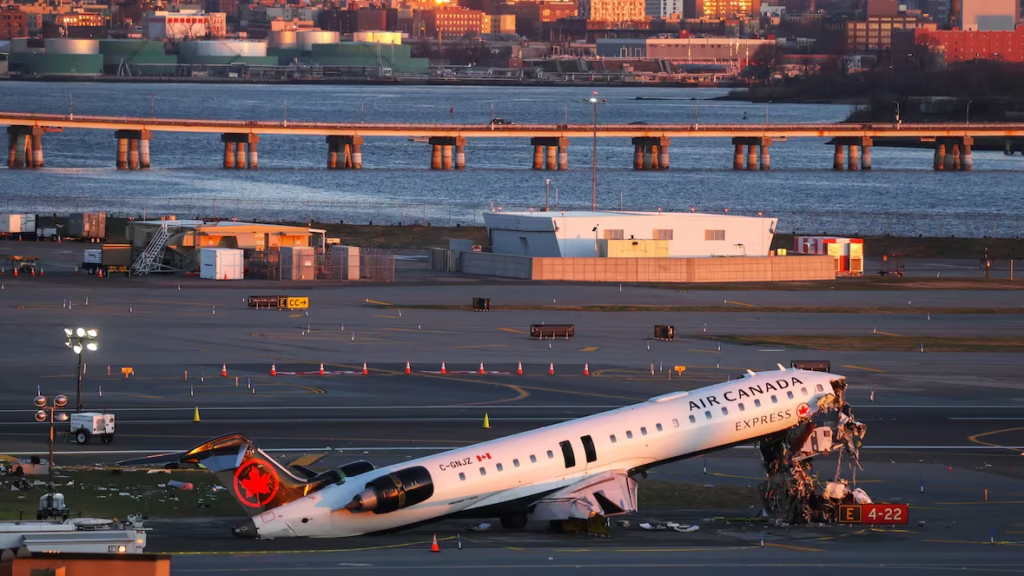
Unraveling the Blame for the Air Canada LaGuardia Airport Crash
On a stormy January night in 2017, an Air Canada Airbus A320 narrowly avoided catastrophe at New York’s LaGuardia Airport. Flight AC624, arriving from Toronto, skidded off the runway, slammed through a fence, and came to a jarring halt on an embankment, its landing gear sheared off and its nose crushed. While miraculously, all 108 passengers and crew survived with only minor injuries, the event sent shockwaves through the aviation community. In the aftermath, a critical question emerged: Who, or what, was to blame for the Air Canada LaGuardia crash?
The subsequent investigation by the U.S. National Transportation Safety Board (NTSB) became a complex exercise in unraveling a chain of events, revealing that blame is rarely a single point of failure but a confluence of factors.
The Immediate Culprit: A Flawed Approach in a “Wicked” Storm
The NTSB’s final report pinpointed the flight crew’s decision-making during the approach as the probable cause. The aircraft was attempting to land during the tail end of a winter storm that had brought snow, ice, and strong winds. The pilots were navigating a “windshear” event—a sudden, dangerous shift in wind speed and direction.
Crucially, the crew continued an unstabilized approach below the airline’s own minimum safe altitude. Instead of executing a standard “go-around” (aborting the landing to circle and try again), they pressed on. The NTSB concluded this was a direct violation of established safety protocols, driven by a desire to land quickly after a long flight and perhaps due to “plan continuation bias”—the psychological tendency to stick with an original plan despite changing conditions.
The Human Factor Under Pressure
The investigation delved deep into human performance:
- Cockpit Resource Management (CRM) Breakdown: Communication between the Captain and First Officer was found to be lacking. Clear, assertive calls about the deteriorating approach were not made.
- Fatigue as a Contributing Element: The crew had been on duty for nearly 13 hours, a factor the NTSB cited as degrading their decision-making capacity and vigilance during the critical final minutes of the flight.
- Over-reliance on Automation: The report suggested the pilots may have been overly dependent on the aircraft’s automated systems, potentially reducing their manual flying proficiency and situational awareness in extreme weather.
Beyond the Cockpit: Systemic and Environmental Factors
While pilot error was central, the NTSB did not place blame solely on the flight deck. The investigation wove a broader tapestry of contributing causes, highlighting how systems and conditions can set the stage for human error.
Air Traffic Control’s Role
The NTSB found that air traffic controllers provided the crew with outdated wind information. The data given was several minutes old and did not reflect the intense, gusting conditions the aircraft was actually encountering during its final descent. This lag in critical weather data deprived the pilots of accurate information needed to make a fully informed decision about continuing the approach.
The Airport and the Storm Itself
LaGuardia’s notorious short runways and proximity to water make it a challenging airport in the best of conditions. That night, the weather was the primary antagonist. The storm had largely passed, but it left behind powerful, erratic winds and a wet runway. The combination created a high-risk landing environment that demanded peak performance from both machine and crew.
Air Canada’s Procedures and Training
The airline’s own policies came under scrutiny. The NTSB questioned whether Air Canada’s training adequately prepared pilots for the specific challenges of a go-around decision during a windshear event at night. Were the procedures for unstable approaches emphasized enough? The investigation implied that corporate safety culture and training rigor are always part of the safety equation.
The Verdict: A Shared Responsibility
So, who was to blame? The NTSB’s findings point to a shared responsibility:
- The Flight Crew for violating stabilized approach criteria and not executing a mandatory go-around.
- Air Traffic Control for failing to provide timely, critical wind updates.
- The Operating Environment, including the severe weather and airport constraints.
- Systemic Factors like pilot fatigue and potential gaps in training emphasis.
This multi-layered conclusion is standard in modern aviation safety. The industry has moved past a simplistic “pilot error” model to adopt a “Swiss Cheese Model” of accident causation. In this model, each layer of defense (training, procedures, ATC, technology) has holes. An accident occurs when the holes in multiple layers momentarily align, allowing a trajectory of failure to pass through. In the case of AC624, holes in crew decision-making, ATC information flow, and environmental management all lined up.
Legacy and Lessons: How Blame Translates to Safety
The true value of an investigation like this is not in assigning punitive blame, but in extracting lessons that make aviation safer for everyone. The Air Canada LaGuardia crash led to tangible changes:
- Enhanced Training: Air Canada and other carriers reinforced training on windshear recovery, unstabilized approach protocols, and the critical importance of the go-around maneuver, especially under fatigue.
- Technology and Procedure Updates: Scrutiny increased on the timeliness of ATC weather dissemination. The incident underscored the need for pilots to cross-check ATC wind info with their own onboard systems.
- Reinforcing a “Just Culture”: The detailed public report serves as a case study for pilots worldwide, fostering an environment where errors are analyzed systemically to prevent recurrence, rather than hidden for fear of reprisal.
The story of Air Canada Flight 624 is ultimately one of resilience—both of the passengers who walked away and of the aviation system itself. By unraveling the complex threads of blame, investigators didn’t just close a file; they strengthened the fabric of flight safety. The crash stands as a stark reminder that in the intricate ballet of modern air travel, vigilance, communication, and the courage to abort a bad plan are the most vital safety features of all.

