Ontario’s 2026 Budget Projects $13.8B Deficit Amid Global Economic Risks
The Government of Ontario has tabled a budget that paints a picture of fiscal caution in an uncertain world. The 2026 financial plan, officially titled the 2026 Ontario Budget: Building a Strong Ontario Together, forecasts a significant deficit of $9.8 billion for the upcoming fiscal year, with a projected increase to $13.8 billion by 2026-27. This forward-looking document cites a complex mix of global economic headwinds and deliberate investments in core public services as the driving forces behind the red ink, while maintaining a long-term path to balance.
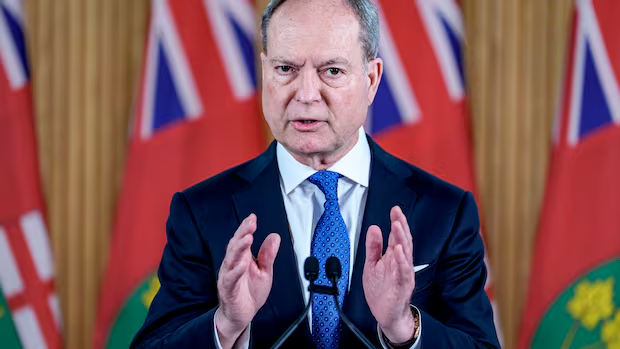
Finance Minister Peter Bethlenfalvy presented the budget as a pragmatic shield against volatility, emphasizing preparedness over austerity. “The world remains uncertain,” he stated, pointing to lingering inflation, high interest rates, and global conflicts. The government’s strategy is to continue investing in healthcare, infrastructure, and economic growth while building “rainy day” contingency funds to cushion future shocks.
A Deeper Dive into the Deficit Drivers
The projected rise in the deficit from $9.8 billion to $13.8 billion over the forecast period is not attributed to a single cause, but rather a confluence of strategic and reactive factors.
1. Global Economic Pressures and Slower Growth
The budget is fundamentally shaped by a downgraded economic outlook. Key assumptions include:
- Lower Real GDP Growth: Forecasts for economic expansion have been tempered, directly reducing government revenue projections from taxes and other sources.
- Persistently High Interest Rates: The cost of servicing Ontario’s substantial debt—which is projected to grow—has skyrocketed. Debt interest charges are now one of the largest line items in the budget, diverting funds from other programs.
- Ongoing Inflation: While cooling, the higher cost of goods and services increases the price tag of government contracts, procurement, and service delivery.
2. Sustained Investments in Public Services
The government insists that cutting core services during difficult times is not its chosen path. Major spending commitments include:
- Healthcare Expansion: Billions are earmarked to increase capacity in hospitals, fund more surgeries, and hire additional healthcare workers, responding to systemic pressures.
- Infrastructure Pipeline: The budget reaffirms commitments to major transit projects (like subway expansions) and highway construction, arguing these are critical for long-term growth despite high upfront costs.
- Support for Individuals and Families: Measures like the gas tax cut extension and targeted tax credits are maintained, aimed at providing cost-of-living relief.
3. Building Fiscal Buffers
A notable feature of the budget is the enhancement of contingency funds. The government is setting aside an additional $5.4 billion over three years in a newly established “Fund to Build Ontario.” This, combined with the existing contingency fund, is designed to manage risks without resorting to sudden spending cuts or tax hikes if conditions worsen.
Key Spending Priorities and Initiatives
Beyond the deficit figures, the budget outlines where taxpayer money will be directed. Several key pillars form the heart of the government’s spending plan.
Healthcare: The Top Priority
The healthcare system receives the lion’s share of new operational funding. Initiatives focus on:
- Reducing wait times for surgeries and diagnostic scans.
- Expanding home care and long-term care capacity.
- Investing in mental health services and addiction treatment.
- Recruiting and retaining nurses, doctors, and personal support workers.
Building Roads, Transit, and Homes
The government is tying economic productivity to physical infrastructure. The budget promises to:
- Continue construction on the controversial Highway 413 and Bradford Bypass.
- Advance major transit projects in the Greater Toronto Area.
- Fund municipal infrastructure to support the goal of building 1.5 million new homes by 2031.
Economic and Workforce Development
To foster a competitive business environment, the plan includes:
- Further reductions to the provincial business tax rate for small corporations.
- Significant investments in training and skills development, particularly in the skilled trades.
- Funding to attract new investments in automotive manufacturing (especially electric vehicles) and critical minerals.
Criticism and Opposition Response
The official opposition and independent fiscal watchdogs have raised serious concerns. Critics argue the government is making a political choice to run high deficits by prioritizing expensive infrastructure projects and avoiding revenue-increasing measures. The Financial Accountability Office (FAO) of Ontario has previously noted that the province’s spending plans are based on historically low program spending growth, which may be difficult to achieve without impacting services.
The NDP and Liberal finance critics have lambasted the budget as “irresponsible” and a “betrayal” of future generations, highlighting the growing debt burden. They contend that the government is underestimating the structural nature of the deficit and failing to adequately invest in immediate crises in education and public health.
The Long Road to Balance
Despite the near-term deficits, the government’s fiscal plan still projects a return to a balanced budget—but the timeline has been pushed further into the future. The current path aims for balance by 2029-30, a year later than previously forecasted. This goal is highly dependent on the province’s economic assumptions holding true. Any further economic slowdown, new global crisis, or spending overruns on major projects could easily derail this timeline and necessitate deeper deficits or unplanned austerity.
Conclusion: A Budget of Calculated Risk
Ontario’s 2026 budget is a document of calculated risks. It chooses to absorb the shock of global uncertainty and high interest rates through increased deficits rather than sharp spending reductions. The government is betting that its sustained investments in healthcare, infrastructure, and industry will generate the economic growth needed to eventually balance the books.
The success of this strategy hinges on two volatile factors: the unpredictable global economy and the government’s own ability to control spending on its ambitious projects. For Ontarians, the budget signals a period of sustained government investment in key areas, but with the shadow of a growing debt that will demand attention in the years to come. The true test will be whether this spending today translates into the promised stronger, more resilient Ontario of tomorrow.