Iranian Drone Attack Injures US Troops at Saudi Arabian Base
In a stark escalation of regional tensions, a military base in Saudi Arabia hosting American personnel came under direct attack, resulting in multiple U.S. troop injuries. The incident, attributed to an Iranian-backed drone strike, has sent shockwaves through international diplomatic and military circles, highlighting the volatile security landscape in the Middle East.
Details of the Attack on the Saudi Military Installation
The attack targeted the King Abdulaziz Air Base, located near the Dhahran region in eastern Saudi Arabia. This facility is a critical hub for the U.S.-led international coalition operating in the region. According to initial reports from U.S. Central Command (CENTCOM), the assault involved at least one explosive-laden drone, which successfully breached the base’s defenses.
The consequences were immediate and severe:
- Personnel Casualties: At least ten American service members were wounded in the blast. While all injuries are reported as non-life-threatening, the psychological impact and the breach of security are significant.
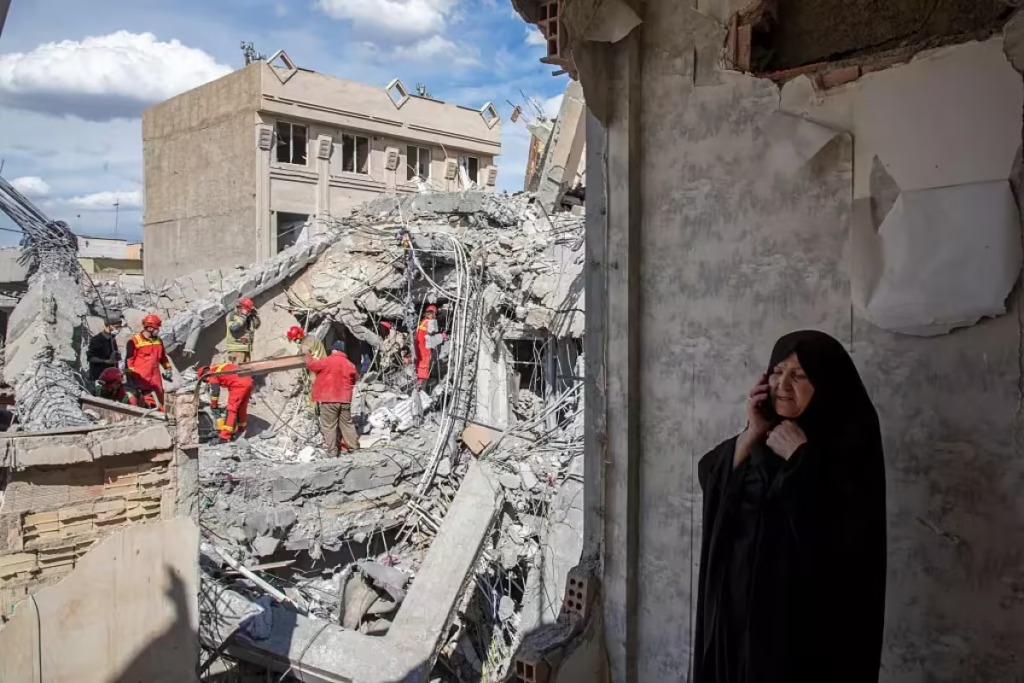
- Material Damage: The drone strike caused substantial physical damage to the airbase’s infrastructure. Preliminary assessments indicate that several aircraft, including U.S. military planes, sustained damage, potentially affecting operational readiness.
This event marks one of the most serious direct attacks on U.S. forces in the region in recent months, shifting the conflict from proxy engagements to a more direct confrontation.
The Iranian Connection and Regional Proxy Warfare
U.S. and Saudi intelligence officials were quick to point the finger at Iran. The attack is assessed to have been carried out by Iranian-backed militias operating in the region, part of a network of proxy forces Tehran supports across the Middle East.
A Pattern of Provocation
This incident is not isolated. It fits into a well-established pattern of Iranian-aligned groups targeting U.S. and allied interests. These groups, often operating in Iraq, Syria, and Yemen, utilize increasingly sophisticated drones and missiles supplied by Iran. The attack on King Abdulaziz Air Base demonstrates a concerning evolution in both the capability and audacity of these forces, enabling them to strike high-value targets deep within defended territory.
The use of drones, or Unmanned Aerial Vehicles (UAVs), is a particularly troubling tactic. They are relatively low-cost, difficult to detect with traditional radar, and can be launched from remote locations, providing plausible deniability for state sponsors like Iran.
Immediate Aftermath and Strategic Implications
In the wake of the attack, the U.S. military has heightened its force protection posture across the region. The Biden administration faces mounting pressure to formulate a decisive response that deters future aggression without spiraling into a wider war.
The strategic implications are profound:
- Security of U.S. Troops: The attack raises urgent questions about the adequacy of air defense systems at allied bases and the need for enhanced counter-drone technology.
- U.S.-Saudi Relations: The incident underscores the shared threat faced by the U.S. and Saudi Arabia, potentially recalibrating a relationship that has seen recent strain over human rights and oil production.
- Nuclear Negotiations: This aggression casts a long shadow over the fragile, stalled negotiations to revive the Iran nuclear deal (JCPOA). It hardens the position of critics who argue Iran cannot be trusted to engage in good faith while actively targeting American personnel.
Historical Context: A Long-Simmering Conflict
The tensions between the U.S., its Gulf allies, and Iran have deep roots. The rivalry is a complex web of geopolitical, religious, and ideological competition for dominance in the Middle East. Saudi Arabia and Iran, in particular, are locked in a cold war, supporting opposing sides in conflicts from Yemen to Syria.
The U.S. military presence in Saudi Arabia, which was significantly reduced after the 2003 Iraq war but has fluctuated since, remains a primary irritant for Tehran. Iran views the American footprint on the Arabian Peninsula as an existential threat and a form of encirclement. Attacks like this one are seen as a method of imposing a cost on that presence and testing American resolve.
Looking Forward: Deterrence and Diplomacy
The path forward is fraught with risk. The central challenge for Washington and its partners is to craft a response that is proportional yet forceful enough to re-establish deterrence. Options range from targeted strikes on Iranian proxy facilities to cyber operations, alongside diplomatic efforts to isolate Iran internationally.
However, any military action carries the inherent danger of retaliation and escalation. The region remains a tinderbox, where a single incident can ignite a broader conflagration. Simultaneously, completely abandoning diplomatic channels could close off the only path to de-escalation in the long term.
The Human and Operational Cost
Beyond the geopolitics, this attack is a sobering reminder of the human cost of persistent conflict. The ten injured troops join a long list of service members who have been wounded in what is often termed a “shadow war.” Furthermore, the damage to aircraft represents a multi-million dollar loss and a temporary degradation of mission capability, affecting not just U.S. operations but also the collective security of the region.
The Iranian drone attack on the Saudi base is a significant and dangerous milestone. It proves that Iranian-backed forces have the reach and precision to hit sensitive targets, directly injuring American personnel. As investigations continue and leaders deliberate on a response, the event serves as a clear signal that the volatile status quo in the Middle East is unsustainable. The world now watches to see whether this attack will be a catalyst for a dangerous new cycle of violence or a grim wake-up call that finally steers the region toward a more stable footing.