
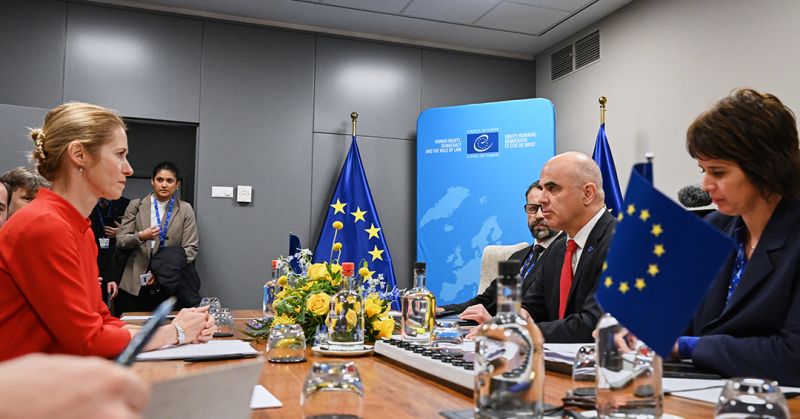
Europe’s Global Role: Navigating a Fractured World Order
The tectonic plates of global politics are shifting. The post-Cold War era of relative stability and predictable alliances has given way to a new, more volatile landscape defined by strategic competition, regional conflicts, and a contest over the very principles that govern international relations. In this emerging “world dis-order,” the European Union finds itself at a critical juncture. No longer merely a regional economic power, Europe is being called upon—and is calling upon itself—to define and assert a coherent strategic role. The question is no longer if Europe should act, but how it can effectively navigate this fractured reality to protect its interests, uphold its values, and ensure its security.
The Gathering Storm: A World in Flux
Europe’s external environment has deteriorated rapidly. The foundational pillars of the liberal international order it helped build are under sustained assault.
Authoritarian Assertiveness and Strategic Rivalry
The most direct challenge comes from resurgent authoritarian powers. Russia’s full-scale invasion of Ukraine marked a definitive return to imperial aggression and a blatant violation of the UN Charter, creating a protracted war on Europe’s doorstep. Simultaneously, China’s rise presents a complex, long-term strategic challenge, combining economic interdependence with systemic rivalry and ambitions to reshape global norms. This dual-pressure environment forces Europe to simultaneously manage an immediate military threat and a long-term geopolitical and economic rebalancing.
The Erosion of Transatlantic Certainty
For decades, the transatlantic alliance with the United States was the bedrock of European security and foreign policy. Today, that certainty is diminished. While support for Ukraine has shown remarkable unity, political volatility in the U.S. raises questions about the long-term reliability of American commitments. Europe must now prepare for a future where it may need to take primary responsibility for its own defense and diplomatic weight, a concept known as “strategic autonomy.”
Global Fragmentation and the “Global South”
Beyond great power politics, the world is fragmenting. Many nations in Africa, Asia, and Latin America—often collectively referred to as the “Global South”—are refusing to take sides in what they see as a renewed Cold War. They prioritize national development, sovereignty, and a restructuring of global institutions they view as outdated and unfair. For Europe, this means its appeals based on a “rules-based order” often fall on skeptical ears, requiring a new diplomacy of engagement, partnership, and tangible benefit.
The European Response: Between Ambition and Reality
Confronted with these multidimensional challenges, the EU has begun a profound, if sometimes halting, transformation from a soft power project into a geopolitical actor.
The Pillars of a New Strategic Posture
Europe’s response is coalescing around several key pillars:
- Security and Defence: The war in Ukraine has been a wake-up call. Initiatives like the European Peace Facility (funding lethal aid), the Strategic Compass plan, and increased defence spending mark a significant shift. The goal is not to replace NATO but to build a credible European pillar within it.
- Economic Resilience and “De-risking”: The EU is actively working to reduce critical dependencies, particularly on China. This involves diversifying supply chains, boosting its own clean tech and digital industries, and screening foreign investments. The focus is on de-risking, not decoupling, to protect economic security without isolating itself.
- Diplomatic Mobilization: Europe is engaging in a global diplomatic offensive, from the Indo-Pacific to Latin America, to build broader coalitions on issues like climate change, digital governance, and upholding international law. This is essential to counter isolation and demonstrate that its vision has global relevance.
The Persistent Internal Divides
Despite this progress, formidable internal obstacles remain. Divergent national interests among member states can paralyze decision-making, especially on issues like enlargement or China policy. The need for unanimity in foreign policy remains a significant constraint. Furthermore, there is an ongoing tension between the imperative of deeper integration (for strength) and the political resistance to ceding more national sovereignty.
Charting the Path Forward: A Strategy for Influence
For Europe to be a successful navigator of global disorder, it must move beyond reactive crisis management and embrace a proactive, long-term strategy.
From “Moral Power” to “Smart Power”
Europe’s traditional strength has been its normative power—the appeal of its model of integration, democracy, and social market economy. In a more contested world, it must learn to couple this with harder tools of statecraft. This means:
- Leveraging its massive single market as a tool of geopolitical influence through trade agreements and standards-setting.
- Developing faster, more flexible decision-making processes for foreign policy.
- Investing seriously in capabilities that project power: defence, intelligence, cyber, and strategic communications.
Prioritizing Credible Partnerships
Europe must approach the “Global South” not as a bloc to be won over, but as a mosaic of diverse partners. This requires:
- Moving beyond a donor-recipient mindset to one of mutual investment and joint ventures, particularly in green energy and infrastructure.
- Listening to concerns about historical inequity and engaging sincerely in reform of institutions like the World Bank and IMF.
- Offering a concrete, positive agenda focused on development, climate finance, and health security that provides a compelling alternative to other powers.
Securing the Home Front: Unity as the Ultimate Asset
Ultimately, Europe’s greatest strength—and its most pressing challenge—is its own unity. A fragmented Europe is irrelevant on the world stage; a united one is indispensable. This means:
- Continuing to support Ukraine robustly, as its fate is inextricably linked to European security.
- Managing enlargement carefully to strengthen, not weaken, the Union.
- Fostering a shared strategic culture that allows Europeans to think and act cohesively in times of crisis.
The fractured world order presents not just a threat, but a clarifying moment for the European project. The era of relying on others to set the agenda and guarantee security is over. By decisively strengthening its own capacity, engaging the world with a more pragmatic and partnership-oriented diplomacy, and relentlessly pursuing greater internal unity, Europe can evolve from being a victim of global shifts to a central architect of a new, more stable equilibrium. The journey from “dis-order” to a renewed order will be long and fraught, but it is a journey Europe can no longer afford to postpone. Its global role, and indeed its future prosperity and security, depend on the choices it makes today.

