
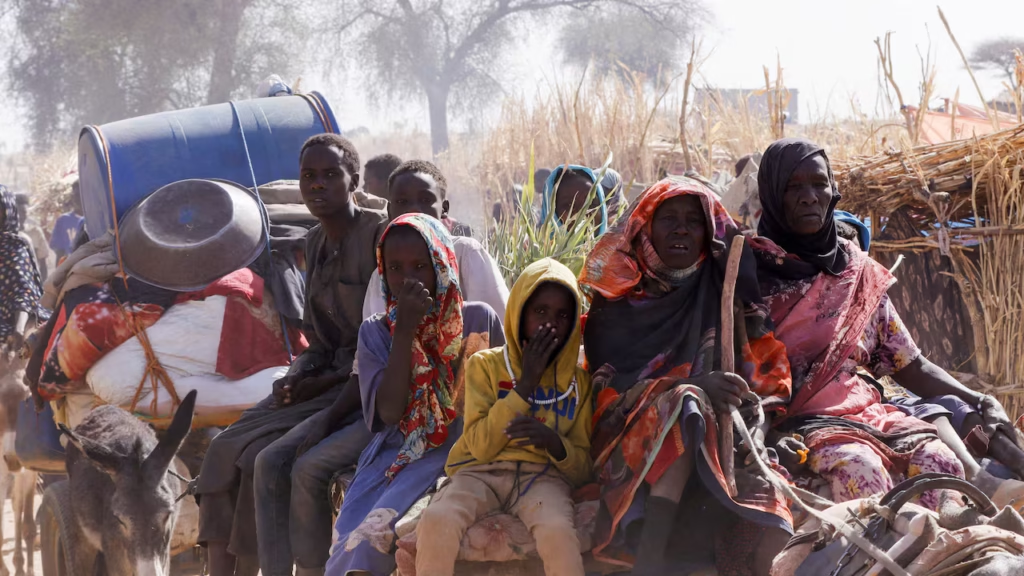
Sudan’s Deepening Famine Crisis Reaches Critical Three-Year Mark
The world is on the verge of witnessing a catastrophe of historic proportions. As the civil war in Sudan grinds past its third devastating year, a grim milestone is being crossed not in timelines, but in empty stomachs and fading hopes. This is no longer just a conflict; it is the epicenter of one of the most severe hunger crises on the planet, a man-made disaster hurtling toward full-blown famine.
In a recent and urgent interview, Andy Harrington, Executive Director of the Canadian Foodgrains Bank, delivered a warning that must serve as a global wake-up call. The message is unambiguous: Sudan is at the brink. Without a dramatic and immediate surge in humanitarian response, including both funding and access, the world will watch as mass starvation claims countless lives.
While international headlines may flutter to other crises, the brutal war between the Sudanese Armed Forces and the Rapid Support Forces has systematically unraveled a nation. The result is a humanitarian nightmare of unimaginable scale, where the most basic human right—the right to food—has been weaponized and stripped away from millions.
The Unfolding Catastrophe: A Perfect Storm of Suffering
The famine threatening Sudan is not a sudden event but the cruel culmination of three years of destruction. It is a complex emergency where multiple failures converge to create what aid workers call a “perfect storm” for starvation.
The Three Pillars of Starvation
To understand the depth of this crisis, one must look at the interconnected pillars propping it up:
- Economic and Infrastructure Collapse: The war has shattered Sudan’s economy and decimated critical infrastructure. Supply chains are in ruins, markets are dysfunctional, and inflation has soared. The cost of a simple food basket has skyrocketed, placing even the most basic staples far out of reach for families who have lost everything.
- Unprecedented Displacement: Over 10 million people have been torn from their homes—the largest displacement crisis in the world. These are farmers who can no longer till their land, merchants who have lost their shops, and families whose livelihoods have vanished overnight. Many are now trapped in active conflict zones, completely isolated from any form of aid.
- The Crippling of Humanitarian Aid: The lifeline of international assistance is being severed. Aid convoys face relentless bureaucratic impediments, deliberate blockades, and outright looting. Warehouses sit empty, and frontline workers operate at immense personal risk. Compounding this physical blockade is a crippling financial one: the global humanitarian appeal for Sudan remains severely and catastrophically underfunded.
This triad of collapse—no economy, no home, and no aid—creates an inescapable trap for the civilian population, with children, pregnant women, and the elderly facing the gravest risks.
Beyond Statistics: The Human Face of the Crisis
Andy Harrington’s plea moves beyond the staggering numbers to highlight the profound human anguish. This crisis is etched in the faces of mothers who must watch their children weaken from hunger, unsure of where the next meal will come from. It is reflected in the stories of families surviving on one scant meal per day, often nothing more than leaves or boiled water.
This is a generation whose future is being stolen. Malnutrition in early childhood causes irreversible physical and cognitive damage, dooming young lives long before they’ve truly begun. Harrington emphasizes a critical, painful point: this famine is not caused by drought or crop failure. It is entirely man-made, a direct and foreseeable consequence of continued warfare and the political failure to prioritize human life.
A Path Forward from the Brink: What Must Be Done
The situation is dire, but it is not hopeless. Famine is a process, not an event, and that process can still be halted. The international community, donor nations, and the global public have both the capacity and the moral responsibility to act. The Canadian Foodgrains Bank and other organizations on the ground outline a clear, urgent path forward.
Immediate Actions to Prevent Mass Starvation
- Surge in Funding and Fulfillment of Appeals: Donor governments must move beyond statements of concern and immediately release funds to meet and exceed the UN’s humanitarian appeal for Sudan. The current funding gap is not a budgetary line item; it is measured in lives lost. Every day of delay has fatal consequences.
- Guarantee Safe and Unimpeded Humanitarian Access: All parties to the conflict must uphold their obligations under international humanitarian law. This means establishing binding agreements to allow aid to flow across frontlines and borders—without conditions, without interference, and without delay. Corridors for humanitarian relief must be opened and protected.
- Sustain Global Focus and Political Pressure: The world cannot look away. Sustained media coverage, public awareness campaigns, and diplomatic pressure are essential to keep Sudan’ crisis at the forefront of the international agenda. Silence is complicity.
- Empower Frontline Organizations: Local and international NGOs already embedded in communities have the knowledge and networks to deliver aid effectively. They require robust, flexible funding to provide not just emergency food and nutrition supplies, but also seeds and tools to help families regain their agricultural self-sufficiency when security allows.
How You Can Help Make a Difference
While the scale of the crisis can feel overwhelming, collective public action creates powerful ripples of change.
- Educate and Advocate: Share information from trusted humanitarian sources. Contact your political representatives and urge them to prioritize funding and diplomatic efforts for Sudan.
- Support Reputable Humanitarian Agencies: Organizations like the Canadian Foodgrains Bank and their partners are on the ground, working under extremely difficult conditions. Donations directly fund life-saving food, nutritional supplements, and emergency support.
- Lend Your Voice: Use social media to amplify the voices of Sudanese people and the aid organizations serving them. Help break the cycle of neglect by keeping the story alive.
A Final, Urgent Call
The third anniversary of Sudan’s war is more than a somber commemoration; it is the final warning siren. We have the knowledge and the means to prevent a historic famine. What we lack is time.
Andy Harrington’s message is a sobering reminder of our shared humanity. The coming weeks and months will determine whether the international community heeded this warning or stood by as catastrophe unfolded. The choice is stark: act now with courage and conviction, or bear witness to a preventable tragedy. For the millions facing starvation in Sudan, hope is not an abstract concept—it is a shipment of food, an open border crossing, and the world finally deciding that their lives matter.

