
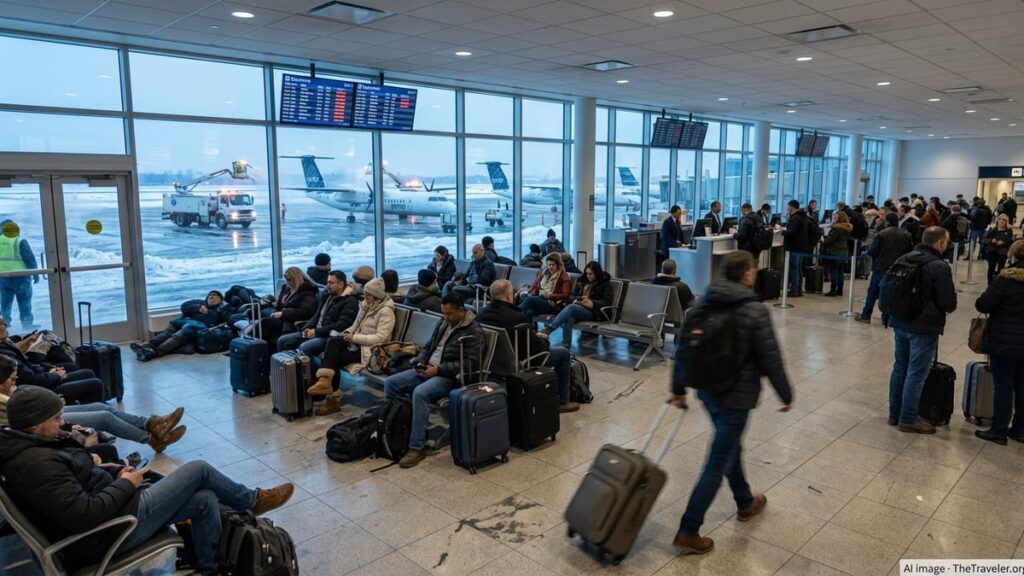
Major Flight Disruptions Hit Toronto’s Billy Bishop Airport
Travelers flying through the heart of Toronto faced significant hurdles this week as a wave of flight delays and cancellations swept through Billy Bishop Toronto City Airport (YTZ). The downtown airport, a crucial hub for regional business and leisure travel, experienced widespread operational challenges primarily affecting its two major carriers, Porter Airlines and Jazz Aviation. The disruptions left passengers stranded and underscored the vulnerability of regional air networks to cascading logistical issues.
A Snapshot of the Disruption
The scale of the disruption was substantial, with data from flight tracking services revealing a troubling pattern over a 24-hour period. In total, 43 flights were delayed and 24 flights were cancelled, creating a domino effect that impacted the airport’s typically efficient schedule. These interruptions were not isolated to a single carrier or route but created a network-wide ripple, frustrating travelers with last-minute changes and uncertainty.
Key Routes Impacted by the Setbacks
The cancellations and delays concentrated on some of the airport’s busiest and most important corridors. Travelers on these routes experienced the brunt of the operational meltdown:
- Toronto to Montreal (YUL): A flagship business route connecting Canada’s two largest economic centers saw multiple cancellations, disrupting a high-frequency shuttle service vital for day-trippers and corporate travel.
- Toronto to Newark (EWR): This key cross-border connection to the New York City area was heavily affected, complicating travel plans for both tourists and professionals with links to the United States.
- Toronto to Ottawa (YOW): The essential link between the nation’s capital and its financial capital faced significant delays, impacting government officials, lobbyists, and families alike.
These core routes form the backbone of Billy Bishop’s network, and their simultaneous disruption highlighted a systemic issue rather than a localized problem.
Unpacking the Causes: What Led to the Chaos?
While airport officials and airlines have been cautious about citing a single definitive cause, industry analysts point to a confluence of factors that likely created a perfect storm for operations. Billy Bishop’s unique position as an urban, island airport also presents specific challenges that can amplify disruptions.
1. Aircraft and Crew Resource Shortages
The most probable primary cause revolves around resource availability. The aviation industry across North America continues to grapple with the lingering effects of pandemic-era downsizing, struggling to ramp up crew staffing and maintain aircraft at pre-pandemic levels. A single mechanical issue with one of Porter’s De Havilland Dash-8-400s or Jazz’s regional jets, combined with a tightly optimized crew schedule, can instantly trigger multiple cancellations as crews time out and aircraft are out of position.
2. Air Traffic Control and Weather Nuances
Even without major storms, localized weather conditions like low visibility, high winds, or low cloud cover can severely impact Billy Bishop. The airport’s short runway and proximity to downtown skyscrapers require precise visual approaches. Any degradation in conditions can lead to flow controls, ground stops, or the implementation of lower arrival rates, causing delays that back up throughout the day. Congestion in the broader Northeastern North American airspace can also contribute to holding patterns and delays.
3. The Ripple Effect in a Hub System
Porter Airlines operates a hub-and-spoke model from Billy Bishop. When an aircraft scheduled for a Montreal flight is grounded in Ottawa, or a crew is stranded in Newark, the disruption doesn’t end with that single flight. It creates a downstream “ripple effect” that can cancel or delay subsequent flights that were dependent on that specific aircraft and crew. This systemic vulnerability was on full display, as issues on one route quickly propagated across the network.
Passenger Fallout and Airline Response
For passengers, the disruptions translated into real-world stress and inconvenience. Social media channels were flooded with accounts of missed meetings, ruined vacation plans, and long waits for rebooking. The compact size of Billy Bishop’s terminal, while usually a benefit, can become crowded and uncomfortable during major irregular operations.
Both Porter Airlines and Jazz Aviation, which operates flights for Air Canada Express from YTZ, activated their customer service protocols. Affected passengers were offered:
- Rebooking on the next available flights.
- Refunds or travel vouchers in cases of significant delays or cancellations.
- Meal vouchers and hotel accommodations for those facing overnight delays, subject to availability and the specific circumstances of the disruption.
However, with flights often operating at high capacity, finding immediate alternative seating proved difficult for many.
Broader Implications for Regional Air Travel
This incident at Billy Bishop is not an isolated event but part of a larger pattern of fragility in the post-pandemic aviation ecosystem. It raises critical questions about the resilience of regional networks that rely on high-frequency, point-to-point service with limited aircraft fleets.
The Reliance on Billy Bishop
For the downtown Toronto core, Billy Bishop is more than just an airport; it’s a critical piece of transportation infrastructure. It saves hours of commute time to and from Pearson International Airport for countless business travelers. When it falters, the alternatives—driving to Mississauga or navigating Union Station for rail travel—are often not feasible last-minute solutions. This event highlights the community’s dependence on its consistent operation.
A Call for Increased Resilience
To mitigate future disruptions, airlines and the airport authority may need to invest in greater operational buffers. This could include:
- Increased spare aircraft availability within the regional fleet to cover unscheduled maintenance.
- More flexible crew scheduling and potentially larger pilot and flight attendant reserves.
- Enhanced passenger communication systems to provide real-time updates and rebooking options via mobile apps before travelers even reach the terminal.
Looking Ahead: Navigating Future Travel from YTZ
For travelers planning to use Billy Bishop Airport, this week’s disruptions serve as a valuable, if frustrating, reminder. While the airport is renowned for its convenience, passengers can take proactive steps to protect their travel plans:
- Book Morning Flights: The first flights of the day are less susceptible to the cumulative ripple effect of delays.
- Consider Travel Insurance: For crucial business trips or expensive vacations, insurance that covers trip interruption can provide peace of mind and financial recourse.
- Monitor Flight Status Closely: Use airline apps for push notifications, as they often provide information before general flight tracking websites.
- Have a Contingency Plan: Know the alternative flight options, both from Billy Bishop and from Toronto Pearson, for your route.
The recent troubles at Billy Bishop Toronto City Airport are a stark reminder that even the most efficient systems are not immune to breakdown. As Porter Airlines and Jazz Aviation work to restore full reliability, the focus will be on rebuilding passenger trust and reinforcing the operational foundations that make this unique urban airport an indispensable asset for Toronto and the broader region. The path to recovery will depend on transparent communication from the airlines and a renewed commitment to the resilience that modern travelers demand.