
Myanmar Junta’s Prisoner Amnesty Frees Former President Win Myint
In a move scrutinized by the international community, Myanmar’s military junta has released former President Win Myint as part of a mass prisoner amnesty. The release, marking a rare concession from the ruling State Administration Council (SAC), comes amidst ongoing political turmoil and widespread conflict following the February 2021 coup. While framed by the junta as an act of clemency, analysts view the amnesty as a calculated political gesture with complex domestic and international implications.
A Surprise Release Amidst Ongoing Repression
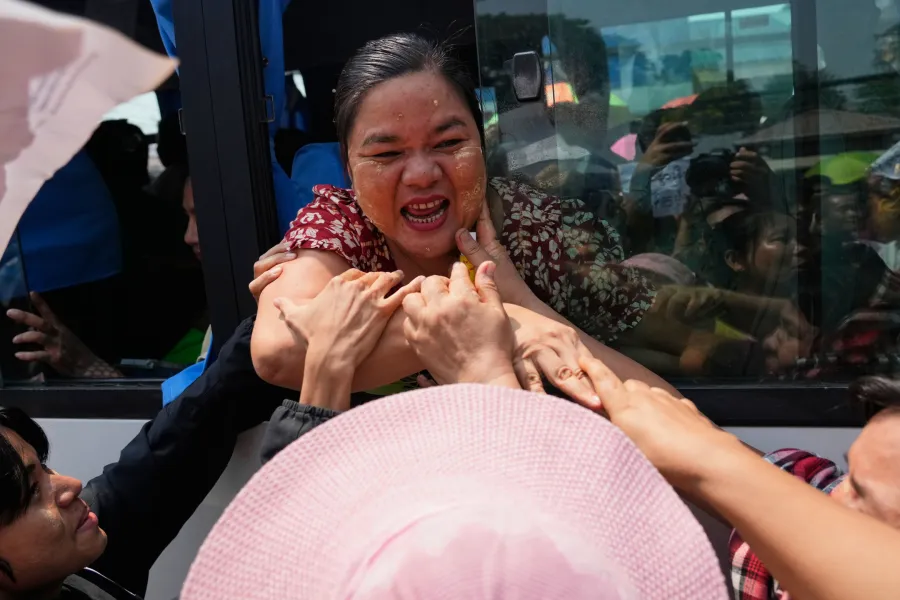
On April 17, 2024, Myanmar’s military authorities announced the pardon and release of over 3,000 prisoners to mark the traditional New Year holiday of Thingyan. Among them was the 72-year-old Win Myint, who served as the country’s president under the ousted National League for Democracy (NLD) government led by Aung San Suu Kyi.
Win Myint had been detained since the coup and was later sentenced to a total of eight years in prison on what are widely considered to be politically motivated charges, including incitement and violating natural disaster management laws during the COVID-19 pandemic. His release, alongside that of former Shan State Chief Minister Aung Kyi, represents the most high-profile prisoner discharge since the military seized power.
However, the amnesty notably did not include Aung San Suu Kyi, who remains under house arrest and is serving a 27-year sentence on a litany of convictions. This selective release has led observers to question the junta’s true motives.
Decoding the Junta’s Motives: Gesture or Strategy?
The military’s decision to free a significant number of prisoners, including a prominent political figure, is not an act of simple benevolence. Experts point to several potential strategic calculations behind the amnesty:
1. Easing International Pressure
Myanmar’s junta faces intense diplomatic isolation and crippling economic sanctions from Western nations and some Asian partners. By releasing a former president, the SAC may be attempting to project an image of moderation and create a talking point for countries advocating for engagement, potentially seeking to fracture the unified international front against its rule.
2. A Domestic Political Maneuver
Internally, the military is grappling with a fierce and expanding armed resistance from People’s Defense Forces (PDFs) and established ethnic revolutionary organizations. The amnesty could be a tactic to:
- Create a minor distraction from the regime’s severe human rights record and battlefield losses.
- Appear conciliatory to certain segments of the population weary of conflict, without making any substantive political concessions.
- Test the public and political response to potential, limited dialogue in the future.
3. The Significance of Timing
The release coincided with the Thingyan holiday, a period of reflection and renewal. By tying the amnesty to a cultural tradition, the junta seeks to frame it within a narrative of national unity and compassion, attempting to soften its authoritarian image. Furthermore, it comes just weeks after the military instituted a conscription law, which sparked public fear and evasion, making a “goodwill” gesture politically expedient.
The Broader Context: Selective Justice in a Nation in Crisis
While the release of thousands is a positive development for those individuals and their families, it must be viewed against a backdrop of systematic repression. Since the coup, Myanmar’s military has arrested over 26,000 people on political grounds. According to local monitoring groups, nearly 4,000 civilians have been killed by security forces, and the country has descended into a civil war.
The amnesty, therefore, feels like a drop in an ocean of injustice. Human rights organizations were quick to highlight the discrepancy.
- Political Prisoners Remain: Despite this release, an estimated 20,000 political prisoners are believed to still be detained in horrific conditions across Myanmar’s prison system.
- Aung San Suu Kyi Still Held: The continued detention of the NLD’s leader and figurehead of democracy signals that the junta is unwilling to address the core political crisis.
- Ongoing Arrests: Reports indicate that arbitrary arrests of activists, journalists, and civilians suspected of opposing the regime continue daily, often outpacing release figures.
This creates a revolving door of repression, where amnesties provide temporary relief but do not alter the underlying structure of state-sanctioned violence.
Reactions and the Path Forward
The international reaction has been cautiously skeptical. While welcoming any prisoner release, governments and rights groups have uniformly called for the unconditional freedom of all political detainees and a genuine, inclusive dialogue to end the violence.
Within Myanmar, reactions are mixed. For the families of those freed, the amnesty brings immense relief. However, for the broader pro-democracy movement and resistance forces, it is seen as a shallow tactic that does not merit negotiation or compromise. The fundamental demand remains the restoration of civilian government and accountability for the military’s atrocities.
What Does Win Myint’s Freedom Actually Mean?
The former president’s release conditions remain unclear. It is unknown if he faces any travel restrictions, surveillance, or limitations on his political activities. His health, reportedly frail after years in detention, is also a concern. His future role, if any, is uncertain. He could become a symbolic figure or a potential intermediary in any future, however unlikely, talks. More probably, his release is intended to remove a potential martyr from custody while keeping the primary leadership of the NLD effectively neutralized.
Conclusion: Amnesty as a Tactical Ploy, Not a Turning Point
The prisoner amnesty in Myanmar, culminating in the release of former President Win Myint, is a significant event but not a turning point. It is a strategic move by an embattled junta seeking to manage its pariah status and alleviate some domestic pressure without addressing the root causes of the conflict.
The true measure of change in Myanmar will not be in holiday amnesties, but in the unconditional release of Aung San Suu Kyi and all political prisoners, the cessation of violence against civilians, and meaningful steps toward a political solution that respects the will of the people. Until then, the release of Win Myint stands as a poignant yet limited gesture in a nation still desperately struggling for its future. The world must look beyond the headline of this amnesty and maintain pressure for a comprehensive and just resolution to Myanmar’s profound crisis.

