
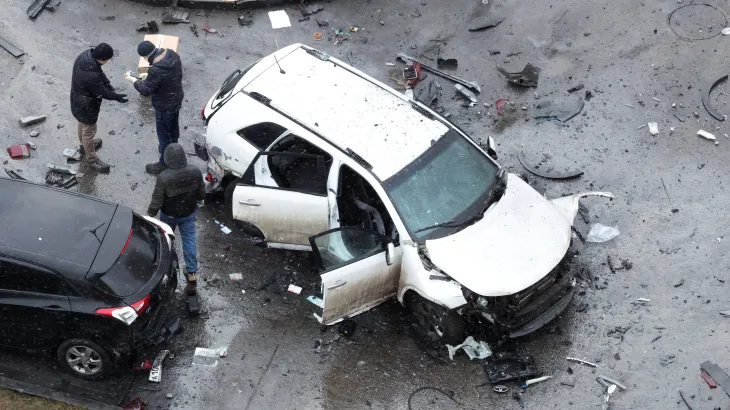
Ukraine Bombing Investigation Points to Russian State Involvement
The aftermath of a devastating attack in Kyiv has been shrouded in grief and smoke, but a clear, chilling picture is now emerging from the investigative rubble. International probes into the recent mass-casualty bombing in Ukraine’s capital are converging on a singular, grave conclusion: the operation bears the direct fingerprints of the Russian state. This isn’t merely the work of a rogue militia or an isolated terrorist cell; evidence suggests a coordinated act of aggression planned and executed with the resources and sophistication of a nation-state.
As Ukrainian authorities work tirelessly alongside international agencies, a narrative of premeditated terror is coming into sharp focus, challenging the Kremlin’s initial dismissals and pointing to a dangerous escalation in tactics.
A Trail of Evidence Leading East
The investigation, described by security officials as one of the most complex since the full-scale invasion began, has pieced together a damning chain of evidence. Forensic analysis of the explosive materials, communication intercepts, and the precise, military-grade execution of the attack all point toward a sponsor with significant logistical and intelligence capabilities.
Forensic Fingerprints and Technical Signatures
At the heart of the case is the forensic evidence. Bomb disposal experts and international investigators have identified components and construction methods that are:
- Consistent with known Russian military and intelligence service arsenals.
- Of a complexity and reliability beyond typical improvised devices used by non-state actors.
- Linked to previous suspected Russian covert operations in Europe and beyond.
This technical signature is a crucial piece of the puzzle, indicating not just where the materials may have originated, but also the level of expertise required to assemble and deploy them effectively.
The Digital Paper Trail and Covert Logistics
Equally compelling is the intelligence gathered in the attack’s wake. Communications intercepted in the days leading up to the event, as well as patterns of movement tracked by multiple agencies, suggest:
- Coordinated planning between the perpetrators on the ground and handlers operating from Russian territory.
- The use of encrypted channels known to be favored by Russian intelligence units.
- A logistics network for smuggling personnel and materials into Ukraine that mirrors methods used by Russian special forces.
This operational footprint strongly indicates state-backed coordination, funding, and command.
Beyond Denial: The Kremlin’s Strategic Calculus
Moscow has, predictably, denied any involvement, labeling the attack a “provocation” by Ukraine itself. However, analysts and security experts see this event as fitting a broader, more sinister pattern of Russian hybrid warfare. The objectives appear to be multifaceted:
- To Terrorize the Civilian Population: Striking the heart of Kyiv aims to break Ukrainian morale and create a pervasive sense of insecurity, demonstrating that no one is safe, even far from the front lines.
- To Destabilize the Ukrainian Government: By showcasing the state’s inability to prevent such attacks, Russia hopes to undermine public confidence in leadership during a critical time.
- To Test Western Resolve: The attack serves as a probe against international red lines, challenging how NATO and allied nations will respond to acts that blur the line between terrorism and state-on-state conflict.
This incident represents a potential shift toward more audacious, asymmetric tactics as conventional battlefield momentum fluctuates.
The Global Response and the Question of Accountability
The international community has reacted with a mixture of outrage and heightened alarm. NATO officials have stated that the evidence of state involvement is “being taken with the utmost seriousness,” while the EU has pledged additional support for Ukrainian security and intelligence services. The key question now is: what constitutes an appropriate and effective response?
Calls for designating Russia as a state sponsor of terrorism, long advocated by Ukraine, have gained renewed momentum. Furthermore, there is intense discussion about:
- Significantly bolstering Ukraine’s air defense and internal security capabilities.
- Imposing a new tier of sanctions specifically targeting Russian intelligence agencies and their leadership.
- Enhancing counter-terrorism intelligence sharing globally to counter Russian operatives.
A Defining Moment for International Law
This investigation thrusts a critical legal and moral issue to the forefront. If a state is conclusively shown to have planned a terrorist attack on another nation’s civilian population, it represents a blatant violation of international law and the UN Charter. The pursuit of justice, whether through international courts or sustained political and economic pressure, will be a defining test for the rules-based global order.
Conclusion: A Line Crossed, A Stance Hardened
The bombing in Kyiv marks a grim milestone. While the conflict has been characterized by brutal violence from its outset, the deliberate targeting of civilians in a mass-casualty terrorist attack, with direct state involvement, crosses a profound threshold. It moves the conflict into a darker realm where the laws of war and the principles of counter-terrorism converge.
For Ukraine, the findings harden the resolve to fight not just for territory, but for survival against a regime willing to employ any tactic. For the West, it eliminates any remaining ambiguity about the nature of the adversary. The investigation’s conclusions are more than just an assignment of blame; they are a stark illumination of the threat, demanding a unified and decisive response to hold the architects of terror accountable. The world is now watching to see if that demand will be met.

