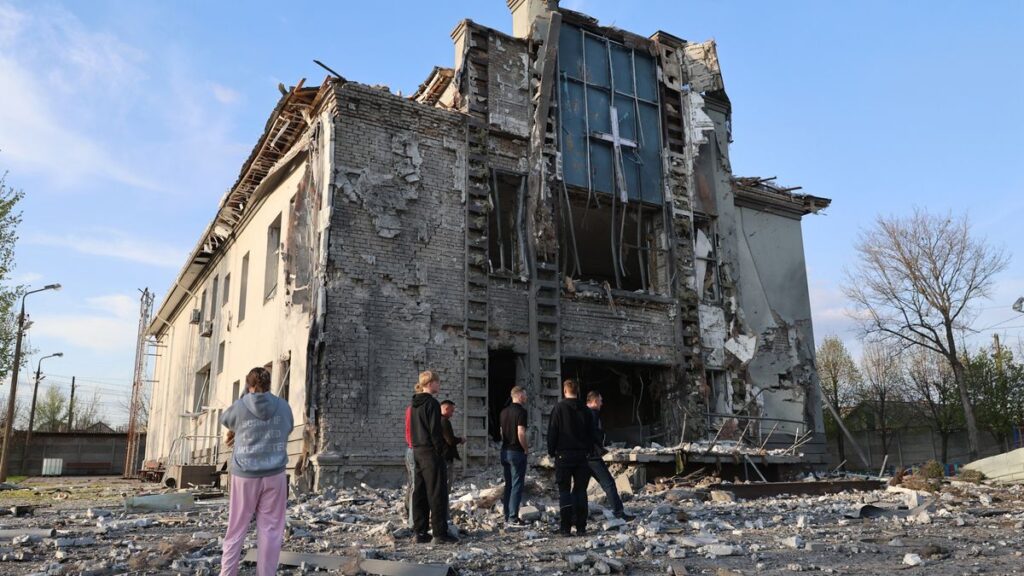
Ukraine Strikes Russian Drone Factory Amid Escalating Attacks
In a significant escalation of its long-range strike capabilities, Ukraine has successfully targeted a key Russian military manufacturing facility deep inside Russian territory. The attack, which reportedly utilized drones, hit a factory in the Republic of Tatarstan, over 1,200 kilometers from the Ukraine-Russia border. This strike represents one of the farthest-reaching Ukrainian operations of the war and signals a bold shift in Kyiv’s strategy to disrupt the Russian war machine at its source.
A Deep Strike into the Russian Heartland
The targeted facility, located in the city of Yelabuga, is known to be a production site for Iranian-designed Shahed attack drones. These low-cost, explosive-laden drones have been a staple of Russian bombardment campaigns against Ukrainian cities and energy infrastructure for months. A second site in Nizhnekamsk, also in Tatarstan, was reportedly struck in the same coordinated operation. This region is a major industrial hub, and the strikes mark a serious breach of what Russia had considered secure domestic territory.
While Ukrainian officials have maintained their customary ambiguity on operations inside Russia, a well-placed source within Ukraine’s Security Service (SBU) confirmed to Reuters that the operation was indeed conducted by Ukraine. The source stated the strikes were a joint effort of the SBU and military. The clear objective was to cripple the production line of a weapon that has caused extensive civilian suffering and economic damage across Ukraine.
The Tactical and Strategic Impact
This operation is not merely a symbolic gesture. It carries substantial tactical and strategic weight:
- Disruption of Critical Supply: Directly damaging or destroying a production facility has a more lasting impact than intercepting drones in the air. It attacks the logistical chain at the point of origin.
- Extension of the Conflict Zone: The strike forcibly demonstrates to the Russian populace and leadership that the costs of the war are not confined to the front lines or occupied Ukraine. It challenges the Kremlin’s narrative of a controlled, distant conflict.
- Testing of Russian Defenses: Successfully penetrating Russian air defenses to such a distance reveals potential vulnerabilities and forces Russia to reallocate and spread out its defensive assets, potentially weakening coverage elsewhere.
- Morale and Psychological Effect: For Ukraine, it is a potent morale booster and a show of advanced capability. For Russia, it is an embarrassing security failure and a sign of Ukrainian resilience and ingenuity.
The Escalating Drone War
The Tatarstan attack is the latest and most dramatic move in an intensifying cross-border drone war. Both sides are increasingly relying on unmanned aerial vehicles (UAVs) for deep strikes, seeking economic and military advantages without direct aerial combat.
In recent weeks, Russia has launched some of its largest drone and missile bombardments against Ukrainian energy infrastructure, aiming to plunge cities into darkness and cripple industrial capacity. Ukraine, meanwhile, has stepped up its own campaign against Russian oil refineries and depots. These strikes on energy targets are a dual-pronged strategy: to degrade the enemy’s military logistics and to inflict economic pain that undermines the war effort.
Ukrainian drones have hit numerous oil processing facilities across Russia, causing significant fires and reducing Russia’s refining capacity. This not only affects fuel supplies for Russian military vehicles but also hits a key source of state revenue from oil exports.
International Reactions and the Question of Weapons
The deepening strikes inside Russia have sparked complex international discussions, particularly among Ukraine’s Western allies. The United States, Ukraine’s primary military backer, has consistently expressed caution about the use of American-provided weapons for attacks on Russian soil, fearing a dramatic escalation from the Kremlin.
However, the Yelabuga strike highlights a critical nuance. According to reports, the drones used in the Tatarstan operation were likely Ukrainian-made. This showcases Kyiv’s growing domestic defense industry and its ability to conduct strategic operations independent of specific Western weapon restrictions. It also places allies in a position where they must acknowledge Ukraine’s right to self-defense, which logically includes striking the facilities that produce weapons actively attacking its citizens.
The Road Ahead: A War of Industrial Endurance
The successful strike on the Shahed drone factory underscores a fundamental evolution in the conflict. The war is increasingly becoming a battle of industrial and technological endurance. It is no longer solely about trenches and artillery duels along a static front; it is about which side can more effectively manufacture, defend against, and deploy advanced systems like drones while degrading the other’s capacity to do the same.
For Ukraine, developing and executing long-range strike capabilities is a necessity to offset Russia’s advantages in mass and conventional weaponry. For Russia, the failure to protect a critical military plant over 1,200 kilometers from the front will prompt serious internal security reviews and likely calls for retaliation.
The undeniable reality is that the war’s geography has expanded. As long as Russia continues to launch missiles and drones from its territory against Ukrainian civilians, Ukraine will seek, and find, ways to reach the sources of those attacks. The strike in Tatarstan is a powerful declaration that no military asset supporting the invasion is beyond reach. This new phase promises further volatility, innovation, and risk, as both nations test the limits of aerial warfare in a conflict with no end in sight.