
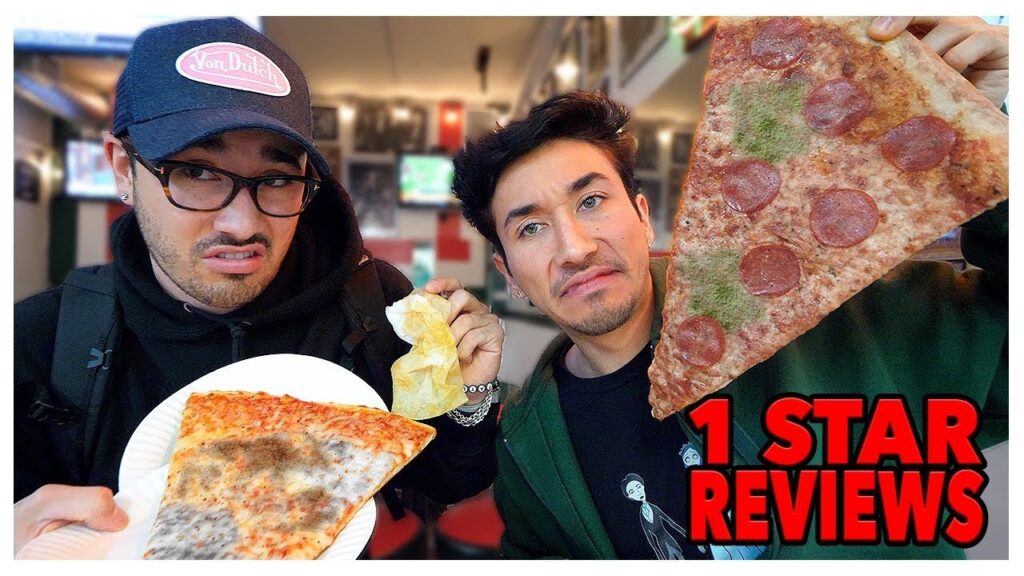
Discover the World’s Worst Pizza Served with Stolen Valor
In a world obsessed with culinary perfection, where food influencers chase the most photogenic, artisanal, and authentic dishes, a rebellious establishment in Mexico City is proudly flying a flag of delicious defiance. Forget the quest for the world’s best pizza. The real adventure, it turns out, lies in seeking out the world’s worst pizza. And one restaurant has not only claimed that dubious title but has built an entire, wildly successful brand around it—with a hefty side of stolen valor.
The “Worst” Pizza in Mexico City: A Masterclass in Marketing
Tucked away in the Narvarte neighborhood, Pizzeria del Perro Negro (The Black Dog Pizzeria) has become a legend. Its signature pie, the “Pizza del Perro Negro,” is a concoction so audacious it borders on culinary anarchy. We’re talking about a pizza generously topped with mozzarella, sliced beef tongue (lengua), onions, and a mysterious “black dog” sauce. It’s a combination that deliberately challenges every conventional notion of what belongs on a pizza.
The owner, Eduardo Morán, is the creative (and mischievous) mind behind the operation. He didn’t stumble into this title by accident; he courted it. After a slow start, Morán decided to lean into the criticism. He began promoting his pizza as “la peor pizza del mundo” – the worst pizza in the world. The genius of this move cannot be overstated. In an age of viral content and experience-driven dining, he transformed a potential failure into an irresistible challenge.
Why “The Worst” is Actually the Best Draw
The psychology is simple: people are inherently curious and love to be in on a joke. By labeling his pizza the worst, Morán did several brilliant things:
- He lowered expectations to rock bottom, making any positive experience a delightful surprise.
- He created a must-try conversation piece. People don’t go just to eat; they go to have the story.
- He flipped the script on food criticism, making negative-sounding reviews part of the allure.
Patrons aren’t paying for gourmet ingredients; they’re paying for a unique, shareable experience. The question shifts from “Is this good?” to “Can I handle the infamous ‘worst pizza’?” The restaurant’s walls, plastered with negative reviews framed as badges of honor, cement this identity. It’s a temple of anti-pretension.
The “Stolen Valor” That Fuels the Legend
Here’s where the plot, and the flavor, thickens. The term “stolen valor” in our title isn’t just a metaphor. The restaurant’s entire aesthetic is built upon a brazen, cheeky appropriation of military imagery—specifically, that of the U.S. Marines.
Walk into Pizzeria del Perro Negro, and you’re greeted by a décor that includes:
- U.S. Marine Corps emblems, uniforms, and insignia.
- Photos of Marines in action.
- A general atmosphere that borrows heavily from military motifs.
The kicker? Eduardo Morán has no connection to the U.S. Marines whatsoever. He is a Mexican pizza maker who simply adopted the iconography because he liked the aesthetic and the sense of discipline and toughness it projected. It’s a complete, unabashed fabrication—a culinary cosplay that adds another layer of absurdity to the experience.
This “stolen valor” is not meant maliciously, but rather with the same tongue-in-cheek humor that defines the pizza itself. It’s part of the character, a piece of the fictional universe Morán has created around his worst-pizza empire. It begs the question: if the pizza’s title is an ironic joke, and the military background is a playful fiction, what are you actually buying into? The answer is pure, unadulterated spectacle.
So, Does the “Worst Pizza” Actually Taste Bad?
This is the million-peso question. Reviews from brave (or curious) diners are wildly mixed, which is exactly what the restaurant wants. Many are shocked to find it’s… actually not terrible. Some even admit to liking it.
The beef tongue, a tender and flavorful meat common in Mexican cuisine, is often the star for those with an adventurous palate. The “black dog” sauce adds a spicy, savory kick. It’s less a poorly made pizza and more a very specific, unconventional flavor profile deliberately designed to polarize. It’s not for everyone, but it’s certainly not an accident. It’s a calculated creation meant to provoke a reaction, good or bad.
The Bigger Slice: What This Phenomenon Teaches Us
Pizzeria del Perro Negro is more than a quirky restaurant; it’s a case study in modern branding and the power of narrative in food.
- Authenticity is Overrated; Personality is King: In a market saturated with “authentic” Italian pizzerias, Perro Negro won by being utterly, joyfully inauthentic. It has a stronger, more memorable personality than any perfectly mimicked Neapolitan joint.
- Embrace Your Criticism: Instead of hiding from bad reviews, Morán amplified them. He understood that in the social media era, strong reactions—even negative ones—are currency.
- Create an Experience, Not Just a Meal: People leave with a story. They’ve conquered the “worst pizza,” navigated the bizarre military theme, and become part of an inside joke. That value far exceeds the cost of the ingredients.
The restaurant’s success, with lines often stretching out the door, proves that diners are craving more than just sustenance. They crave entertainment, novelty, and a break from the predictable.
Should You Seek Out the World’s Worst Pizza?
If you find yourself in Mexico City, the decision is this: do you want a safe, delicious, and forgetgettable meal, or do you want an adventure for your taste buds and your Instagram feed?
Going to Pizzeria del Perro Negro is not a standard dining decision. It’s agreeing to participate in a performance. You are an extra in Eduardo Morán’s hilarious, bizarre play where the pizza is a prop, the décor is a stolen set, and the payoff is the tale you get to tell afterward.
In the end, the “world’s worst pizza” served with “stolen valor” is a triumphant testament to one man’s understanding that in today’s world, the best way to stand out is to willingly, and cleverly, stand in the spotlight of being the “worst.” It’s a delicious paradox that’s worth every ironic bite. Just don’t expect a salute from a real Marine when you walk in—unless, of course, they’re there for the pizza, too.

