
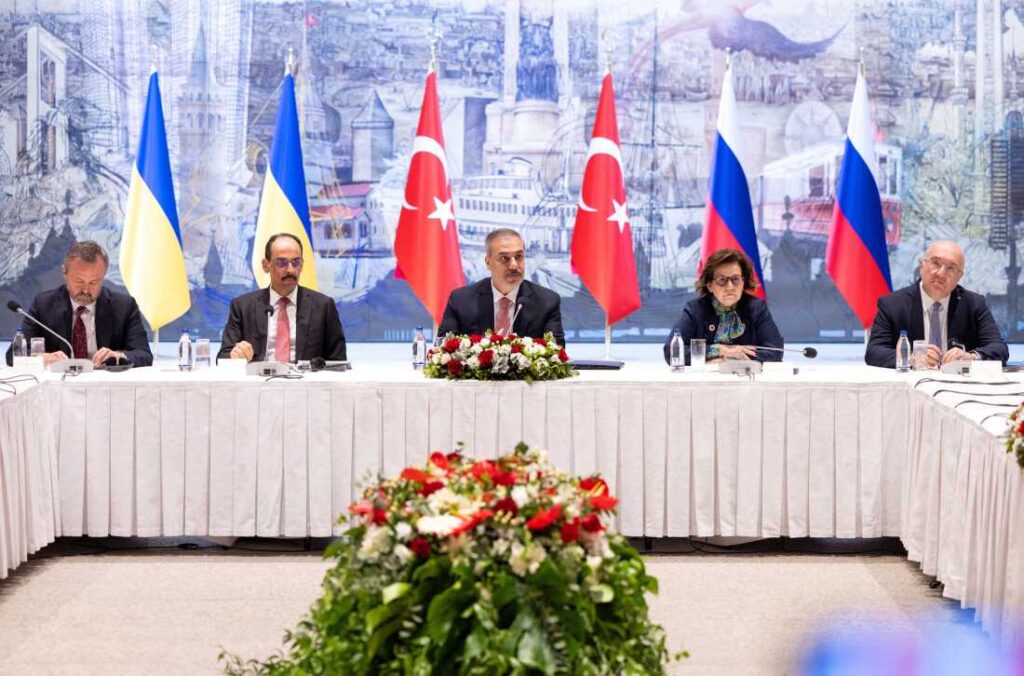
Zelenskyy Seeks Direct Putin Summit to Revive Stalled Ukraine Peace Talks
The path to peace in Ukraine, long fraught with diplomatic hurdles and battlefield stalemates, has reached a critical juncture. In a bold and unexpected move, Ukrainian President Volodymyr Zelenskyy has called for a direct summit with Russian President Vladimir Putin. This proposal, emerging in late April 2026, represents a significant strategic pivot, aiming to breathe new life into international peace efforts that have largely stalled.
A Stalled Process and a New Gambit
For years, the primary diplomatic framework for ending the war has been a series of international conferences, spearheaded by nations like the United States and Saudi Arabia. These gatherings brought together dozens of countries to build consensus around core principles for peace, most notably the respect for Ukraine’s territorial integrity and sovereignty. However, a glaring absence defined these talks: Russia was never invited.
While these efforts kept the diplomatic flame alive, they failed to produce a breakthrough, leading to widespread frustration over the lack of tangible progress. President Zelenskyy’s direct appeal for a leader-to-leader meeting appears to be a calculated response to this impasse. The logic is clear: meaningful negotiations ultimately require the direct involvement of the primary belligerents. By bypassing the multilateral deadlock and appealing directly to the Kremlin, Zelenskyy is attempting to force a moment of decision.
The Core Ukrainian Position: A Return to International Law
Crucially, Zelenskyy’s offer for talks is not an opening for concession. Ukrainian officials have been emphatic that the summit would not be a platform for negotiating away their land or people. Instead, the proposed agenda would center on a single, foundational document: the UN Charter and the basic principles of international law.
The Ukrainian vision for the summit includes:
- A discussion based squarely on the UN Charter’s principles of sovereignty and territorial integrity.
- The potential use of a previous Ukrainian peace formula, which includes demands for a full Russian withdrawal, as a starting point.
- An absolute red line against any talks that legitimize Russia’s illegal annexation of Ukrainian territories.
This framing is strategically vital. It allows Ukraine to demonstrate unwavering commitment to a rules-based world order while placing the onus squarely on Putin to either engage on those terms or reveal his intransigence to the global community.
Global Reactions and the Kremlin’s Calculated Silence
The international response to Zelenskyy’s proposal has been a mixture of cautious support and deep skepticism. Western allies, while publicly backing Ukraine’s right to determine its own diplomatic path, privately express concerns. The fear is that a summit without extensive pre-negotiated groundwork could become a propaganda platform for the Kremlin or lead to premature pressure on Ukraine to accept unfavorable terms.
The most telling reaction, however, has come from Moscow itself: silence. The Kremlin has repeatedly stated it has no interest in negotiations that do not recognize the “new realities on the ground”—a euphemism for its claimed annexations of Ukrainian regions. For Putin, engaging in a summit that starts from the premise of the UN Charter would be an admission that his war of conquest has failed to alter the fundamental legal status of Ukraine. His refusal to comment on Zelenskyy’s proposal is, in itself, a powerful statement of his current position.
The High Stakes of Face-to-Face Diplomacy
Why would Zelenskyy risk such a high-profile meeting? The potential rewards are as great as the risks.
- Breaking the Deadlock: A direct conversation could theoretically bypass bureaucratic and diplomatic filters, creating a chance for a genuine breakthrough that lower-level talks cannot achieve.
- Moral and Strategic Pressure: By publicly and repeatedly offering talks, Zelenskyy reinforces Ukraine’s image as the rational actor seeking a just peace, isolating Russia further on the world stage.
- Testing True Intentions: A summit would force Putin to explicitly articulate his war aims and conditions for peace in a direct setting, revealing whether any diplomatic off-ramp truly exists.
Conversely, the dangers are profound. A failed summit could demoralize Ukrainian society, fracture international unity, and be exploited by Russia to promote narratives of Ukrainian unreasonableness.
The Road Ahead: Preconditions and Battlefield Realities
The prospect of a Zelenskyy-Putin summit remains distant. For it to have any chance of success, several stars would need to align. Most experts agree that any such meeting would require extensive pre-negotiations through back channels to establish a minimal framework and avoid a public relations disaster. Furthermore, the military situation on the ground would play a decisive role. A significant shift in momentum for either side would drastically alter their willingness to negotiate and the terms they would bring to the table.
Ultimately, Zelenskyy’s call for a summit is less about immediate dialogue and more about reshaping the strategic chessboard. It is a move designed to:
- Re-energize a stagnant diplomatic process.
- Reaffirm Ukraine’s agency and its commitment to a principled peace.
- Place the responsibility for the continued war and suffering unequivocally at the feet of Vladimir Putin.
A Defining Moment for Peace
As the world enters the third year of this devastating conflict, the Ukrainian president’s push for a direct summit marks a pivotal moment. It acknowledges the limitations of current multilateral forums while refusing to abandon the pursuit of a just and lasting peace. Whether the Kremlin will ever agree to meet on terms other than surrender remains the central, unanswered question. For now, Zelenskyy’s gambit has succeeded in one key aspect: it has shifted the global conversation, reminding all parties that the door to diplomacy, however heavy, must remain open. The world now watches to see if Vladimir Putin will choose to walk through it, or continue to bet on the brutal logic of war.

