
Lebanon Condemns Israeli Home Demolitions After Ceasefire Violation
A Fragile Truce Faces Its First Major Test
Lebanon has strongly condemned Israel following the demolition of residential homes in southern villages reportedly occupied after a recent ceasefire agreement. The incident, which took place in late April 2026, is being described by analysts as one of the most serious violations of the truce so far.
What was meant to be a step toward stability now risks reigniting tensions in an already volatile border region.
What Happened?
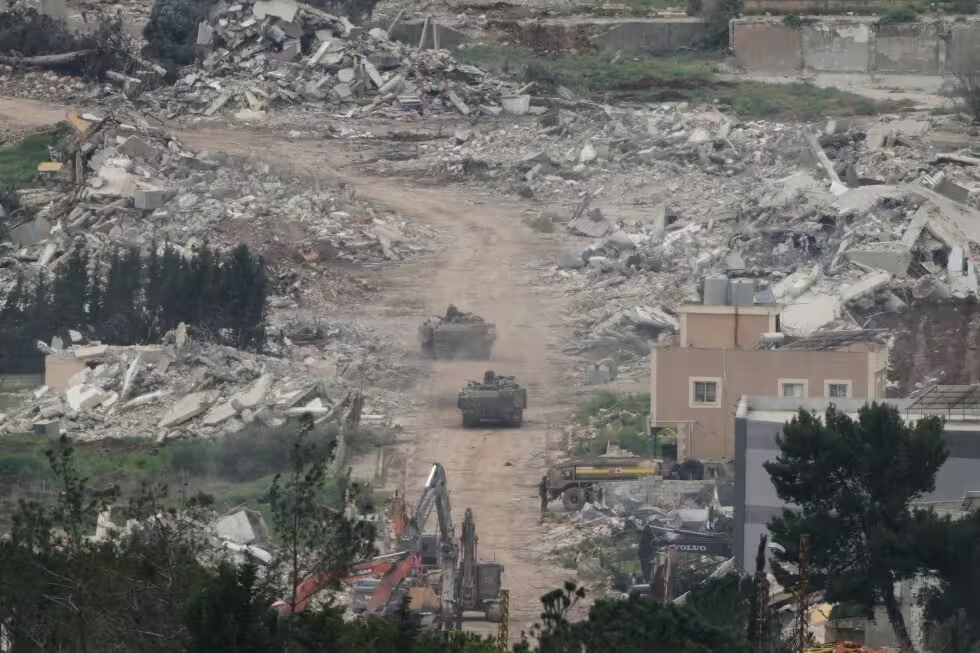
Reports from the ground indicate that Israeli forces entered areas in southern Lebanon that were supposed to be transferred back under the ceasefire agreement. Instead of withdrawing, military bulldozers were used to demolish several residential buildings.
Key details include:
- The demolitions took place in villages within a designated buffer zone
- Multiple civilian homes were destroyed
- Families were given no prior warning, according to local reports
- UN peacekeepers were reportedly not notified in advance
Lebanon’s Foreign Ministry called the incident a “flagrant violation of international law and the ceasefire agreement,” and urged the United Nations Security Council to intervene.
Why This Matters
Beyond political tensions, the impact is deeply human. Families who had begun returning home after months of conflict now face renewed displacement.
Human Impact
The demolitions have:
- Destroyed long-standing family homes
- Disrupted local agriculture and small businesses
- Created new waves of internal displacement
- Reopened trauma from previous cross-border violence
One resident described the moment his home was destroyed:
“We believed the ceasefire meant safety. Now we don’t know what to believe anymore.”
Legal Concerns
Under international humanitarian law, the destruction of civilian property in occupied territory is strictly prohibited unless justified by immediate military necessity.
In this case:
- The homes were civilian structures
- No clear military threat has been confirmed
- The demolitions occurred shortly after a ceasefire
- The action took place in disputed or occupied territory
Legal experts say these factors raise serious questions about compliance with international law.
Lebanon’s Response
Lebanon has launched a series of diplomatic actions in response:
- Filed a formal complaint with the UN Security Council
- Requested an emergency meeting with UNIFIL
- Sent diplomatic notes to major world powers
- Called for Arab League intervention
The Lebanese Prime Minister stated:
“This is not security. It is aggression disguised as necessity. We will not remain silent.”
Israel’s Position
Israel has not issued a full official statement, but military sources have described the demolitions as “security operations” aimed at preventing potential militant use of structures.
However, critics argue:
- The areas were largely civilian
- No immediate threat was identified
- The scale suggests territorial control rather than defense
Impact on the Ceasefire
The ceasefire, brokered by the United States and France, was intended to stabilize the border region. This incident now puts that agreement under serious strain.
Possible Outcomes
1. Escalation
Retaliation or renewed conflict if tensions continue to rise.
2. Diplomatic Pressure
International action could force accountability and halt further demolitions.
3. Status Quo Inaction
If ignored, it may set a dangerous precedent for future violations.
Role of the International Community
The United Nations Interim Force in Lebanon (UNIFIL) is expected to investigate, though its ability to enforce action is limited.
Key global stakeholders include:
- United States – key ally of Israel and ceasefire guarantor
- France – co-broker of the agreement
- European Union – potential diplomatic pressure
- Arab League – likely to support Lebanon’s position
Broader Regional Concerns
This incident comes amid:
- Ongoing instability in the Middle East
- Fragile ceasefires in other conflict zones
- Growing distrust in diplomatic agreements
- Competing global crises limiting international focus
If left unaddressed, it could weaken confidence in ceasefire agreements worldwide.
Humanitarian Situation
Aid groups are now working to support displaced families with:
- Emergency shelter
- Food and medical assistance
- Temporary housing support
However, humanitarian aid alone cannot replace lost homes or resolve underlying disputes.
Long-term needs include:
- Reconstruction of destroyed homes
- Legal accountability for property damage
- Compensation for affected families
- Stronger protections for civilians
Conclusion: A Test of Global Accountability
The destruction of homes in southern Lebanon is more than a ceasefire violation—it is a test of how seriously international agreements are enforced.
Lebanon has called for accountability. The international community now faces a choice: respond decisively or risk allowing the agreement to erode further.
For displaced families, the issue is not political—it is personal. Their homes are gone, and their future depends on whether this violation is addressed or ignored.
The ceasefire was meant to bring hope. Whether it survives now depends on what happens next.

