
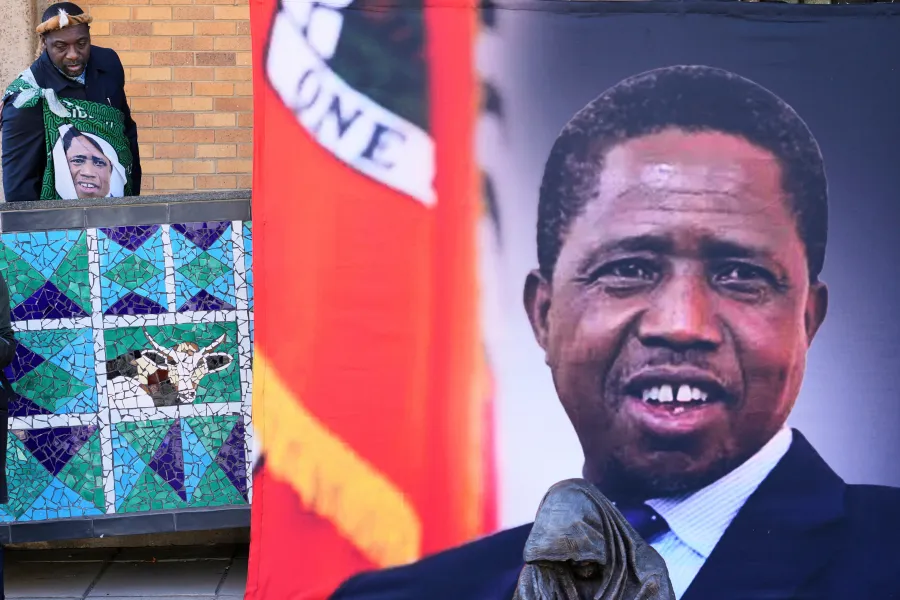
# Title: Zambia Government Seizes Deceased Ex-President’s Body Amid Heated Family Funeral Feud
## Introduction: A Nation Stunned by an Unprecedented Action
In a dramatic and deeply controversial move that has sent shockwaves across the African continent, the Zambian government has reportedly seized the body of former President Rupiah Banda, plunging the nation into a bitter and very public family dispute. The remains of the late leader, who served as the fourth President of Zambia from 2008 to 2011, have become the center of a tense standoff between his grieving family and state authorities. This extraordinary situation raises profound questions about state protocols, family rights, burial traditions, and the politicization of death in a country still navigating its democratic maturity.
## The Core of the Conflict: A Clash Over Final Resting Place
The dispute, which has escalated to the highest levels of government, originates from a fundamental disagreement regarding where President Banda’s body should be laid to rest. Sources close to the family indicate that a significant portion of the Banda family wishes to bury the former head of state at his private farm in the Eastern Province, a location he cherished deeply during his lifetime. The government, however, appears to be insisting on a state burial at the official presidential burial site, a move that has ignited a firestorm of opposition from the family.
This is not merely a logistical disagreement. For many Zambians, burial sites carry immense cultural, spiritual, and political weight. The choice of a final resting place can symbolize a leader’s legacy, his connection to the land, and his relationship with his people. The family’s preference for a private burial suggests a desire for a more personal, less politicized farewell, while the government’s insistence on a state site underscores the institutional importance attached to the presidency.
Government Justification: Upholding National Protocol or Overstepping Authority?
The Zambian government, under the administration of President Hakainde Hichilema, has defended its action by citing established protocols for former heads of state. Officials have argued that a uniform burial standard exists for all individuals who have held the nation’s highest office, designed to honor their service and ensure a dignified, national farewell.
The government’s stated position includes:
- That former presidents are entitled to a state funeral as a matter of national honor and protocol.
- That the designated state burial grounds are the only appropriate venue for such ceremonies, as they symbolize national unity and respect for the office.
- That the family was consulted but has been uncooperative, forcing the government to take decisive action to preserve the dignity of the office.
Critics argue that while protocol is important, it should not supersede the wishes of the deceased’s immediate family, especially in matters as sensitive as burial. The seizure of a body, they contend, is an unprecedented and authoritarian act that shows a disturbing disregard for familial autonomy and traditional customs.
The Role of President Hakainde Hichilema and Historical Tensions
The involvement of current President Hakainde Hichilema adds another layer of complexity to this saga. Rupiah Banda and Hichilema have a political history that is far from friendly. Banda defeated Hichilema in the contentious 2008 presidential by-election, a defeat that Hichilema and his supporters have long considered to be deeply unfair. Later, Banda was arrested and charged with abuse of authority during Hichilema’s political rise, charges that were eventually dropped.
This political baggage has led many observers to view the government’s actions through a suspicious lens. Some members of the Banda family have publicly accused the Hichilema administration of using the burial issue as a final act of political retribution against a former rival. This accusation, whether true or not, has inflamed public sentiment and turned a family funeral into a national political scandal.
## Family Response: Grief, Anger, and Accusations of Disrespect
The family of the late President Banda has reacted with fury and profound grief. Spokespersons for the family have described the government’s seizure of the body as a violation of their father’s memory and an assault on their personal dignity. They have stated that Rupiah Banda himself expressed a clear preference to be buried on his farm, a place where he felt most at peace.
Key points from the family’s statements include:
- The late president had a written will expressing his burial wishes, which the government is ignoring.
- The family has been denied access to the body, preventing them from performing traditional mourning and funeral rites.
- The government’s actions are politically motivated and amount to “body snatching” by the state.
- They have threatened legal action and international appeals if the body is not returned immediately.
The family’s legal team has already prepared papers to challenge the government’s actions in court, setting the stage for a protracted legal battle that could have far-reaching implications for how Zambia handles the remains of former leaders.
Cultural and Traditional Dimensions of the Dispute
To fully understand the gravity of this situation, one must consider the deep cultural significance of burial rituals across Zambia. In many Zambian communities, including the Banda family’s Eastern Province roots, burial is not just a ceremony but a sacred obligation. The deceased must be laid to rest according to clan traditions, with specific rites performed by the family.
The Concept of “Home” in Zambian Burial Customs
For many Zambians, “home” is not just a physical location but a spiritual and ancestral center. Being buried on one’s ancestral land is believed to ensure that the spirit rests peacefully and continues to watch over the family. A forced burial away from this sacred land is considered not just disrespectful but spiritually dangerous. The government’s intervention is therefore seen by many as a cultural desecration, not just a political disagreement.
State Protocol vs. Traditional Authority
This conflict highlights a long-simmering tension between modern state authority and traditional chieftaincy and family rights. In many African nations, the state has increasingly asserted control over the burials of high-ranking officials, often overriding family preferences in the name of national unity. However, this case has brought the issue to a breaking point, forcing the nation to confront an uncomfortable question: Who truly owns the body of a former head of state—the state or the family?
## Legal Ramifications and the Rule of Law
The seizure of President Banda’s body raises serious legal questions. Under international human rights law, respect for the dead and the family’s right to bury their loved ones according to their customs is a recognized principle. The Zambian constitution guarantees certain fundamental rights, and the family’s legal challenge will test whether the government’s actions were lawful or an overreach of executive power.
Legal experts are watching this case closely. If a court rules in favor of the family, it could set a landmark precedent limiting the state’s ability to dictate burial arrangements for former leaders. Conversely, a ruling for the government could expand executive powers in unprecedented ways, potentially affecting how future presidents are memorialized.
Key legal questions to be resolved include:
- Does the state have the legal right to seize human remains against the explicit wishes of the family?
- Are the government’s burial protocols for former presidents legally binding on the family, or are they merely guidelines?
- Does the deceased’s expressed will regarding his burial have legal precedence over state protocol?
## Public Reaction and National Division
The Zambian public is deeply divided over this issue. On social media and in public forums, the debate is fierce. Supporters of the government argue that the state must maintain order and honor the office of the presidency uniformly. They contend that the family’s personal wishes should not undermine the formal procedures that have been established for national icons.
Conversely, a large segment of the population sympathizes with the family. Many see the government’s action as heavy-handed and disrespectful. The term “dictatorship” has been used by some opposition figures and civil society organizations, who view this as a dangerous precedent for the Hichilema administration. The burial dispute has thus become a flashpoint for broader political frustrations, including accusations of authoritarian drift in the country.
International Attention and Diplomatic Implications
News of the body seizure has quickly spread internationally, drawing attention from neighboring countries and the broader international community. The African Union and various human rights organizations are monitoring the situation. For a nation that prides itself on its reputation for peaceful transitions of power, this episode is an unwelcome embarrassment. Foreign diplomats stationed in Lusaka have expressed concern, with some quietly urging the government to de-escalate the situation through dialogue.
The outcome of this dispute could affect Zambia’s diplomatic standing. If the government is seen as violating basic human rights and cultural sensitivity over a deceased leader, it could damage its image internationally at a time when it seeks foreign investment and tourism.
## Conclusion: A Nation Mourns in Chaos
The seizure of former President Rupiah Banda’s body has transformed what should have been a somber period of national mourning into a bitter, divisive battle. As the legal showdown looms and the family remains locked in a standoff with the state, the tragedy is palpable. A respected former leader deserves to be laid to rest with dignity and peace, yet politics, protocol, and personal grievances have conspired to deny him that final honor.
This case will not only determine where Rupiah Banda is buried, but it will also likely redefine the relationship between the state and the families of former leaders for generations to come. For now, the nation waits, holding its breath, as the body of a former president remains in state custody, caught between the demands of government protocol and the sacred wishes of a grieving family. The resolution of this crisis will be a defining moment for President Hichilema’s administration and for Zambia’s commitment to the rule of law and cultural respect.

