
The $500 Million Isabella Stewart Gardner Museum theft: Inside Boston’s Greatest Unsolved Mystery
It remains one of the most baffling crimes in art history—a brazen, disciplined theft that stripped a world-class museum of thirteen irreplaceable masterpieces.
On the morning of March 18, 1990, the Isabella Stewart Gardner Museum woke to an empty gallery and a legacy of questions that have haunted investigators for over three decades.
This is the story of the $500 million heist that has never been solved, the clues that went cold, and the reward that still stands for anyone who can crack the case.
The Night That Changed Art History
Just after midnight on March 18, 1990, two men dressed as Boston police officers pulled up to the side entrance of the Gardner Museum.
They buzzed the security intercom, claiming they were responding to a disturbance. The rookie guard on duty made a fatal mistake: he let them in.
Once inside, the “officers” revealed their true intent. They handcuffed the two security guards, duct-taped their mouths, and led them to the basement.
For the next 81 minutes, the thieves roamed freely through the museum’s galleries, selecting exactly which pieces to steal. Their precision suggested advanced planning—or inside knowledge.
The thieves bypassed more valuable works like The Rape of Europa and instead targeted specific items.
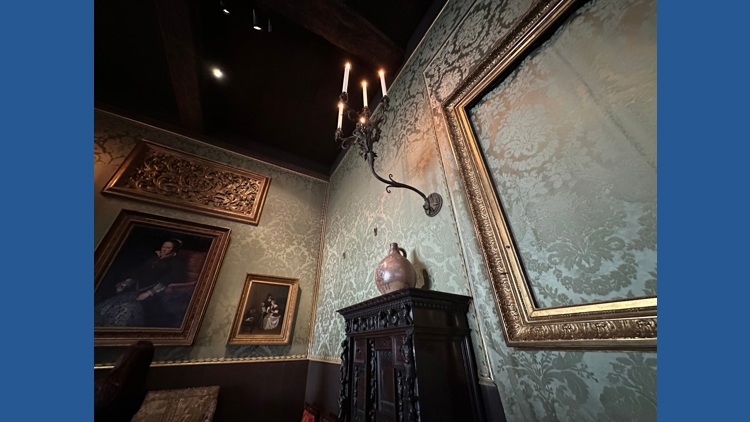
They cut paintings from their frames with a box cutter, leaving the empty stretchers hanging on the walls—a haunting sight that still greets visitors today.
In all, they made off with 13 works of art valued at a combined $500 million (adjusting for inflation, over $1 billion today).
The Stolen Masterpieces: What Was Lost
The list of stolen pieces reads like a who’s-who of Western art’s greatest names. Each painting represents an irreplaceable cultural treasure.
The Crown Jewels
- The Concert (c. 1664) – The most valuable stolen painting in history, estimated at over $200 million alone. One of only 34 known Vermeers in existence
- The Storm on the Sea of Galilee (1633) – Rembrandt’s only seascape, depicting Christ calming the storm
- A Lady and Gentleman in Black (1633) – A double portrait cut from its frame
- Rembrandt’s self-portrait (c. 1629) – A small copper etching, part of a set of five prints stolen
- Works by Edgar Degas – Five pieces, including a drawing and several pastels
- Chez Tortoni (1870) – A small portrait of a man at a café
- Landscape with an Obelisk (1638) – Long mistaken for a Rembrandt, it was removed from its frame
- A Chinese bronze gu (12th–11th century BC) – A Shang dynasty ritual vessel
- A finial from a Napoleonic eagle – A bronze ornament from the top of a flagstaff
The empty frames remain hung in the museum’s Dutch Room and other galleries as a memorial and a plea for their return.
The museum has kept the frames as a constant reminder that the art is missing—and that the world hasn’t forgotten.
The Investigation: Dead Ends and Secret Suspects
The Federal Bureau of Investigation took over the case immediately.
For years, agents chased leads across the United States and Europe, but no concrete evidence ever surfaced.
The thieves left few clues: no fingerprints, no DNA, and the security cameras were not functioning that night—a flaw the museum had long ignored.
Key Theories Over the Years
- Inside job: The thieves’ precise selection of paintings—ignoring far more valuable works on the same walls—suggested someone with intimate knowledge of the collection tipped them off. Several museum insiders were investigated but never charged
- Organized crime links: The FBI has long suspected the Boston mob was involved. In 2013, the agency stated it believed the theft was carried out by a local criminal organization, and that some of the art may have moved through Philadelphia and New England
- The “Goodfellas” connection: A 2023 documentary series on Netflix (This Is a Robbery) reignited public interest, featuring interviews with a former mobster who claimed the art was destroyed to eliminate evidence. However, no proof has emerged
- International smuggling: Some believe the paintings were shipped overseas to private collectors, possibly in Europe or Japan, where they hang in secret in vaults or homes
In 1997, the FBI announced a $5 million reward for the safe return of the artworks.
In 2017, the reward was doubled to $10 million—the largest ever offered by a private museum.
Despite dozens of tips, including a claim from a man who said he had the Vermeer in his possession, all leads have fizzled.
The Ongoing Legacy: Why the Gardner Heist Still Matters
The Gardner Museum heist is more than a crime story—it’s a cultural wound.
The empty frames serve as the most powerful exhibit in the museum. Every year, thousands of visitors stand before them, staring at ghosts of art that once existed.
What Makes This Case Unique?
- No arrests ever made. After more than three decades, not a single person has been charged
- No ransom demands. Unlike other high-profile art thefts, the thieves never tried to sell the works back
- No recovered pieces. Not one of the 13 artworks has been located
- The reward remains open. The $10 million offer is still active, and the museum maintains a dedicated tip line
The case also set a new standard for museum security.
After the heist, institutions worldwide upgraded their systems—motion sensors, facial recognition, 24/7 monitoring.
Yet the Gardner theft remains a stark reminder that human error is the hardest vulnerability to fix.
Could the Art Still Be Found?
Art recovery experts remain cautiously optimistic.
Historical cases, such as the recovery of The Scream in 1994 (stolen and later returned), show that stolen masterpieces can resurface after decades.
However, the Gardner art may be a unique challenge.
Why Recovery Is Difficult
- The paintings are too famous to sell openly. Any auction house or dealer would recognize a missing Vermeer immediately
- The thieves likely had no legitimate buyer lined up. The art may have been hidden in a basement, attic, or even buried
- The original perpetrators are likely dead or elderly. The FBI believes the thieves were part of a crew active in the 1980s and 1990s
- The art may have been destroyed. Some investigators fear the paintings were burned or dumped to destroy evidence
Yet hope persists.
In 2023, a retired FBI agent stated that he believed the art is still somewhere in New England, hidden by someone who does not know its true value or is afraid to come forward.
How You Can Help Solve the Mystery
The Isabella Stewart Gardner Museum continues to invite the public to submit tips.
The $10 million reward is guaranteed for information leading to the recovery of all 13 objects.
If you have any knowledge—even a rumor, a family story, or a memory—you are urged to contact the FBI’s Boston field office or the museum directly.
The reward is available for the return of the art, no questions asked, as long as the information is accurate and leads to recovery.
The museum has also promised immunity from prosecution for anyone who provides the tip, provided they were not directly involved in the theft.
Conclusion: A Mystery That Refuses to Fade
The Isabella Stewart Gardner Museum art heist is not just a crime—it’s a riddle that has puzzled the FBI, art historians, and true-crime enthusiasts for more than three decades.
The empty frames still hang. The reward still waits.
And somewhere, perhaps in a locked room or a forgotten storage space, a Vermeer and a Rembrandt wait to be discovered.
As long as those frames remain empty, the world will keep looking.
The $500 million question remains: Who took them, and where are they now?

