
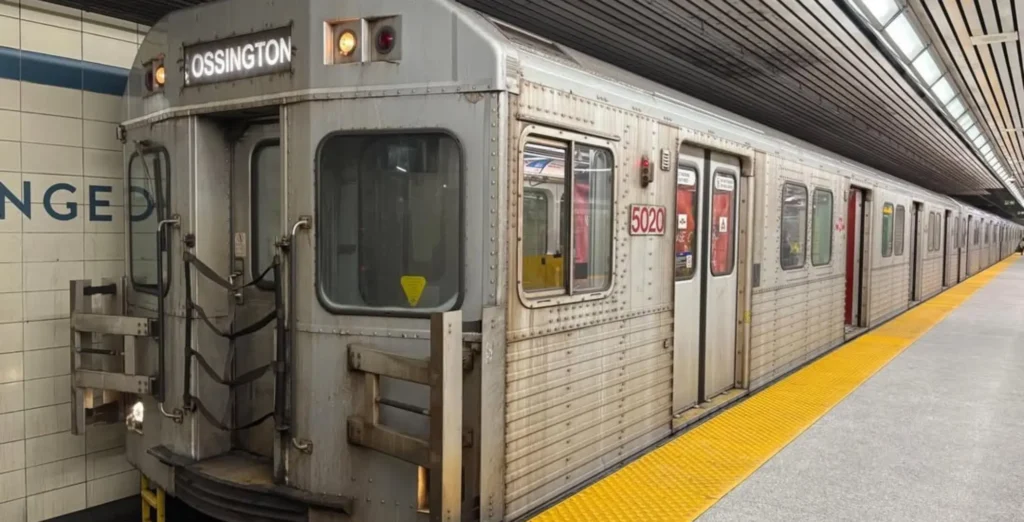
Toronto Transit Hounded by Disruptions Ahead of World Cup 2026
For a city that prides itself on multicultural vibrancy and logistical capability, the recent performance of the Toronto Transit Commission (TTC) is a growing source of embarrassment and anxiety. As the world turns its eyes toward the 2026 FIFA World Cup—which will see matches played on Toronto soil—the city’s public transit backbone is showing alarming signs of fragility. The narrative emerging from underground tunnels and streetcar lines is not one of modern efficiency, but rather of an aging system plagued by what officials are euphemistically calling “gremlins.”
However, as someone who has analyzed urban transit systems for the past two decades, I can assure you that these are not supernatural entities. These are the predictable consequences of deferred maintenance, underfunded capital projects, and a system operating at its breaking point. If Toronto hopes to avoid a global humiliation in two years, the time for polite disappointment is over. The TTC requires an intensive operational audit and a rapid-response engineering strategy.
The ‘Gremlin’ Phenomenon: A Technical Breakdown
The recent weeks have seen a spate of disruptions that are deeply troubling for their variety and frequency. We are not talking about a single broken train or a minor weather delay. We are talking about a cascade of failures that suggest a systemic weakness:
- Signal System Failures: Repeated issues with the automatic train control signals have caused major slowdowns and shutdowns on Line 1 (Yonge-University). This is the most critical spine of the entire network, connecting downtown to North York and Vaughan.
- Track Level Fires: Incidents involving electrical fires and arcing near tracks have forced emergency evacuations. These are not just inconvenient; they represent a serious safety risk that erodes public trust.
- Door Malfunctions: Trains sitting at platforms with doors stuck open or refusing to close have cascading effects that ruin the schedule for the entire line for hours.
- “Ghost” Trains: Riders have reported trains appearing on digital screens only to disappear, or long gaps between service without explanation. This points to a breakdown in the supervisory control and data acquisition (SCADA) systems that manage fleet tracking.
The Root Cause vs. The Symptom
The TTC’s narrative of “gremlins” irritates transportation experts because it frames these breakdowns as random, unpredictable acts of mischief. They are not. The reality is far more prosaic: the TTC is running rolling stock that is among the oldest in North America, operating on a signalling infrastructure that was implemented in a piecemeal fashion.
The Toronto Rocket trains, while a marvel in their day, are now feeling the strain of high-frequency operational demands. Furthermore, the recent transition to new communication-based train control (CBTC) technology has created integration issues. Whenever you have legacy hardware talking to modern software, you introduce instability. The “ghost trains” and signal dropouts are classic symptoms of a network that is fighting against itself—two generations of technology trying to coexist without reliable middleware.
This is not a mystery. It is a physics and engineering problem that requires immediate triage.
Why This Matters: The 2026 World Cup Deadline
The World Cup is not just a series of soccer games. It is a global stress test for a city. When 45,000 fans try to leave BMO Field after a late match, or when foreign media attempt to navigate from Pearson International Airport to downtown hotels, the TTC becomes the face of Toronto.
Imagine the headlines: “World Cup Visitors Stranded for Hours on Aging Subway.” That is not just a logistical failure; it is a branding disaster that could impact tourism and investment for years. The stakes are exceptionally high.
Ridership Projections We Cannot Ignore
The current system struggles with daily rush hour. Now consider:
- A tripling of ridership on specific corridors during match days.
- Increased demand on the 509 Harbourfront streetcar to reach the Exhibition grounds.
- The need for extended late-night service to accommodate post-match crowds.
- Potential security closures that will require rapid rerouting.
The TTC currently lacks the redundancy necessary for this scenario. If Line 1 goes down for two hours during a game day, there is no viable alternative surface route that can absorb 50,000 extra passengers. The gridlock would be absolute.
Lessons from Global Transit Hubs
Toronto is not the first city to face this crisis. We can look to London, UK, which suffered similar “gremlin” issues before the 2012 Olympics. The difference was their response. London Underground initiated a period of intense route-clearance and signal recalibration in the 18 months leading up to the games. They brought in engineers from Japan and Germany to audit their control systems. They publicly admitted where the weaknesses were.
Similarly, Vancouver’s SkyTrain for the 2010 Olympics underwent a massive software overhaul. They didn’t just paint the stations. They hardened the network against failure.
Toronto, however, seems stuck in a cycle of reaction. A signal goes down, they fix that signal. A door jams, they fix that door. But there is no evidence of a holistic systemic overhaul. The TTC needs to adopt a predictive maintenance model rather than a reactive one. This means installing sensors on every critical component—track switches, braking systems, door actuators—and running failure-mode analysis before the World Cup arrives.
The Path Forward: Recommendations for TTC Leadership
As a transit analyst, I see three non-negotiable actions TTC leadership must take immediately.
1. Crash Priority for Signal Modernization
All non-essential capital projects must be paused. The budget for aesthetic station upgrades and non-critical improvements should be redirected to the signal system on Line 1 and Line 2. This is the vascular system of the city. If it fails, nothing else matters. They need to contract external experts—not just internal staff—to run a 24/7 diagnostic on the ATC system.
2. Transparent Communication Strategy
Stop using the word “gremlins.” It is condescending to riders and insulting to the engineers. The TTC should issue a weekly “System Health Report” that publicly tracks specific failure rates. When the public knows exactly what is being fixed, trust is rebuilt. Hiding behind euphemisms only deepens the cynicism.
3. Redundancy in Fleet Operations
The TTC must secure contingency rolling stock. Whether that means leasing buses from neighboring municipalities or deferring the retirement of older subway cars, they need a “shadow fleet” ready to deploy. The current philosophy of “just in time” maintenance is incompatible with the demands of a World Cup.
Conclusion: The Clock is Ticking
The term “gremlins” implies a problem we can laugh off. But the TTC’s recent disruptions are a serious crisis of engineering and management. With the 2026 World Cup bearing down on Toronto, the margin for error has narrowed to zero. Every signal dropout, every stuck door, every unexplained delay is a warning shot.
The city has the talent. It has the budget. What it lacks currently is the urgency and the willingness to admit that the system is not just a little tired—it is wounded. The repairs needed are not cosmetic. They are foundational. If the TTC fails to address these “gremlins” with the gravity they deserve, the world will not just see a minor transit delay. They will see a city that was not ready for its close-up. And that is a memory that haunts a metropolis far longer than any faulty signal could.

