
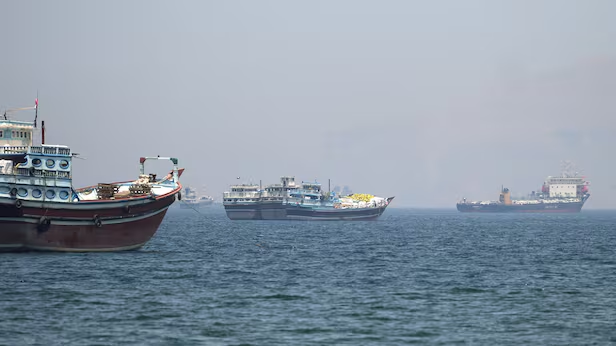
US Threatens Sanctions on Shipping Firms Paying Iran Strait of Hormuz Tolls: Essential Guide for Maritime Operators
The United States has issued a strict warning to the global shipping industry: any company paying tolls to Iran for passage through the Strait of Hormuz may face significant sanctions. This move intensifies Washington’s pressure campaign on Tehran and directly targets one of the world’s most strategically sensitive maritime chokepoints. For shipowners, insurers, charterers, and logistics operators, the implications are immediate and serious.
Understanding the US Warning
The US Department of the Treasury’s Office of Foreign Assets Control (OFAC) has clarified that payments linked to Iranian entities—particularly those associated with the Islamic Revolutionary Guard Corps (IRGC)—for transit through the Strait of Hormuz may be treated as sanctionable conduct.
The warning covers:
- Direct payments to Iranian port or security-linked authorities
- Indirect transactions routed through intermediaries or agents
- In-kind compensation, including fuel, services, or logistical support
In effect, Washington is treating toll payments as financial support to a designated sanctioned entity, exposing violators to asset freezes, banking restrictions, and potential criminal enforcement.
The Strait of Hormuz: A Critical Global Chokepoint
The Strait of Hormuz is one of the most important energy transit routes in the world, linking the Persian Gulf to global shipping lanes. Roughly one-fifth of global oil supplies pass through this narrow waterway, making it a focal point for geopolitical and market stability.
Iran has periodically asserted control over parts of this route through “security fees” or informal toll structures, escalating tensions with commercial shipping operators and Western governments.
How Iran’s Toll System Operates
Unlike formal maritime tariffs, these payments are often enforced through pressure mechanisms, including:
- Boarding or inspection of vessels in contested waters
- Delays or detention threats for non-compliance
- Inflated charges disguised as pilotage or safety services
These practices place shipping companies in a difficult position between operational continuity and regulatory risk.
Why the US is Escalating Enforcement Now
Several developments have driven Washington’s stricter stance:
- Renewed sanctions enforcement following stalled nuclear diplomacy
- Increased incidents of vessel seizures in the region in recent years
- Concerns over financial flows reaching sanctioned military-linked entities
- Broader efforts to deter coercive maritime practices in strategic waterways
The policy signal is clear: tolerating informal payments is no longer an option under US sanctions enforcement frameworks.
Legal and Financial Risks for Shipping Companies
The consequences of non-compliance extend across multiple layers of risk exposure.
Sanctions Exposure
- Primary sanctions risk: US-linked entities are strictly prohibited from engaging in such transactions
- Secondary sanctions risk: Non-US firms may lose access to US banking and dollar clearing systems
- Designation risk: Companies could be placed on restricted sanctions lists, limiting global operations
Insurance and Financing Impacts
Maritime insurers are expected to tighten coverage conditions, potentially resulting in:
- Higher war-risk premiums
- Restricted protection and indemnity (P&I) coverage
- Loan covenant breaches triggered by sanctions exposure clauses
Legal Liability
In serious cases, enforcement may extend to executives and compliance officers, particularly where intentional evasion is identified.
Impact on Global Trade and Energy Markets
The Strait of Hormuz remains essential to global energy flows, meaning any disruption or avoidance behavior has immediate market consequences.
- Oil markets: Even perceived risk can increase price volatility
- Shipping routes: Vessels may reroute, increasing voyage times and costs
- Insurance markets: Underwriters may reprice regional risk exposure upward significantly
The cumulative effect is higher operational cost across global supply chains.
Compliance Strategies for Maritime Operators
Shipping companies are being urged to adopt strict compliance frameworks.
Strengthen Due Diligence
- Verify all port agents and service providers in high-risk jurisdictions
- Screen counterparties against sanctions databases
- Monitor maritime advisories and threat intelligence updates
Implement Zero-Tolerance Payment Policies
- Establish clear internal prohibitions on unauthorized toll payments
- Require immediate escalation of any coercive payment requests
- Maintain detailed voyage documentation for audit readiness
Review Legal and Insurance Coverage
- Engage sanctions counsel for route-specific risk assessments
- Ensure insurance policies explicitly address sanctions-related exclusions
- Update charter party clauses to reflect current enforcement risks
Conclusion
The US sanctions warning regarding Strait of Hormuz toll payments marks a significant escalation in maritime enforcement policy. For global shipping operators, the issue is no longer operational discretion but regulatory compliance with potentially severe consequences.
While the Strait of Hormuz remains a vital commercial artery, access to it now comes with heightened legal and financial scrutiny. Companies that fail to adapt their compliance frameworks risk not only financial penalties but long-term exclusion from critical global shipping systems.

