
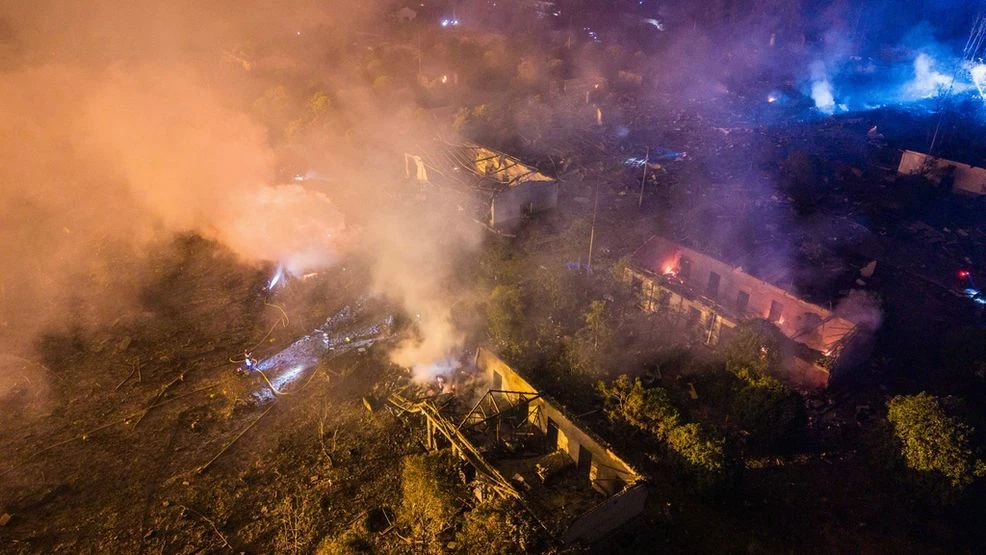
Liuyuan Fireworks Factory Blast: 21 Dead, Dozens Injured in Hunan Province – A Deep Dive
The fireworks industry, synonymous with celebration and spectacle, has been dealt a devastating blow. On Thursday, a catastrophic explosion ripped through a fireworks manufacturing plant in Liuyang, Hunan province – the world’s undisputed fireworks capital. According to state media reports, the blast has claimed at least 21 lives and left dozens more injured. As rescue crews continue to sift through the mangled wreckage, the incident serves as a grim reminder of the hidden dangers that lurk behind the dazzling displays. This is not just a local tragedy; it is a systemic failure that demands a hard look at safety protocols, regulatory enforcement, and the human cost of pyrotechnic production.
The Incident: What We Know So Far
The explosion occurred during what authorities have termed a “production accident.” Emergency services were dispatched immediately, with teams working through the night to locate survivors and recover bodies. As of the latest updates, the death toll stands at 21, though officials warn that the number may rise as search operations continue. Multiple injured individuals have been rushed to nearby hospitals, with some in critical condition.
Preliminary reports from the scene indicate that the blast was of significant magnitude, causing extensive structural damage to the facility. Witnesses described a loud roar followed by a shockwave that shattered windows in surrounding buildings. The factory has been ordered to suspend operations indefinitely while investigators determine the precise chain of events.
Key Details at a Glance
- Location: Liuyang, Hunan Province, China – the heart of global fireworks manufacturing.
- Date: Thursday (exact date withheld pending ongoing investigation).
- Fatalities: 21 confirmed, with potential for increase.
- Injuries: Dozens, several critical.
- Cause: Under investigation; suspected equipment malfunction or safety violation.
- Status: Factory shut down; management being questioned.
Liuyang: The World’s Fireworks Capital – A Double-Edged Sword
To understand the gravity of this explosion, one must first grasp Liuyang’s outsized role in the global fireworks trade. The region produces an estimated 80% of the world’s fireworks, supplying everything from Chinese New Year celebrations to Fourth of July displays in the United States. The industry is the lifeblood of the local economy, employing hundreds of thousands of workers in thousands of factories, ranging from large automated plants to small family-run workshops.
Yet this economic reliance comes with a steep price. Fireworks manufacturing is inherently dangerous due to the volatile chemicals involved – gunpowder, potassium nitrate, sulfur, and various oxidizers. Even a small spark or static discharge can trigger a catastrophic chain reaction. In Liuyang, the density of these facilities means that a single accident can have devastating ripple effects.
Economic Dependence vs. Safety Risks
The tension between economic necessity and workplace safety is palpable in Liuyang. For years, local authorities have struggled to balance the demand for cheap, high-volume production with the need for rigorous safety standards. Smaller factories, in particular, often operate on thin margins and may cut corners on protective equipment, ventilation, or employee training. “In many cases, the profit motive overrides common sense,” notes Dr. Wei Zhang, an industrial safety analyst. “When you have a community where nearly every family has someone working in fireworks, there is immense pressure to keep production moving – even when conditions are risky.”
This explosion is not an isolated event. Liuyang has seen a series of deadly fireworks accidents over the past two decades, including a 2019 blast that killed 6 people and a 2010 incident that left 12 dead. Each time, authorities promise stricter oversight – yet the underlying hazards remain.
Root Causes and Ongoing Investigation
Authorities have launched a formal investigation, with local police questioning company management. While the exact trigger is not yet confirmed, experts point to several common culprits in such accidents:
- Equipment malfunction: Aging machinery, faulty wiring, or improperly maintained mixing equipment can generate sparks.
- Human error: Violation of safety protocols – such as smoking near gunpowder storage or improper handling of chemicals – is a frequent factor.
- Storage violations: Storing too much raw material in close proximity, or failing to segregate incompatible chemicals, can amplify a small incident.
- Inadequate training: Workers may not be fully aware of the risks or trained in emergency procedures.
“The pattern is all too familiar,” says retired fire investigator Li Ming. “You often find that the company had been warned before, or that they were operating beyond their licensed capacity. The question isn’t if something will go wrong – it’s when.”
Safety Regulations and Enforcement Challenges in China
In recent years, China has implemented tougher safety regulations targeting high-risk industries, including fireworks. The government has conducted nationwide crackdowns, closing unsafe factories and mandating stricter licensing requirements. However, enforcement remains inconsistent, particularly in rural areas where local governments may be reluctant to shut down major employers.
Moreover, the sheer scale of the industry makes oversight difficult. There are over 2,000 fireworks manufacturers in Hunan Province alone, many of them small operations buried in remote villages. Inspectors are often understaffed and under-resourced, and some factories have been known to tip off workers before inspections, allowing them to hide violations. The result is a patchwork of compliance – some facilities are model operations, while others are ticking time bombs.
What Needs to Change?
Industry experts argue for a multi-pronged approach:
- Mandatory automation: Replacing manual handling of explosives with robotic systems reduces human exposure to danger.
- Real-time monitoring: Installing sensors for temperature, humidity, and gas leaks can provide early warnings.
- Stiffer penalties: Holding company owners criminally liable for negligence could deter cost-cutting at the expense of safety.
- Whistleblower protections: Encouraging workers to report unsafe conditions without fear of retaliation.
Human Cost and Industry Impact
Beyond the immediate tragedy of 21 lives lost, this explosion will have lasting consequences. Dozens of families are now grieving breadwinners who went to work expecting a routine day. The injured face long recoveries, and some may never return to work. The psychological toll on the community – where many have lost neighbors, friends, or relatives – is incalculable.
For the global fireworks industry, this incident could prompt renewed scrutiny from importers and regulators. Countries that rely on Chinese fireworks – such as the United States, the United Kingdom, and Australia – may demand stricter certification or even seek alternative suppliers. “This isn’t just a Chinese problem,” says trade analyst Karen Liu. “Every consumer who buys a firework is indirectly connected to these production conditions. The supply chain needs to be transparent and accountable.”
Conclusion: A Call for Accountability
The Liuyuan fireworks plant explosion is a heartbreaking reminder that behind every pyrotechnic display lies a complex web of risk and labor. While the dazzling bursts of color bring joy to millions, the workers who produce them often pay the ultimate price. As the investigation unfolds, the hope is that this tragedy spurs genuine reform – not just in Liuyang, but across the entire industry. Until safety becomes non-negotiable, we will continue to see headlines like this one.
Our thoughts remain with the victims, their families, and the entire community. The world may celebrate with fireworks, but we must never forget the human hands that make it possible.

