Venezuela Extradites High-Profile Maduro Lieutenant to Face US Justice
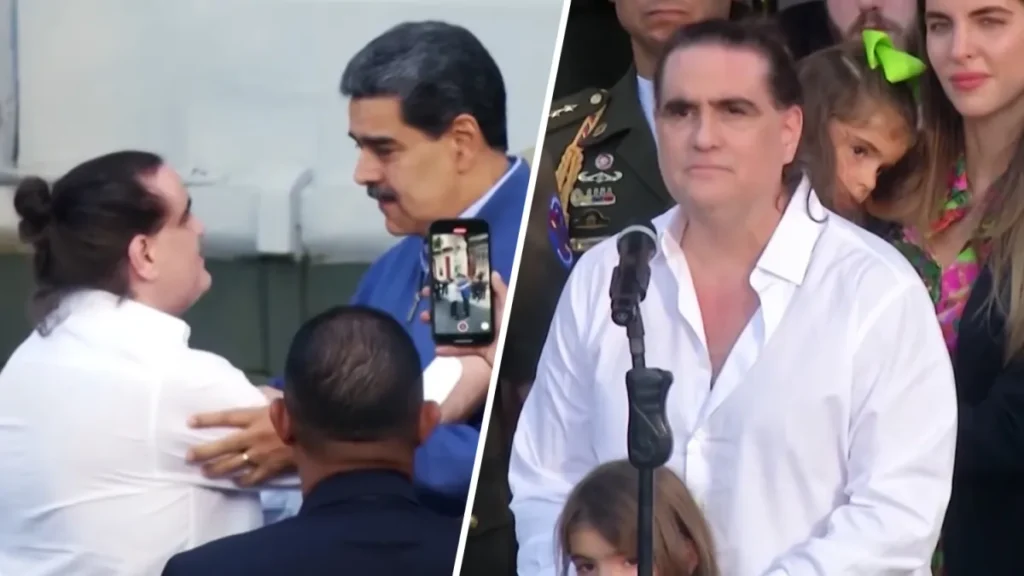
In a stunning geopolitical development, the Venezuelan government has announced the extradition of a close confidant of President Nicolás Maduro to the United States, where he will face criminal proceedings. This move, reported by multiple international outlets including the St. Albert Gazette, marks a significant shift in Caracas’s relationship with Washington and signals a potential recalibration of the long-embattled regime’s legal strategy.
The individual in question—identified by sources as a key financial operative and political ally of Maduro—was transferred to US custody after Venezuelan authorities confirmed his deportation. While the official statement from Caracas did not name the suspect, independent reports suggest he is a major figure linked to illicit financing schemes that have propped up the socialist government for years.
The Arrest and Extradition: A Game-Changing Move
The decision to hand over a Maduro loyalist to American prosecutors is unprecedented in recent Venezuelan history. For years, the US Department of Justice has sought the extradition of multiple high-ranking Venezuelan officials on charges ranging from narcotrafficking and money laundering to corruption. Yet the Maduro administration has consistently shielded its inner circle, dismissing US indictments as political persecution.
This extradition breaks that pattern. The individual is expected to appear before a federal court in the Southern District of Florida, a jurisdiction that has become the epicenter of US-led anti-corruption cases involving Venezuelan assets. Legal experts believe his testimony could crack open a treasure trove of evidence against other regime insiders.
Who Is the Extradited Ally?
Though Venezuelan officials have not released a name, multiple sources tracking the case point to a figure with deep ties to Maduro’s financial network. This individual is believed to have orchestrated complex schemes involving gold smuggling, currency manipulation, and the diversion of state funds through shell companies anchored in Panama and Switzerland.
- Role in the regime: Served as a liaison between Maduro and foreign investors brokering clandestine deals.
- Previous US sanctions: Was already under US Treasury sanctions for undermining democratic processes in Venezuela.
- Legal exposure: Faces charges under the Foreign Corrupt Practices Act and international anti-drug trafficking statutes.
The US Department of Justice has long argued that Venezuela operates as a “criminal enterprise” at the highest levels. This extradition provides a rare opportunity to pierce that veil.
Why Did Venezuela Change Its Stance?
The question on every analyst’s mind is: Why now? For years, Maduro has leveraged nationalism and anti-imperialist rhetoric to refuse extradition requests. So what prompted this sudden cooperation?
Three factors likely converged:
- The Pressure of US Sanctions Relief Talks
Behind closed doors, Washington and Caracas have been engaged in delicate negotiations regarding the lifting of crippling oil sanctions. In exchange for easing restrictions, the US demanded concrete steps toward democratic reforms—and the extradition of wanted figures was a non-negotiable condition. By handing over a Maduro ally, Venezuela signals its willingness to meet certain benchmarks.
- Internal Regime Power Struggles
Maduro’s grip on power is facing unprecedented challenges, even from within. The arrest and extradition of a rival faction member could be a calculated move to weaken internal opposition while simultaneously appeasing the US. It is a classic strategy of sacrificing a pawn to protect the king.
- Legal Leverage for Other Coalition Members
There is speculation that the extradited individual may have cooperated voluntarily—or been coerced into doing so—in exchange for lighter sentencing or protection for his family. Such plea deals are common in US federal cases, and the promise of witness protection can swiftly turn a regime insider into a valuable government asset.
What This Means for US-Venezuela Relations
This extradition does not signal a full normalization between the two countries. The US still does not recognize Maduro as the legitimate president, and the Biden administration continues to back opposition leader Juan Guaidó (though his role has waned). However, this move opens a diplomatic channel that had been frozen for years.
For the US, securing a high-value target yields several advantages:
- Intelligence gathering: The extradited ally holds intimate knowledge of Maduro’s financial pipelines, military contacts, and illicit dealings with foreign entities like Hezbollah and Russian oligarchs.
- Deterrence: Sends a message that no corrupt official is beyond reach, even while still serving in a foreign government.
- Humanitarian leverage: Could be used to negotiate better conditions for political prisoners in Venezuela.
Yet the risk remains that Maduro will use this extradition to paint his opponents as US puppets, rallying nationalist support ahead of future elections.
The Broader Implications for International Justice
This case sets a powerful precedent for how authoritarian regimes may eventually be held accountable through international legal frameworks. While the International Criminal Court (ICC) has investigated Venezuela for crimes against humanity, its reach is limited. US federal courts, by contrast, have proven they can penetrate the highest circles of power.
Consider the trajectory of similar cases:
- Mexico: Extradited drug lord Joaquín “El Chapo” Guzmán to the US, leading to a life sentence.
- Colombia: Handed over multiple paramilitary leaders and politicians for drug trafficking.
- Panama: Extradited former president Ricardo Martinelli on corruption charges.
Venezuela now joins this list, but with a twist: it is the government itself that is delivering one of its own. That signals a potential shift from a state of impunity toward a fragile rule of law—at least for those deemed expendable.
What Comes Next for the Accused
The individual now in US custody will undergo a standard judicial process. Expect:
- Arraignment within 48 hours, where charges will be formally read.
- Detention hearing to determine flight risk. Given that Venezuela lacks an extradition treaty with the US (the process was handled via deportation), the court may consider him a high flight risk.
- Potential cooperation agreement if prosecutors believe he can deliver bigger fish—perhaps even Maduro himself.
Defense attorneys will likely argue that his deportation was illegal under Venezuelan law, but US courts generally do not second-guess the manner in which a foreign government transfers a suspect. The focus will be on the evidence: wiretaps, financial records, and witness testimony gathered over years of investigation.
Final Analysis: A Calculated Gambit
The extradition of a top Maduro ally is not an act of goodwill—it is a survival tactic. Maduro is betting that sacrificing one loyalist will buy his regime more time and potentially unlock sanctions relief worth billions. For the US, it is a victory in the long war against corruption in Latin America, but one that must be handled carefully to avoid legitimizing a regime Washington still condemns.
As the legal proceedings unfold, the world will watch closely. This could be the first domino in a cascade of accountability—or just another chapter in Venezuela’s tragic saga of political maneuvering. One thing is clear: the days of total impunity for Maduro’s inner circle are numbered.
Stay tuned for updates on this developing story, including the identity of the extradited official and the specific charges he faces.