
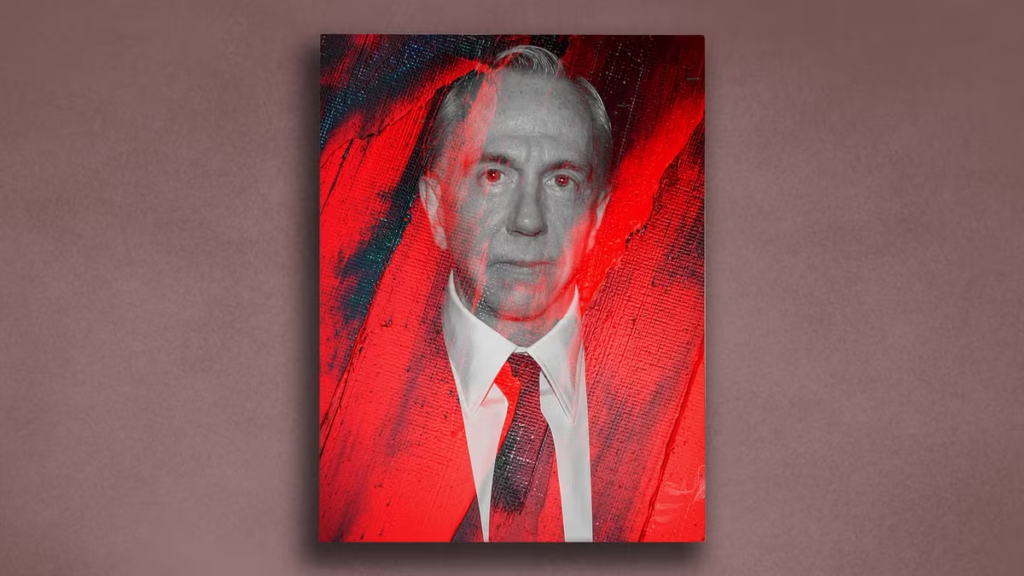
Art World Murder-for-Hire Trial: Inside the Gallerist Killing That Shocked Chelsea
The polished floors of Chelsea’s art galleries and the high-stakes bidding wars of Manhattan auction houses rarely brush against the grim reality of contract killing. But a sensational trial now unfolding in a New York courtroom has shattered that illusion, pulling back the velvet curtain on a dark tale of greed, betrayal, and an alleged hitman who once browsed for art.
At the center of the proceeding is a question that haunts the entire creative community: Did a disgruntled insider orchestrate the murder of a beloved gallerist for cold, hard cash?
The Victim: Brent Daniel Sikkema, a Pillar of the Art World
Brent Daniel Sikkema was no ordinary gallery owner. For decades, his namesake gallery in New York’s Chelsea district served as a vital launchpad for emerging and established artists. Known for a sharp curatorial eye and a gentle demeanor, Sikkema cultivated careers and built an enduring reputation as one of the most trusted figures in a notoriously cutthroat industry.
His brutal death—stabbed in his own Manhattan apartment in January 2023—sent shockwaves through the art ecosystem that are still reverberating today. Initially reported as a possible robbery gone wrong, the investigation quickly took a far more sinister turn as detectives uncovered a web of personal grievances, financial motives, and alleged murder-for-hire plotting.
A Legacy Under Threat
Sikkema’s gallery wasn’t just a business; it was a relationship-driven institution. He represented artists like Katherine Hubbard, Luis Camnitzer, and Moyra Davey, and his eye for talent made him a fixture at Art Basel and the Armory Show. Colleagues describe him as a man who mentored tirelessly, often taking risks on unproven voices when others wouldn’t. That legacy now hangs in the balance as the trial exposes the darker side of art-world commerce.
The Accused: Maxwell Grell and a Web of Suspicion
Enter Maxwell Grell, a former employee of the gallery. According to prosecutors, Grell harbored deep resentment after a falling out with Sikkema. But rather than walk away, he allegedly orchestrated a chilling plan that crossed every ethical line.
The alleged hitman? A man named Daniel de la Torre, who is currently testifying against Grell in exchange for a lighter sentence.
The Motive: Money, Revenge, and a Promise of Inheritance
Prosecutors allege that Grell offered de la Torre a significant sum of money to eliminate Sikkema. What drove this betrayal? Investigators believe it was a toxic cocktail of:
- Personal animosity following a bitter falling-out between Grell and his former mentor.
- Financial desperation, as Grell had reportedly been cut out of a potential inheritance or business deal.
- A sense of entitlement, as Grell allegedly believed murder was the only way to claim what he felt was owed to him.
Grell’s defense team, however, paints a very different picture—one in which their client may have engaged in reckless talk but never intended for anyone to die.
The Trial: A Hitman Takes the Stand
This is far from a standard murder case. The star witness is the confessed killer himself.
De la Torre admitted in open court to entering Sikkema’s apartment with a knife. He described the events of that night with chilling particularity, claiming Grell gave him precise instructions about the victim’s schedule, building layout, and even the best time to strike.
The Defense’s Counter-Narrative
Grell’s attorneys are aggressively attacking de la Torre’s credibility. They argue that he is:
- A convicted criminal with every incentive to cooperate with prosecutors.
- A man with nothing to lose by embellishing or fabricating details.
- Potentially the sole architect of the murder, using Grell’s name to deflect blame.
During cross-examination, the defense has pressed de la Torre on inconsistencies in his statements to police. They’ve questioned why he waited months to implicate Grell, and whether he truly acted on Grell’s orders or simply saw an opportunity to shift responsibility.
Art World Fallout: Trust, Money, and the Cost of Ambition
The trial isn’t just about two men in a courtroom. It’s a Rorschach test for an industry built on relationships, reputation, and sometimes, ruthless competition.
Galleries operate on thin margins and thicker egos. In a market where a single show can make or break a career, personal disputes can escalate into litigation—or, in this case, alleged violence. Art professionals I’ve spoken with express a mix of horror and recognition: the same ambition that drives innovation can, in rare cases, curdle into something dangerous.
What This Means for Gallery Owners and Collectors
If there’s a lesson here, it’s that the art world’s informality—a business run on handshakes and whispered deals—can also create blind spots. Few galleries have the security protocols of a law firm or a bank. Trust is the currency, and when that trust is exploited, the consequences can be fatal.
- For gallerists: This case underscores the importance of clear contracts, proper severance practices, and mental health support for staff.
- For collectors: It’s a reminder that the glossy surface of gallery life often hides complex human dramas.
- For artists: The trial raises uncomfortable questions about the power dynamics between creators and the people who sell their work.
What’s at Stake in the Verdict
As the jury weighs testimony, the art world watches closely. A conviction of Grell would send a message that even the most insulated communities are not above the law. An acquittal would leave many wondering if the real mastermind remains unpunished.
Either way, the legacy of Brent Daniel Sikkema—a man who believed in art as a force for good—will be forever intertwined with a story of greed, knives, and a hitman who once walked through his gallery doors.
The trial continues. The art world holds its breath.

