Gadi Eisenkot Government Talks Begin After Israel’s Election
Winning an election does not always mean a political leader can immediately take control of a government. In Israel, a party or political bloc must secure enough parliamentary support to establish a governing coalition, and the latest election has left the country facing a complicated political transition.
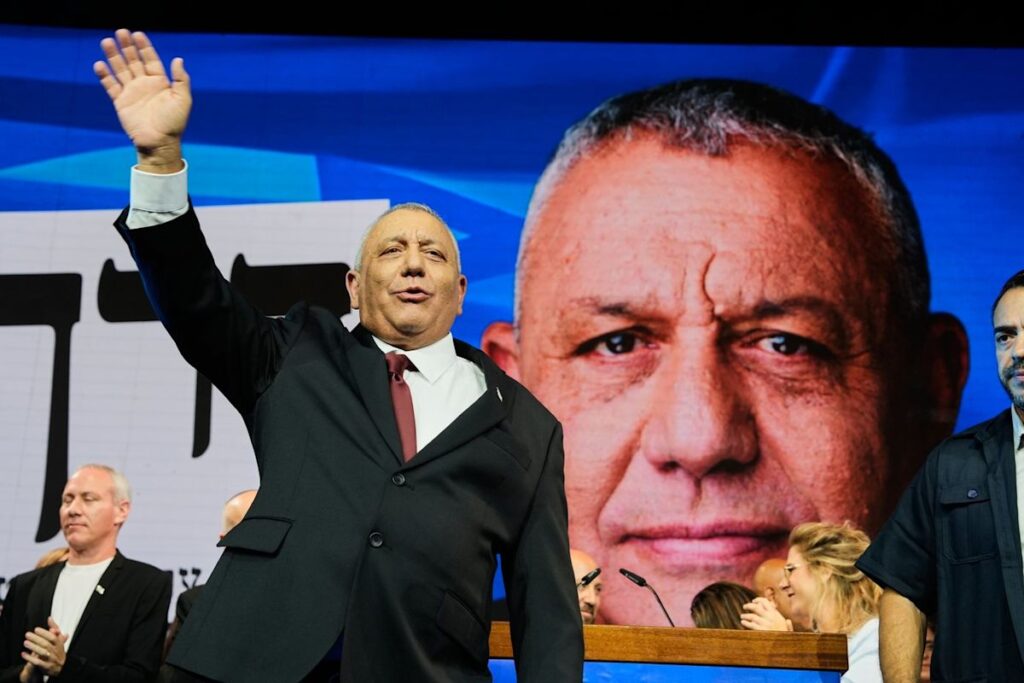
Israeli President Isaac Herzog has selected Gadi Eisenkot, Prime Minister Benjamin Netanyahu’s main political rival, to attempt to form the country’s next government. The announcement came late Saturday following consultations with political parties elected to parliament on October 27, 2026.
The decision gives Eisenkot an opportunity to negotiate with potential coalition partners, but it does not guarantee that he will become Israel’s next prime minister. Netanyahu, whose governing coalition lost its parliamentary majority, is also expected to work against Eisenkot’s attempt to establish a new administration.
The political development marks an important moment for Israel as competing parties consider possible alliances and negotiate over the policies that would shape the next government.
Why Isaac Herzog Selected Gadi Eisenkot
President Isaac Herzog’s decision followed several days of discussions with representatives of the political parties elected to Israel’s parliament, known as the Knesset.
After considering the available political support, Herzog determined that Eisenkot had the strongest opportunity to assemble a parliamentary majority. Support from Arab-led political parties was an important factor in that assessment.
Eisenkot is a former chief of staff of the Israel Defense Forces and leads the Yashar party, whose name translates to Straight. He emerged as Netanyahu’s principal challenger in the October 2026 election.
Netanyahu’s political bloc had previously controlled as many as 68 parliamentary seats, but its representation fell to 53 following the election.
Meanwhile, the opposition bloc led by Eisenkot secured 48 seats, while Arab-led parties obtained the remaining 19 seats in the 120-member Knesset.
These results explain why coalition negotiations will be particularly important. Neither major political bloc obtained the minimum number of seats required to govern independently.
How Israel’s Coalition Government System Works
Unlike political systems where voters directly elect a president or where one party can govern independently after winning an election, Israel uses a parliamentary system based on political parties and coalition agreements.
The Knesset has 120 seats, and a government needs support from at least 61 members to establish a parliamentary majority.
This means that political leaders must negotiate with other parties to secure enough support to govern. Smaller political groups can become particularly influential when neither major bloc has sufficient seats.
In the latest election, the 19 seats secured by Arab-led parties became especially important to the opposition’s efforts to form a government.
However, securing their support presents political difficulties for Eisenkot. Some members of his opposition bloc have expressed resistance to cooperating with Arab-led parties, making the negotiations more complicated.
The situation also leaves Netanyahu with an opportunity to seek alternative arrangements that could prevent his rival from taking power.
Three Possible Paths for Eisenkot to Form a Government
Eisenkot faces several potential arrangements as he attempts to gather sufficient parliamentary support. Each option comes with political conditions that could affect the composition and priorities of the next Israeli government.
1. A power-sharing agreement with Netanyahu
One possibility involves reaching an agreement with Netanyahu to establish a national unity government. Netanyahu publicly called for this arrangement on Saturday night.
However, the two politicians have competing political interests, and it remains uncertain whether they could agree on how to divide government responsibilities or leadership positions.
2. Cooperation with Arab-led political parties
Another option is obtaining support from Arab-led parties, which collectively secured 19 seats in the election.
The Ra’am party has indicated that it is prepared to support Eisenkot. The Joint List has also expressed willingness to back his effort from outside the governing coalition.
Nevertheless, this arrangement faces resistance from some of Eisenkot’s political partners. The conservative Yisrael Beytenu party, for example, has already rejected joining a government supported by Arab-led parties.
Eisenkot has also established conditions for potential Arab party participation, including recognition of Israel as a Jewish state and the designation of Hamas as a terrorist organization.
3. Negotiations with ultra-Orthodox parties
The third possibility involves cooperation with ultra-Orthodox religious parties that previously participated in Netanyahu’s government.
However, disagreements over military service exemptions could make an agreement difficult. Eisenkot and his political partners campaigned for equal military or civil service obligations, including ending long-standing exemptions for ultra-Orthodox men.
These religious parties want to maintain the exemptions, arguing that they are necessary to protect their religious way of life.
United Torah Judaism has nevertheless indicated that it remains open to discussing cooperation with Eisenkot, potentially giving the party an influential position during negotiations.
Netanyahu’s Position and the Political Challenges Ahead
Although Netanyahu lost his parliamentary majority, he remains an important figure in the government formation process.
He has challenged the election results by making claims about Arab parties and their voters, alleging that the election was stolen. However, the Associated Press reported that he provided little evidence supporting these allegations.
Israel’s Shin Bet security agency has opened an investigation into possible foreign interference in the election. However, the Central Elections Commission and President Herzog have maintained that the election was valid and that any identified wrongdoing would not have significantly changed the outcome.
Netanyahu is expected to continue opposing Eisenkot’s efforts, particularly if the opposition leader seeks parliamentary support from Arab-led parties.
At the same time, Netanyahu and his Cabinet will remain in office in a caretaker capacity while negotiations continue. Their authority will be limited until a new coalition is established.
The political transition also comes after three years of wars in Gaza and across the Middle East, making questions involving national security, military service, and relations between political groups particularly significant.
What Happens Next in Israel’s Government Formation?
Eisenkot is scheduled to formally receive the mandate to form a government during an official ceremony on Sunday, November 8, 2026.
Under the timetable reported by the Associated Press, he will have 28 days to assemble a coalition, with the possibility of receiving an additional two-week extension from the president.
Israel’s newly elected members of the Knesset are scheduled to be sworn in on Tuesday evening. This parliamentary transition will take place while coalition negotiations continue.
If Eisenkot fails to establish a government within the permitted period, Netanyahu could receive an opportunity to attempt the same process. If Netanyahu also fails, Israel could face another national election early next spring.
For readers following international politics, the important dates to watch are November 8, when Eisenkot is expected to receive the mandate, and November 10, when the new Knesset members are scheduled to take their oaths.
The coming weeks will determine whether Eisenkot can secure the necessary 61 parliamentary supporters or whether Netanyahu can find another route to retain political leadership. Until a coalition is finalized, Israel will continue under its outgoing caretaker government.