Israel’s Government Formation Enters a New Political Phase
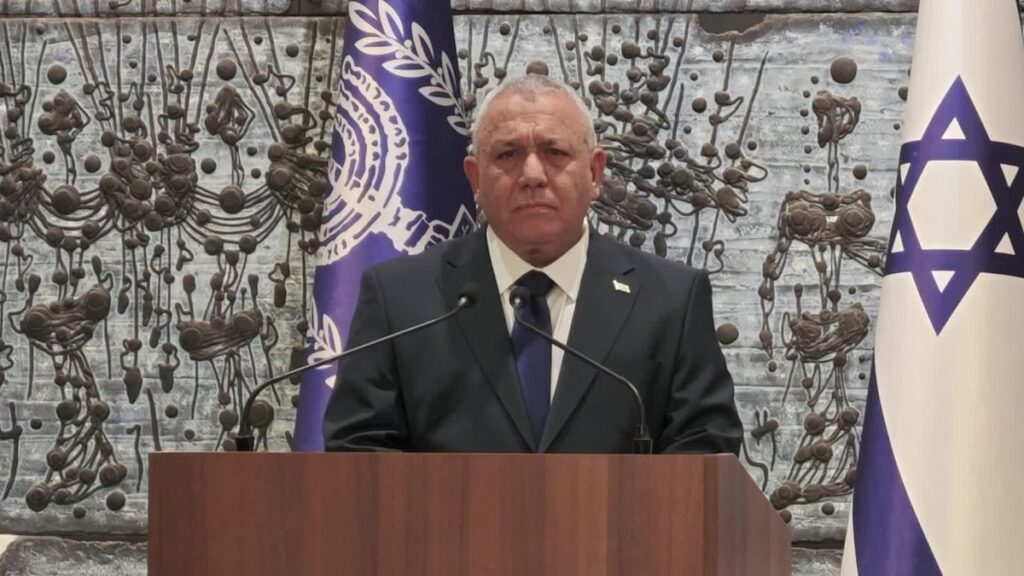
Israel’s political landscape has entered another important period of negotiations after an inconclusive national election left competing political blocs without enough parliamentary support to govern independently. Former military chief Gadi Eisenkot is now attempting to assemble a coalition that could replace Prime Minister Benjamin Netanyahu.
On November 8, 2026, Eisenkot formally received the mandate from President Isaac Herzog to form the country’s next government. His approach includes an unexpected invitation to members of Netanyahu’s Likud Party and the Religious Zionist Party to consider joining a government under his leadership.
The proposal creates an unusual political situation because Eisenkot is attempting to attract support from individuals and parties associated with the very government he wants to replace. His challenge is to find enough common ground among political groups with different priorities.
Why Gadi Eisenkot Is Reaching Out to Netanyahu’s Allies
Eisenkot leads the Yashar party and previously served as chief of staff of the Israel Defense Forces. His political campaign focused on changing the country’s leadership and establishing a government capable of addressing Israel’s security and domestic challenges.
Following the October 27, 2026, election, neither Netanyahu’s political camp nor the opposition secured an outright parliamentary majority. This created the need for negotiations involving parties that might otherwise remain political rivals.
Eisenkot has indicated that members of Likud and the Religious Zionist Party could participate in his proposed government if they accept his leadership and the principles he has presented.
Among the political figures involved is Bezalel Smotrich, leader of the Religious Zionist Party and Israel’s finance minister. His party’s participation could become important in negotiations over the composition of the next administration.
The invitation does not mean Netanyahu has agreed to support Eisenkot. Rather, it represents an attempt to attract lawmakers from the incumbent prime minister’s political camp and expand the possible coalition.
The Parliamentary Numbers Behind the Coalition Negotiations
Israel’s parliament, known as the Knesset, has 120 seats. A government needs the support of at least 61 lawmakers to secure a parliamentary majority.
The election results left Eisenkot with a difficult starting position. His Yashar party secured 21 seats, while the broader opposition bloc associated with his political effort held 48 seats.
Netanyahu’s Likud Party won 27 seats, and his wider political coalition held 53. Neither side independently reached the 61-seat threshold.
Arab-led political parties also became important to the negotiations, holding a combined 19 seats. Their parliamentary support could potentially help Eisenkot establish a government, although cooperation with these parties remains controversial among some potential coalition partners.
The figures demonstrate why Eisenkot is exploring different political arrangements instead of relying exclusively on his existing partners.
Why Arab parties matter in the negotiations
Ra’am and the Joint List are two Arab-led political groups whose parliamentary representation could influence the formation of the next government.
Support from these parties could help an opposition-led administration obtain the numbers necessary to survive a parliamentary confidence vote. However, some politicians within Eisenkot’s broader political camp have rejected depending on Arab parties to establish a government.
Avigdor Liberman, leader of Yisrael Beiteinu and a prominent opposition figure, has been particularly resistant to an arrangement that relies on Arab-party support.
This disagreement creates another obstacle for Eisenkot, who must balance the need for additional parliamentary votes with the political conditions imposed by his potential partners.
Eisenkot’s Four Principles for a New Government
Beyond securing enough parliamentary support, Eisenkot has outlined political principles that prospective coalition partners would be expected to accept.
These conditions are intended to establish a common foundation for the proposed national emergency government rather than simply creating an alliance based on opposition to Netanyahu.
The four principles include:
1. Israel’s identity as a Jewish and democratic state: Prospective partners must recognize Israel’s national identity and democratic system.
2. The values of the Declaration of Independence: Coalition members are expected to support the principles associated with Israel’s founding declaration.
3. Mandatory military service: Eisenkot supports compulsory military service for all, making military-service exemptions an important subject in potential coalition negotiations.
4. Recognizing Hamas as a terrorist organization: Prospective partners must accept this position and support ending Hamas’s governing and military power.
These requirements could make negotiations more complicated, particularly with ultra-Orthodox political parties that have historically sought exemptions from compulsory military service for their communities.
The Challenges Facing Israel’s Next Government
Eisenkot’s efforts come at a time when Israel faces significant security, diplomatic, and domestic political challenges. His proposed administration would need to address these issues while maintaining enough parliamentary support to govern.
One possible arrangement involves cooperation with ultra-Orthodox parties. Together, these parties hold 13 seats, making them potentially important partners in efforts to reach the required parliamentary majority.
However, negotiations would likely involve difficult discussions about military-service exemptions, an issue that has generated considerable disagreement in Israeli politics.
Another possibility is a minority government supported externally by Arab-led parties. Such an arrangement could allow Eisenkot to take office without formally including those parties in the governing coalition.
Nevertheless, this approach would leave the government dependent on parliamentary support from lawmakers outside its formal coalition when important votes arise.
A broader unity government involving Likud is another possibility, although disagreements over leadership and government policy make such an arrangement difficult.
Reuters reported on November 8, 2026, that Eisenkot was pursuing a broad national emergency government while facing competing demands from potential partners. The negotiations involve questions about military service, relations with Arab parties, and the country’s wider security priorities.
What Happens If Eisenkot Cannot Form a Government?
President Isaac Herzog has given Eisenkot 28 days to assemble a governing coalition. He may receive an additional 14 days if an extension is granted.
If Eisenkot cannot secure sufficient support within the allotted period, Herzog could give Netanyahu an opportunity to attempt forming the next government.
Netanyahu would then face the same fundamental challenge: assembling enough parliamentary support to reach the 61-seat majority required to govern.
If the available political options fail, Israel could eventually face another election, depending on the constitutional procedures and parliamentary decisions that follow.
The possibility of another vote makes the current negotiations particularly important. Political parties must decide whether they can reach an agreement despite their disagreements or whether the country will remain caught in an extended government formation process.
What Readers Should Watch in the Coming Weeks
The next developments will depend on which political parties respond positively to Eisenkot’s invitations and whether his proposed partners can agree on the major issues separating them.
Three developments deserve particular attention: whether members of Likud consider joining a government led by Eisenkot, whether ultra-Orthodox parties become willing coalition partners, and whether Arab-led parties provide the parliamentary support needed for an alternative arrangement.
Readers following international politics should also monitor announcements from President Isaac Herzog’s office, statements from the major political parties, and updates on the 28-day government formation period.
For now, Eisenkot’s proposal represents an attempt to build a government through negotiations that cross traditional political divisions. Whether those discussions produce a workable parliamentary majority will determine Israel’s next political direction.
Sources: Reuters, November 8, 2026; Associated Press; The Washington Post; Jewish Telegraphic Agency.