Kevin Warsh Faces a High-Risk Test as a Powerful but Perilous Role Looms
In global finance and U.S. economic policy circles, few names spark as much debate as Kevin Warsh. Once seen as a steady hand during financial turmoil, Warsh now stands at the center of intense speculation surrounding a potential return to high-level economic leadership. But what appears to be a prestigious opportunity may, in reality, represent a political and economic poisoned chalice — one filled with risk, scrutiny, and limited room for error.
As inflation pressures, market volatility, and political polarization converge, any leader stepping into a top economic role inherits challenges that could define — or derail — their legacy. For Warsh, the timing could not be more delicate.
Why Kevin Warsh Is Back in the Spotlight
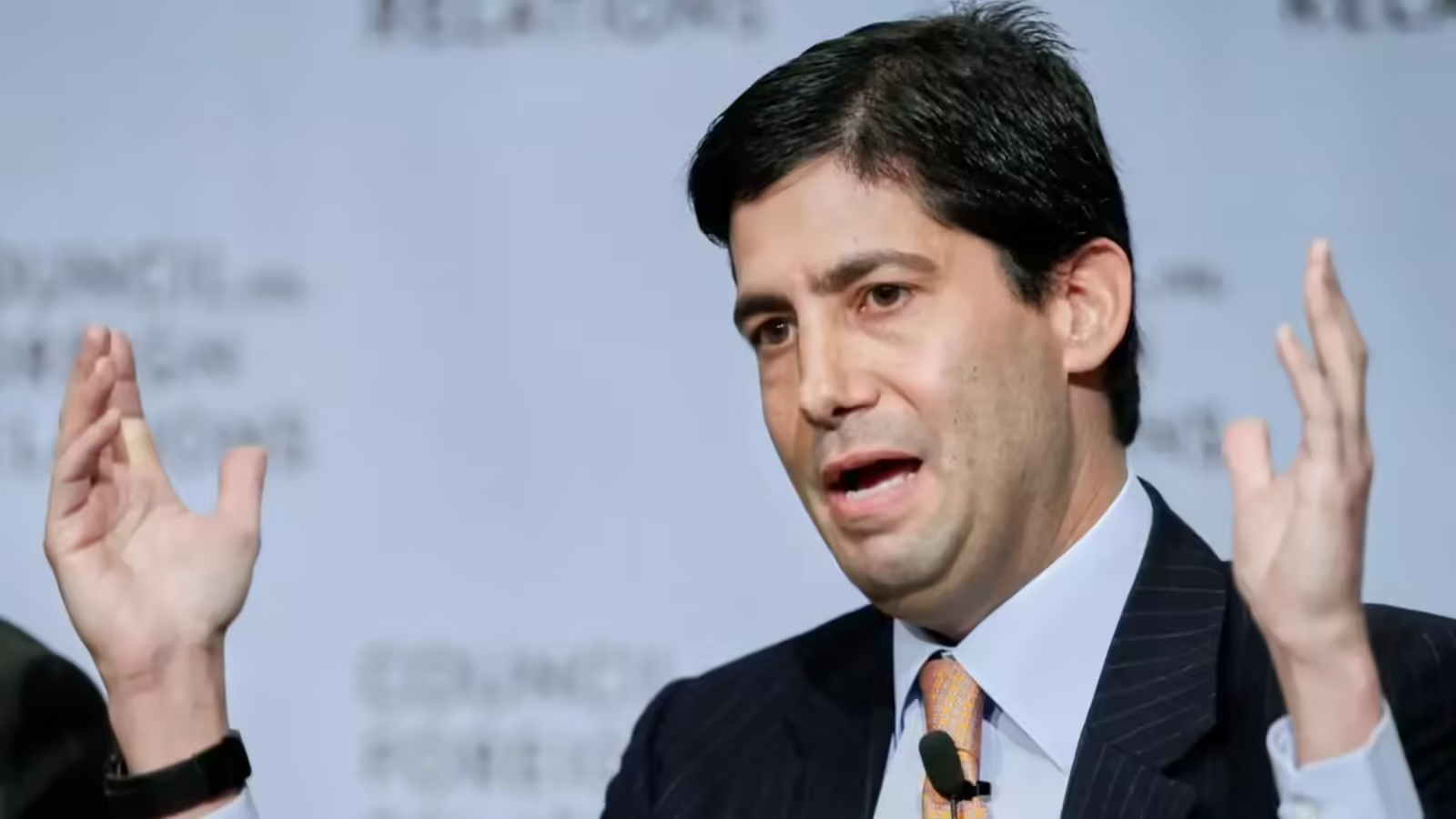
Kevin Warsh, a former Federal Reserve governor and longtime economic advisor, has re-emerged as a prominent figure in discussions about the future direction of U.S. monetary and fiscal policy. His past experience during the global financial crisis gives him credibility, particularly among policymakers seeking discipline, stability, and institutional reform.
However, the current economic climate is vastly different from the one Warsh previously navigated. Today’s environment is shaped by persistent inflation, geopolitical instability, ballooning public debt, and heightened public distrust in financial institutions.
This combination makes any leadership position not just influential — but inherently dangerous.
The Meaning Behind the “Poisoned Chalice”
In political and financial history, a poisoned chalice refers to a role that appears powerful but carries near-impossible expectations. Whoever accepts it is often blamed for problems that were already entrenched long before their arrival.
For Kevin Warsh, this risk is substantial. Markets expect clarity. Politicians demand results. Voters want relief from rising costs. Yet the tools available to policymakers are increasingly blunt, constrained by past decisions and global forces beyond domestic control.
Success would require near-perfect execution — and even then, credit may be scarce.
Inflation: The Central Threat to Any Economic Agenda
At the core of the challenge lies inflation, which continues to erode purchasing power and test public patience. While headline numbers may fluctuate, structural pressures remain stubbornly persistent.
Any economic leader associated with tightening monetary conditions risks being blamed for slower growth, weaker employment, or market downturns. Conversely, a softer stance invites accusations of recklessness and currency debasement.
For Warsh, known for his hawkish reputation on monetary discipline, this creates a narrow and unforgiving path forward.
Market Volatility and Investor Expectations
Financial markets today are less forgiving than ever. Algorithms react instantly. Investors demand predictability, even when none exists. A single misstep, miscommunication, or unexpected policy shift can trigger sharp sell-offs.
Should Kevin Warsh step into a leadership role, markets would immediately attempt to “price in” his philosophy. That initial optimism could quickly turn hostile if outcomes fail to match expectations.
This dynamic places enormous pressure on decision-making, turning every policy signal into a high-stakes gamble.
Political Pressure From All Sides
Beyond markets, Warsh would face relentless political pressure. Economic policy has become deeply politicized, with both sides of the aisle eager to assign blame for rising costs, debt levels, and inequality.
Hard choices — such as fiscal restraint or tighter financial conditions — are rarely popular. Even necessary reforms can become political liabilities, especially in election cycles where economic anxiety dominates public discourse.
In this climate, technocratic expertise alone may not be enough to survive.
Legacy Risk: Reputation on the Line
For a figure like Kevin Warsh, legacy matters. His past service during crisis moments earned him respect across many sectors. But returning to the spotlight now risks overshadowing those achievements.
If inflation worsens, if markets stumble, or if growth stalls, public narratives tend to simplify blame. The leader becomes the face of failure, regardless of deeper structural causes.
This is the true danger of the poisoned chalice: the risk of being remembered for problems you did not create but could not fix.
Supporters See Discipline and Credibility
Despite the risks, Warsh’s supporters argue that his credibility, experience, and institutional knowledge make him uniquely qualified to handle turbulent conditions. They point to his emphasis on transparency, accountability, and long-term stability.
In their view, avoiding hard decisions is more dangerous than confronting them. Accepting the challenge, even under hostile conditions, could demonstrate leadership when it is most needed.
But conviction alone does not guarantee political or economic success.
The Structural Limits of Economic Leadership
One of the most overlooked realities in modern economics is how limited the power of individual leaders has become. Global supply chains, energy markets, demographic shifts, and international conflicts all shape outcomes in ways no central banker or finance official can fully control.
Yet public expectations remain sky-high. The gap between perceived power and actual influence creates a trap — and anyone stepping into it risks inevitable disappointment.
For Kevin Warsh, navigating these limits would require not just policy skill, but exceptional communication and political resilience.
Is Declining the Role the Safer Option?
Some observers quietly suggest that refusing such a role may be the wiser move. Preserving credibility, avoiding association with economic pain, and waiting for a more favorable moment could protect Warsh’s long-term standing.
History offers many examples of capable leaders whose reputations were damaged by circumstances beyond their control. In that context, restraint can be strategic.
Still, walking away also carries its own costs — particularly for someone committed to shaping economic policy.
A Defining Moment Ahead
Whether Kevin Warsh ultimately accepts or avoids this high-stakes responsibility, the debate itself highlights a broader truth: economic leadership today is more dangerous than ever. Power comes paired with blame, and influence is constrained by forces no single figure can master.
If Warsh does take on this challenge, he will inherit not just authority, but an economic landscape fraught with risk, skepticism, and unforgiving expectations.
That is the essence of the poisoned chalice — and why the decision ahead may define his career more than any policy he ultimately pursues.