How the Bank of Canada Mastered Inflation After a Painful Lesson
For millions of Canadians, the past few years have been a harsh economics crash course. The soaring cost of groceries, gas, and housing wasn’t just a news headline—it was a daily financial reality. At the center of this storm stood the Bank of Canada (BoC), an institution tasked with maintaining price stability, which found itself navigating an inflationary surge of a magnitude not seen in decades. The journey from runaway prices to renewed stability was neither simple nor painless, but it has provided a critical, hard-earned education for the central bank. This is the story of how the BoC learned from its mistakes, adapted its strategy, and ultimately regained control.
The Unforeseen Storm: How Inflation Took Root
In the initial aftermath of the global pandemic, the BoC, like most major central banks, interpreted rising prices as “transitory.” The logic was that supply chain snarls and pent-up consumer demand would ease as the world reopened. For a time, it held interest rates at historic lows to support the fragile economic recovery.
However, this diagnosis proved to be a critical miscalculation. Several powerful forces converged to create a perfect inflationary storm:
- Global Supply Chain Mayhem: Factory shutdowns and port congestion created unprecedented shortages of everything from semiconductors to furniture.
- Soaring Commodity Prices: The war in Ukraine sent shockwaves through energy and agricultural markets, drastically increasing costs for fuel and food.
- Domestic Demand Overheating: Government stimulus and accumulated savings led to a surge in consumer spending, particularly on goods, overwhelming the strained supply system.
- A Tight Labor Market: Rapid job recovery led to wage growth, which, while positive for workers, added another persistent layer to inflationary pressures.
The BoC’s initial patience allowed these forces to become entrenched. The realization that inflation was broad-based and persistent, not transitory, was the painful first lesson.
The Pivot to Aggressive Action: A New Playbook
By early 2022, with inflation hitting 7%-plus and public trust eroding, the Bank executed a dramatic pivot. It embarked on one of the most aggressive monetary tightening cycles in its history. The era of near-zero interest rates was over.
The Strategy: Front-Loaded Rate Hikes
Gone was the cautious, quarter-point approach. The BoC introduced jumbo 50 and 75 basis-point hikes, moving its policy rate from 0.25% to a 22-year high of 5.0% in just over a year. This “front-loading” was designed to shock the economy, break inflationary psychology, and unequivocally demonstrate its commitment to restoring price stability.
Clear, Forceful Communication
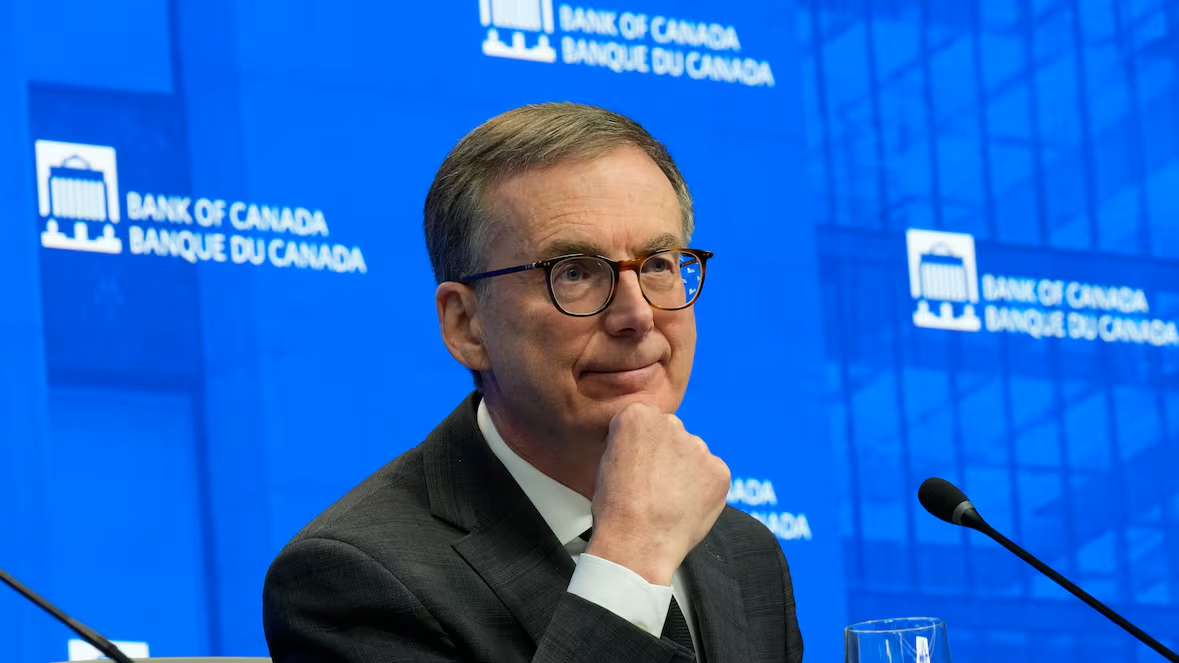
The Bank learned that in a crisis, clarity is paramount. Governor Tiff Macklem and his team shifted their language from nuanced to direct, repeatedly emphasizing that restoring price stability was the absolute priority, even at the risk of slowing the economy. This forward guidance was crucial for managing market and public expectations.
The Hard-Won Lessons from the Inflation Surge
The experience has fundamentally altered the BoC’s framework and mindset. Key takeaways now embedded in its approach include:
- The High Cost of Delay: The primary lesson is that acting too slowly on inflation allows it to become embedded in wage and price-setting behavior, requiring even more painful medicine later. Early and decisive action is now the preferred doctrine.
- Data-Dependence with a Wider Lens: The Bank now scrutinizes a broader set of indicators beyond traditional models. It pays closer attention to inflation expectations, corporate pricing behavior, wage growth, and global geopolitical risks in real-time.
- The Importance of Supply-Side Vigilance: While monetary policy tackles demand, the Bank now has a heightened awareness of how supply-side shocks (like housing shortages or global disruptions) can drive inflation and complicate its task.
- Transparency in Uncertainty: The BoC has acknowledged the challenges of forecasting in a volatile world and strives to be more transparent about the risks and uncertainties in its outlook.
The Path Forward: A Cautious and Vigilant Stewardship
Having successfully lowered inflation from its peak towards the 2% target, the Bank has begun a careful easing cycle. However, the scars of the recent battle ensure it will not return to the pre-pandemic policy stance.
The new watchword is vigilance. The BoC is meticulously parsing data, aware that the “last mile” of inflation fighting can be tricky. It remains focused on core inflation measures and is prepared to hold rates higher for longer if necessary to prevent a resurgence.
Furthermore, the episode has sparked a necessary public conversation about the Bank’s mandate and tools. There is ongoing debate about whether its 2% inflation target remains optimal and if more should be done to explicitly consider asset prices, like housing, within its policy framework.
Conclusion: A Stronger, More Resilient Central Bank
The inflation surge of the 2020s was a severe test for the Bank of Canada. The initial misstep in labeling it “transitory” damaged its credibility and imposed real hardship on Canadians. Yet, from this painful lesson emerged a more resilient and pragmatic institution.
By pivoting decisively to aggressive rate hikes, communicating with unwavering clarity, and internalizing the hard-won lessons of the crisis, the BoC has demonstrated its ability to adapt and fulfill its core mandate. The path to price stability was rocky, but it has equipped Canada’s central bank with a deeper, more实战 (practical) understanding of inflation dynamics for the challenges of the future. The mastery was not born from infallibility, but from the capacity to learn, correct course, and act with conviction when it mattered most.