
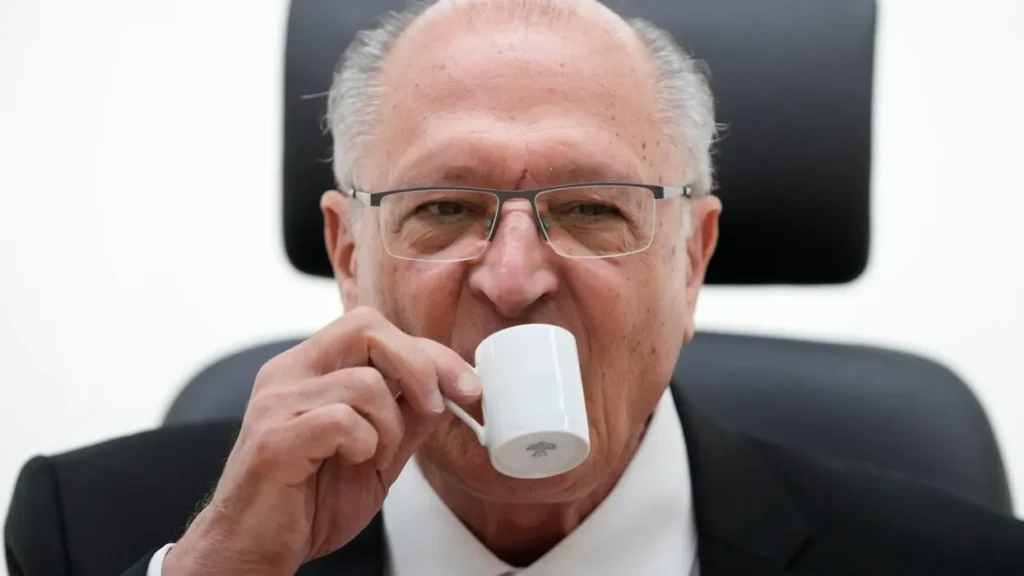
# Mercosur-EU Trade Deal: Brazil’s VP Calls It a Lifeline in a Fractured Global Economy
**What if one trade agreement could steady the ship in a stormy global market? That’s the question Brazilian Vice President Geraldo Alckmin is asking—and answering. After decades of negotiations, the** Mercosur-EU free trade pact **is finally poised to become a reality. For Alckmin, who has served as a chief negotiator for the South American bloc, this deal is more than a bureaucratic achievement. It’s a** strategic anchor **in a world rocked by protectionism, war, and economic fragmentation.
—
## Why the Mercosur-EU Deal Matters Now More Than Ever
Global trade is under siege. Tariffs are rising. Supply chains are breaking. Geopolitical tensions between the United States and China are reshaping old alliances. In Europe, energy costs from the war in Ukraine continue to squeeze businesses. In South America, inflation and political instability remain persistent threats.
Into this chaos steps the Mercosur-EU agreement—a pact that links two of the world’s largest economic blocs. According to Alckmin, the timing couldn’t be better.
“We are seeing a fragmentation of global trade,” Alckmin said in a recent interview. “This agreement sends a very strong signal that cooperation still prevails over isolation.”
The deal, which has been under negotiation for over two decades, was often stalled by disagreements over environmental standards and agricultural access. But the current global crisis has given negotiators new urgency. Alckmin describes the agreement as “relief in a turbulent world”—a rare win for multilateralism when unilateral actions dominate headlines.
—
## What’s Actually in the Mercosur-EU Trade Deal?
Let’s break it down. This isn’t just a symbolic handshake. The Mercosur-EU free trade agreement is one of the most ambitious trade pacts ever proposed. Here’s what it covers:
– **Tariff elimination on billions of dollars in goods** – Agricultural products like Brazilian beef, poultry, sugar, and coffee will see reduced barriers. In return, European machinery, pharmaceuticals, cars, and luxury goods will flow more freely into South America.
– **Market access for services** – From banking to logistics, the deal opens doors for European firms to operate more easily in Mercosur countries.
– **Government procurement rules** – Companies from both blocs will have a fairer shot at public contracts.
– **Intellectual property protections** – This includes stronger patent rules and geographical indications for products like champagne and Parmigiano-Reggiano.
– **Environmental and labor commitments** – A key addition following years of criticism. Both sides must adhere to the Paris Climate Agreement and enforce labor rights.
The bottom line? This deal creates a market of over 780 million people. That’s roughly 10% of the world’s population. For businesses looking for stability, that scale is hard to ignore.
—
## Brazil’s Strategic Play: Hedging Against Global Volatility
Brazil isn’t just signing this deal for the sake of diplomacy. It’s an economic survival strategy.
### Diversification Beyond Commodities
Brazil’s economy has long been tied to selling raw materials—soybeans, iron ore, crude oil—to China. While that relationship has been lucrative, it leaves Brazil vulnerable to Beijing’s political and economic swings. The EU provides an alternative. A high-value, stable market that demands quality, sustainability, and innovation.
By locking in trade terms with Europe, Brazil can:
– Attract green investment from European companies seeking sustainable supply chains
– Expand its manufacturing and tech exports beyond raw goods
– Reduce its dependency on any single trading partner
### Environmental Credentials as a Trade Asset
One of the biggest hurdles for the Mercosur-EU deal was environmental pushback. European lawmakers and environmental groups argued that Brazil, under former President Jair Bolsonaro, was encouraging deforestation in the Amazon. That threat nearly killed the agreement.
But under President Luiz Inácio Lula da Silva, Brazil has re-committed to protecting the rainforest. Alckmin has been vocal in highlighting the environmental safeguards now embedded in the deal.
“This agreement includes strong commitments to combat deforestation and promote sustainable development,” Alckmin explained. “It shows that trade and environmental protection can go hand in hand.”
For Brazil, this is more than a talking point. It’s a way to rebrand itself as a global leader in green trade—a position that can unlock billions in climate finance and eco-conscious investment.
—
## The Challenges That Remain
Even with Alckmin’s optimism, the path to ratification is not paved with roses.
### European Farmer Resistance
French farmers, in particular, have voiced strong opposition. They fear that cheaper South American beef and poultry will flood European markets, undercutting local producers who face higher regulatory costs. Agricultural unions in countries like Poland and Ireland share those concerns.
To address this, negotiators have included:
– Tariff-rate quotas that limit how much South American meat can enter the EU duty-free
– Phased tariff reductions over several years to give EU farmers time to adapt
– Sanitary and phytosanitary standards that maintain high food safety requirements
### Ratification Hurdles
The deal must be approved by all 27 EU member states and the European Parliament. Some governments are still skeptical. France’s National Assembly even voted against starting ratification talks in 2023. While that vote was non-binding, it showed the political headwinds.
In South America, Paraguay and Uruguay are eager for the deal but Argentina’s economic instability could slow the process. Brazil, as the bloc’s largest economy, is pushing hard for a final vote in 2025.
—
## Why Alckmin Believes This Deal Will Survive
For Alckmin, the current chaos is exactly why the agreement must succeed.
“In a world that feels increasingly divided, this agreement is a bridge,” he said. “It sends the message that dialogue and cooperation still have power.”
He points to concrete examples:
– European automakers like Volkswagen and Stellantis already have deep roots in Brazil. A trade deal would let them import parts and export finished vehicles with lower costs.
– Brazilian agricultural giants like JBS and Marfrig could expand their halal and organic product lines for European consumers.
– Pharmaceutical companies on both sides could collaborate on vaccine distribution and generic drug production.
Alckmin’s vision is pragmatic, not idealistic. He doesn’t claim the deal will end global trade wars or solve climate change overnight. But he sees it as a proof of concept—a demonstration that nations can still find common ground when they choose long-term stability over short-term nationalism.
—
## What This Means for the Global Economy
If ratified, the Mercosur-EU agreement would be the largest free trade deal outside of the Comprehensive and Progressive Agreement for Trans-Pacific Partnership (CPTPP). It would set a precedent for:
– How developed and developing economies can balance trade and climate goals
– How regional blocs can serve as shock absorbers against global economic fragmentation
– How agricultural and industrial interests can coexist through phased liberalization
Critics argue the deal doesn’t go far enough on environmental enforcement. Supporters say it’s the best chance to lock in sustainability commitments for decades.
Alckmin’s camp falls squarely in the latter group.
“We cannot wait for a perfect world to make progress,” he said. “We must work with the world we have.”
—
## Final Thoughts: A Strategic Shield for a Volatile Era
The Mercosur-EU trade deal is not just about reducing tariffs. It’s about choosing a path.
For Brazil, it represents a shift away from isolationism and toward strategic alliances. For Europe, it’s a chance to secure reliable supply chains outside of China and Russia. For the global economy, it’s a test of whether multilateralism still has teeth.
Alckmin has framed the agreement as “the best possible medicine for a sick global economy.” Whether that medicine takes effect depends on the political will of leaders on both sides of the Atlantic.
One thing is clear: In a world where trade wars are escalating and trust is eroding, a deal that took 25 years to negotiate is a rare victory for patience, diplomacy, and economic common sense.
The question now is whether that victory will be realized—or left on the negotiating table as the world drifts further apart.
—
**Key Takeaways:**
– Scale: The deal links 780 million people across two major economic blocs
– Strategic value: For Brazil, it reduces reliance on China and attracts green investment
– Environmental safeguards: Both sides must adhere to climate and labor standards
– Challenges: European farmer opposition and ratification hurdles still loom
– Global significance: The pact could become a template for future trade agreements in a divided world

