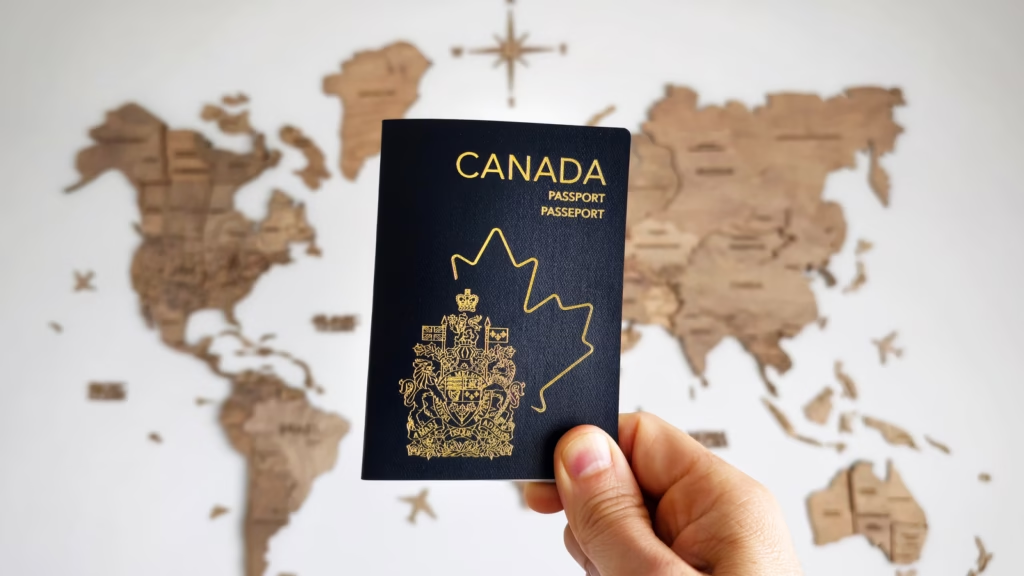
Canada Issues Urgent Travel Advisory for Brazil and Multiple Nations
In a significant move highlighting growing global instability, the Government of Canada has updated its international travel advisories, issuing urgent warnings for a diverse list of countries. The advisory, which now includes Brazil alongside nations like Mexico, El Salvador, Jamaica, Italy, France, and Costa Rica, cites a confluence of serious concerns ranging from passport security and crime to escalating border restrictions and regional conflicts. This broad advisory underscores a volatile travel landscape where traditional tourist destinations are now presenting heightened risks for Canadian visitors.
Understanding the Travel Advisory Levels
Canada’s travel advisory system uses a four-level scale to inform citizens of risks abroad. The latest updates have seen several countries move to higher levels of caution.
Level 2 – Exercise a high degree of caution: This is where major tourist destinations like France, Italy, and Costa Rica currently sit. Warnings for these countries often point to threats of terrorism, petty and violent crime in tourist areas, and pickpocketing.
Level 3 – Avoid non-essential travel: This more serious advisory now applies to Brazil, Jamaica, and Mexico (with regional advisories). The reasons for this escalation are particularly severe, including high rates of violent crime, gang activity, and ineffective local law enforcement in many areas.
Level 4 – Avoid all travel: This is the highest level, reserved for areas where there is an extreme risk to personal safety. While not all countries on the latest list are at Level 4, specific regions within them may be.
Key Risks Driving the Advisories
The updated warnings are not based on a single issue, but a perfect storm of security and logistical challenges facing travelers in 2024.
Passport Theft and Document Security
A critical and recurring theme in the advisories, especially for countries in Latin America and the Caribbean, is the targeted theft of passports. Canadian passports are highly valuable documents on the black market. Criminals in tourist hotspots, airports, and public transportation are specifically targeting foreign visitors.
- Always keep your passport in a secure hotel safe when not needed for travel or identification.
- Carry a photocopy or digital scan of your passport’s main page separately.
- Never leave bags or documents unattended, even for a moment.
- Report a lost or stolen passport to local police and the nearest Canadian government office immediately.
Violent Crime and Gang Activity
For countries like Brazil, Jamaica, El Salvador, and parts of Mexico, the advisory explicitly warns of endemic violent crime. This includes armed robbery, assault, carjacking, and sexual violence. Gang wars and territorial disputes can occur with little warning, even in areas frequented by tourists. The advisories stress that local authorities may have limited ability to respond to incidents.
Political Unrest and Border Instability
Regional conflicts and political tensions are causing rapidly changing conditions. This can lead to sudden protests, roadblocks, and military activity. Furthermore, escalating border restrictions in certain regions mean that crossing land borders can be unexpectedly dangerous or legally complex, with rules changing on short notice.
High-Risk Activities and Areas
The Canadian government specifically advises against certain activities in these countries:
- Walking alone after dark or in isolated areas.
- Resisting robbery attempts.
- Using unauthorized taxis or public buses in high-risk zones.
- Displaying signs of wealth, such as expensive jewelry or electronics.
- Traveling to informal border crossings.
Country-Specific Highlights from the Advisory
Brazil: Carnival Concerns and Beyond
The inclusion of Brazil at Level 3 is particularly notable given its status as a major South American destination. The advisory warns of high crime rates in urban centers, including São Paulo, Rio de Janeiro, and Recife, even during famous events like Carnival. Violent muggings can occur in seemingly safe tourist areas.
Mexico: A Regional Patchwork of Risk
Canada maintains regional advisories for Mexico. While resort areas may seem insulated, travel between cities and outside hotel zones carries significant risk. Kidnapping, both virtual and express, remains a serious concern in many states.
Europe: Not Immune to Threats
The advisories for France and Italy serve as a reminder that Western Europe is not without danger. The primary concerns here are terrorism—with ongoing calls for attacks against Western nations—and sophisticated petty crime networks that target tourists at major landmarks, train stations, and beaches.
The Caribbean Context: Jamaica and Beyond
Jamaica’s Level 3 advisory points to a consistently high level of violent crime, often linked to gangs. Home invasions, armed robberies, and sexual assaults are frequent, and the police force is often under-resourced. Tourist areas are not exempt from these threats.
Essential Steps for Canadian Travellers
Before any international trip, especially to a country with an active advisory, preparation is your best defense.
- Register with ROCA: Always enroll in the Registration of Canadians Abroad service. This allows the government to contact you in case of an emergency abroad, like a natural disaster or civil unrest.
- Research Thoroughly: Don’t just read the headline advisory level. Click through to the full country page on the Government of Canada’s Travel Advice and Advisories website for detailed, region-specific warnings.
- Purchase Comprehensive Travel Insurance: Ensure your policy includes extensive medical coverage, emergency evacuation, and coverage for trip interruption due to political unrest. Verify that your activities are covered.
- Share Your Itinerary: Leave a detailed travel plan with family or friends at home, including contact information for your accommodations.
- Monitor Local Media: Stay informed about local news and conditions during your trip. Situations can deteriorate rapidly.
- Know Your Embassy: Locate the nearest Canadian embassy, consulate, or High Commission and save their emergency contact number in your phone.
Navigating a New Era of Travel
The breadth of this latest advisory update from Global Affairs Canada is a stark indicator of a shifting world. It reflects a reality where geopolitical tensions, domestic crime, and logistical hurdles are converging to make international travel more complex. For Canadian travelers, this is not a call to stop exploring the world, but a powerful reminder to do so with eyes wide open. Vigilance, thorough preparation, and a commitment to situational awareness are no longer just recommendations—they are essential components of safe travel in the modern age. Before booking your next getaway, make consulting the official travel advisories the first and most important step in your planning process. Your safety may depend on it.