The Vanishing Canadian Dream: Why Upward Mobility Feels Out of Reach
For generations, the promise of Canada was built on a powerful idea: that through hard work, education, and perseverance, anyone could build a better life than their parents had. This was the Canadian Dream—a covenant of upward mobility, secure employment, and homeownership. Today, that dream feels increasingly like a relic of a bygone era. A pervasive sense of economic stagnation has taken hold, leaving many to wonder if the ladder of opportunity has been pulled up for good. What forces have conspired to make the path to prosperity feel so narrow, and is there a way to rebuild it?
The Erosion of the Traditional Pillars of Prosperity
The foundation of middle-class advancement in Canada has historically rested on three key pillars: affordable education, a thriving job market with good wages, and attainable housing. Alarmingly, each of these pillars is now showing significant cracks.
The Housing Affordability Crisis: The Dream’s Biggest Casualty
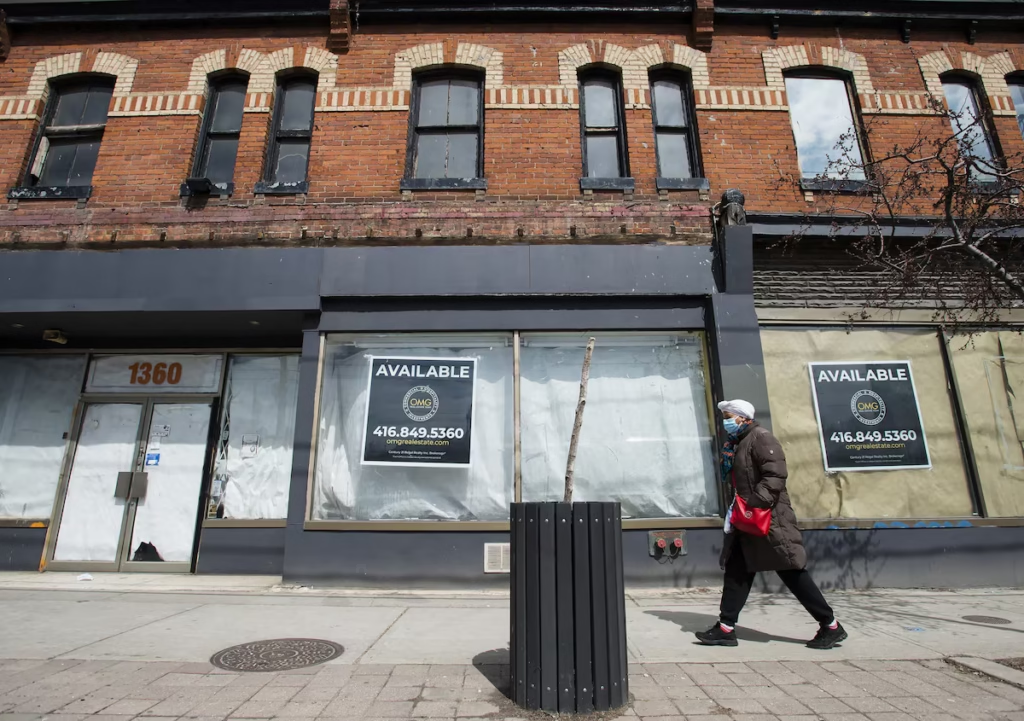
The most visceral symbol of the vanishing dream is the Canadian housing market. For decades, homeownership was the ultimate milestone of financial success and security. Now, it is a source of profound anxiety and exclusion.
Soaring prices in major urban centres have placed the average home out of reach for the average income earner. The down payment required has become a mountain too steep to climb for many young Canadians, forcing them into prolonged rental situations where saving becomes even more difficult. This isn’t just about luxury; it’s about the primary mechanism for building intergenerational wealth being locked away.
The Stagnant Wage and Precarious Work Dilemma
While asset prices, especially housing, have skyrocketed, wage growth has largely flatlined. The link between increased productivity and rising pay has broken for many workers.
- Many new jobs are in the gig or contract economy, offering flexibility but lacking benefits, job security, or pension plans.
- Even for full-time employees, wage increases have failed to keep pace with the true cost of living, particularly inflation in essential areas like food, fuel, and shelter.
- This creates a frustrating paradox: people are working hard, often in skilled positions, but feel financially further behind than previous generations at the same age.
The Rising Cost of Building Human Capital
Education was long touted as the great equalizer. While it remains crucial, its financial burden has grown heavier. Students are graduating with historically high levels of debt, entering the workforce with a significant financial anchor before they even secure their first career-oriented job. This debt delays other life milestones, from starting a family to saving for that elusive down payment.
Beyond Economics: The Psychological Toll of Stalled Mobility
The impact of this economic squeeze is not just measured in dollars and cents; it’s etched in the national psyche. The loss of predictable upward mobility breeds a deep-seated pessimism.
There is a palpable fear of backsliding—the concern that one’s children will be worse off, not better. This anxiety undermines the optimism and risk-taking that drive entrepreneurship and innovation. When survival and stability become the overriding focus, the energy for building and creating diminishes. The social contract feels broken, leading to political polarization and a loss of faith in institutions.
Reclaiming the Path Forward: Is a New Canadian Dream Possible?
Acknowledging the scale of the challenge is the first step. Rebuilding a sense of widespread opportunity will require bold, coordinated action across several fronts. It demands moving beyond nostalgia and crafting a modern blueprint for prosperity.
1. Reimagining Housing as a Place to Live, Not Just an Asset
Solving the housing crisis is non-negotiable. This requires a wartime-level commitment to increasing supply, but with a focus on the “missing middle”—dense, family-friendly housing types like townhomes and mid-rise apartments. Policies must also cool speculative investor demand that treats homes purely as financial instruments. The goal must be to restore housing’s primary function: providing shelter and stability.
2. Fostering a High-Wage, High-Skill Economy
Canada must move beyond an economy reliant on resource extraction and low-wage service jobs. This means:
- Doubling down on productivity-enhancing investments in technology and automation.
- Creating a proactive industrial strategy that nurtures winners in high-growth sectors like clean tech, AI, and advanced manufacturing.
- Ensuring our immigration system is tightly aligned with these economic goals, filling critical skill gaps while protecting wage levels for all workers.
3. Building a Modern Social Safety Net and Lifelong Learning
The old model of a single career with one employer is fading. Our systems must adapt.
- Explore portable benefits that follow workers between jobs, whether they are full-time, contract, or self-employed.
- Invest heavily in affordable, accessible upskilling and retraining programs to help workers adapt to technological change throughout their careers.
- Consider policies that ease the student debt burden, such as tying repayment more closely to income after graduation.
Conclusion: From Individual Struggle to Collective Renewal
The feeling that the Canadian Dream is vanishing is a symptom of deep structural shifts in our economy and society. It is not a reflection of a lack of hard work among Canadians, but of systems that no longer reliably convert that effort into security and advancement.
Reversing this trend will not happen overnight, nor through individual effort alone. It requires a national recommitment to the principle of intergenerational progress. By tackling housing with urgency, fostering a more dynamic and better-paying economy, and updating our social supports for the 21st century, we can begin to repair the ladder of mobility.
The goal is not to return to a romanticized past, but to forge a new promise for the future: that in Canada, dedication and talent are still met with genuine opportunity. The dream doesn’t have to vanish; it needs to be rebuilt, stronger and more inclusive than before. The work starts now.