
Mastering the Art of Wildlife Photography with Chris Fallows
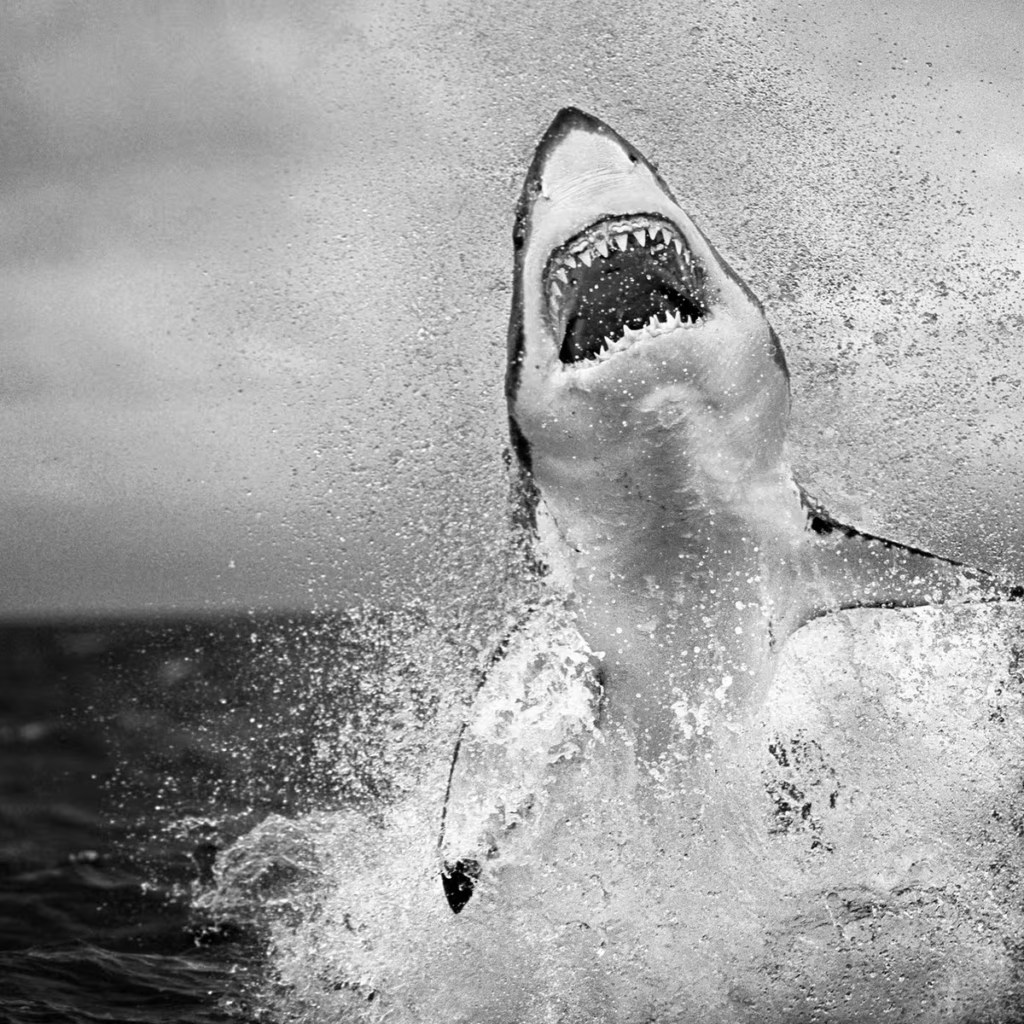
For most of us, capturing a fleeting moment in nature is a matter of luck. For legendary wildlife photographer Chris Fallows, it’s a masterful blend of decades of patience, profound biological understanding, and an almost preternatural anticipation. His iconic image of a great white shark erupting from the water—a spectacle known as breaching—is seared into the public consciousness, a testament to his skill behind the lens. But as revealed in a recent feature, the story behind that split-second shot is one of relentless dedication and a deep-seated respect for the wild.
More Than Luck: The Foundation of Knowledge
Chris Fallows’ journey began not with a camera, but with a fascination for predators. His early career as a shark researcher in South Africa provided the critical foundation for his future photographic triumphs. He didn’t just want to see sharks; he wanted to understand their behavior, their patterns, and their environment.
This scientific background is the non-negotiable first step in his process. By knowing an animal’s habits intimately—what it eats, where it hunts, how it reacts to weather and tide—Fallows can position himself not as an intrusive presence, but as a predictable part of the landscape. This knowledge transforms a chaotic, wild scene into a predictable stage where moments of drama are more likely to unfold.
Anticipation: The Photographer’s Secret Weapon
Armed with knowledge, the next tool in Fallows’ arsenal is anticipation. Wildlife rarely performs on cue. The perfect shot is often the result of predicting an action several seconds before it happens. His famous breaching shark photographs are the ultimate example. By studying the behavior of Cape fur seals (the shark’s prey) and the underwater topography, Fallows learned to anticipate where and when a shark might launch its ambush.
He describes this as watching a “theater” unfold, reading the subtle cues—a change in bird activity, a shift in the current, a certain look in a predator’s eye. The camera click is the final, almost incidental, step in a long chain of observation and prediction.
The Ethical Compass: Respect Above the Shot
A core philosophy that defines Chris Fallows’ work is an unwavering ethical commitment to his subjects. For him, the welfare of the animal and the integrity of the ecosystem always come before getting a photograph.
- No Baiting or Harassment: He is a strong advocate for natural behavior photography. His shots are captured because he was in the right place at the right time through patience, not because he lured or provoked an animal into action.
- Understanding Boundaries: Years of experience have taught him the subtle signs of animal stress. If a creature shows any sign of agitation, he will back off, even if it means missing a once-in-a-lifetime opportunity.
- Conservation Through the Lens: Every image serves a higher purpose: to foster appreciation and inspire protection. By showcasing the raw power and beauty of predators like sharks, he challenges misconceptions and advocates for their conservation.
Practical Wisdom from the Field: Tips for Aspiring Photographers
While few will have the chance to photograph breaching great whites, the principles guiding Chris Fallows’ work are universal for anyone wanting to improve their wildlife photography.
1. Patience is Not a Virtue; It’s a Requirement
You may sit for hours, or even days, for a few seconds of action. Fallows’ most famous breach sequence was the culmination of years of work and countless hours waiting. Embrace the quiet moments—they are part of the process.
2. Learn Your Subject Inside and Out
Before you even pick up your camera, become a student. Read about the animal, learn its habits, and understand its habitat. The more you know, the better you can predict and compose your shots.
3. Master Your Equipment in Any Condition
Wildlife action is fast and often happens in challenging light or weather. Fallows must operate his gear instinctively. Know your camera’s settings—autofocus modes, shutter speed, aperture—so well that adjusting them becomes second nature.
4. Composition and Story Are Key
A technically perfect shot of an animal is good. A shot that tells a story about that animal’s life is powerful. Look for interactions, behaviors, or environmental context that adds narrative depth to your image. Include the habitat to show the animal in its world.
5. Safety and Ethics Are Paramount
Always maintain a safe distance for yourself and the animal. Your presence should not alter its natural behavior. The goal is to be an invisible observer, not a disruptive force.
The Enduring Impact: A Legacy of Awe and Protection
Chris Fallows’ work transcends photography. It is a bridge between the human world and the wild one. His breathtaking images do more than stun viewers; they evoke a sense of awe and respect for nature’s power and precision. By freezing these dramatic moments, he allows us to study, appreciate, and connect with creatures we might never encounter.
Ultimately, his mission is conservation. Each photograph of a majestic great white shark challenges the outdated stereotype of a mindless killer, replacing it with an image of an awe-inspiring, perfectly adapted apex predator crucial to ocean health. He uses his lens as a tool for education and advocacy, proving that powerful imagery can change hearts and minds.
Mastering wildlife photography, as demonstrated by Chris Fallows, is about so much more than fancy equipment. It is a pursuit built on respect, relentless learning, and the patience to wait for the natural world to reveal its most extraordinary secrets. It reminds us that the greatest images are not taken, but are earned through time, dedication, and a profound love for the subject in front of the lens.

