
The Surprising Harmony Between Embryology and Evangelism
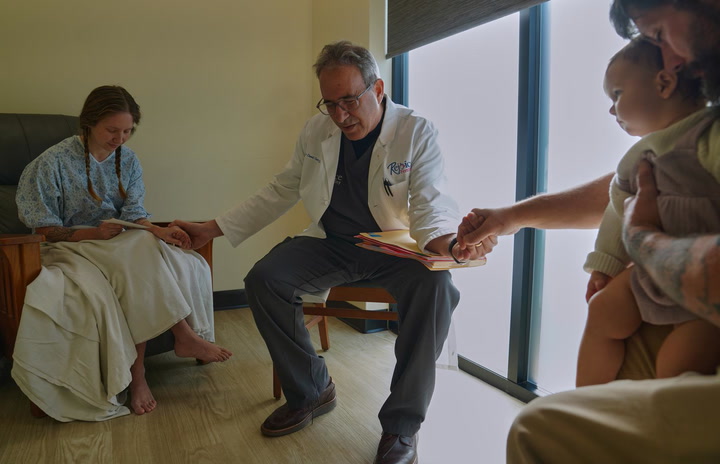
When we picture the typical fertility clinic, the image that comes to mind is usually one of sterile white coats, cold laboratory equipment, and clinical detachment. We rarely imagine a doctor pausing to pray with a weeping patient before transferring an embryo.
Yet that scene—and the complex theological reasoning behind it—lies at the heart of a fascinating profile that challenges everything we think we know about the supposed war between conservative Christianity and reproductive technology.
The doctor in question isn’t just a skilled embryologist. He’s a man who has wrestled with the deepest questions of human existence while holding a micropipette.
Here is what his story reveals about faith, science, and the messy reality of living in the tension between them.
The False Dichotomy of Faith vs. Science
We have been sold a narrative that suggests religious conviction and scientific advancement exist in permanent opposition. Either you believe in divine creation, or you trust the lab. Either you accept the sanctity of life from conception, or you embrace the possibilities of assisted reproduction.
This doctor’s life dismantles that binary completely.
He operates from a position that many would consider contradictory: he holds a high view of embryonic life while actively participating in the creation and transfer of embryos. Rather than ignoring this tension, he engages with it directly, acknowledging that IVF creates moral complexities that simple answers cannot resolve.
What makes his approach distinct is his refusal to pretend the tension doesn’t exist. He doesn’t offer his patients platitudes or easy theological formulas. Instead, he walks with them through the hard questions:
- What happens to embryos that are never transferred?
- Is cryopreservation an act of preservation or suspension?
- How do we honor the potential inherent in every single cell?
These aren’t abstract philosophical exercises for him. They are daily decisions made in the presence of grieving couples who desperately want children.
The Personal Wound That Shaped the Healer
Perhaps the most compelling element of this doctor’s story is that he didn’t enter this field as an outsider looking in. He and his wife walked the same painful road that brings patients to his door.
Infertility is a unique kind of suffering. It is a grief with no funeral, a loss with no closure. It attacks identity, marriage, and faith simultaneously. For this doctor, that experience didn’t simply make him more sympathetic—it fundamentally shaped how he practices medicine.
He knows that infertility is not primarily a medical problem. It is a human problem.
Patients who sit in his examination room are not bringing merely their fallopian tubes or their sperm counts. They are bringing their shattered expectations, their strained marriages, their whispered prayers, and often, their silent accusations against God.
Because he has been there, he sees them. He doesn’t rush to solutions before acknowledging the pain. He doesn’t minimize the cost. And he doesn’t pretend that technology alone can heal what is broken.
Why the Embryo Question Cannot Be Ignored
Any honest conversation about Christianity and IVF must eventually arrive at the same uncomfortable destination: the status of the embryo.
Conservative Christian theology has historically held that human life begins at conception. This creates an immediate ethical dilemma when IVF routinely produces more embryos than can be transferred. What do you do with the extras?
This doctor does not dodge the question. In fact, he brings it up before his patients do.
His approach is remarkable for its transparency: he helps couples think through the implications of their decisions before they make them. He encourages them to consider the fate of every embryo created in the process, not just the ones that will eventually be transferred.
This is unusual in fertility medicine, where the focus is often on the immediate goal of pregnancy. But for a Christian doctor who believes he is stewarding human life, the destination of every single embryo matters.
He doesn’t claim to have perfect answers. What he offers instead is a willingness to sit in the complexity and help patients make the most faithful decisions they can.
The Pastoral Role of the Physician
What emerges from this profile is a picture of medicine that extends far beyond technical expertise. This doctor functions as a pastor as much as a physician.
He prays with patients. He discusses theology with them. He helps them navigate the tension between their desire for children and their religious commitments. He treats their spiritual health as seriously as their reproductive health.
This is a model of medicine that has become increasingly rare in an era of hyper-specialization and assembly-line healthcare. It recognizes that bodies and souls are not separate compartments. The woman whose uterus is being prepared for embryo transfer is also a woman who may be wrestling with doubt, guilt, or fear.
A doctor who addresses only the physical dimension is treating only half the patient.
What This Means for Patients Seeking Faith-Aligned Care
For Christian couples considering IVF, this doctor’s example offers both hope and a warning.
The hope is that it is possible to pursue assisted reproduction without abandoning your faith. You do not have to check your beliefs at the clinic door. There are physicians who will honor your convictions while offering you the full range of modern fertility treatment.
The warning is that the path is not easy. There are no shortcuts through the ethical terrain. You cannot avoid the hard questions by simply hoping they won’t apply to you. The embryos you create will matter. The decisions you make about them will carry moral weight.
The most faithful approach is not to pretend the complexities don’t exist, but to face them with courage, community, and honest conversation.
A Model for the Future
Perhaps the most important takeaway from this profile is that the supposed war between faith and science is largely a fiction. Real life is lived in the intersections, not the extremes.
This doctor demonstrates that rigorous science and deep religious conviction can coexist without compromising either. He does not sacrifice his theological convictions to perform his medical duties. Neither does he allow his faith to prevent him from offering compassionate care to those who are suffering.
In an increasingly polarized world, that is a model worth paying attention to.
The questions raised by reproductive technology are not going away. As science advances, the ethical terrain will only become more complex. We need more doctors, patients, and faith communities willing to engage these questions with the kind of honesty, humility, and compassion this doctor embodies.
Because at the end of the day, the goal is not to have all the answers. The goal is to accompany suffering people with love, skill, and unwavering presence—no matter which side of the petri dish you stand on.

