
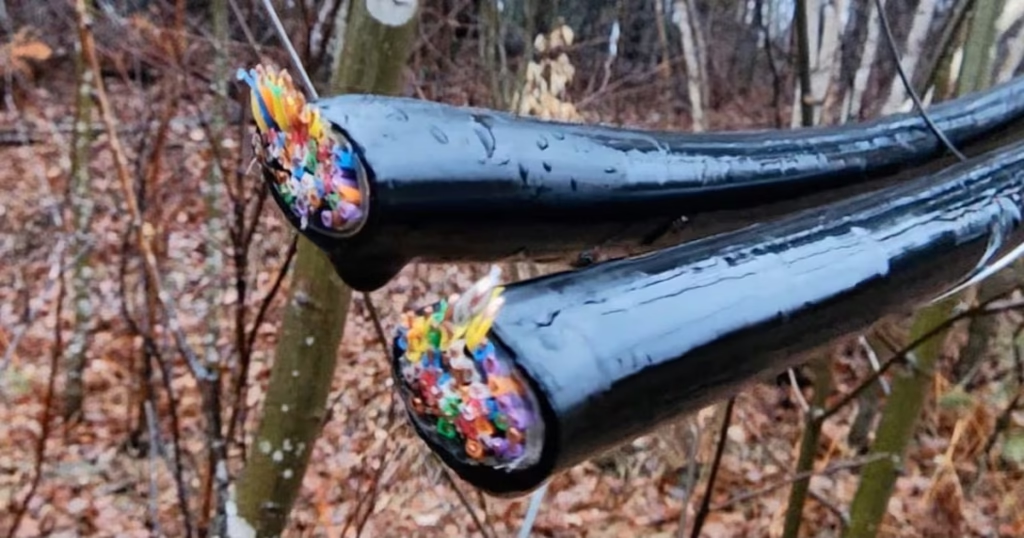
Canada’s Copper Theft Crisis: Why a National Safety Plan is Non-Negotiable
A recent and alarming report from the Senate of Canada has thrust a growing criminal trend into the national spotlight, framing it not as mere vandalism but as a direct assault on public safety. The systematic theft of copper across the country has escalated into a full-blown crisis, threatening the very infrastructure that keeps our communities running, safe, and connected. This isn’t just about stolen metal; it’s about stolen security, and the Senate’s findings are a clarion call for immediate and coordinated national action.
The findings are unequivocal: Canada needs a unified, robust national strategy to combat copper theft before a preventable tragedy strikes. The current patchwork of provincial regulations and local enforcement is failing to stem the tide, leaving our critical systems vulnerable and our citizens at risk.
The Alarming Scale of the Copper Theft Epidemic
Driven by consistently high global commodity prices, copper has become a lucrative target for thieves. Its widespread use in electrical wiring, telecommunications, and transportation makes it accessible, but the methods of extraction are where the true danger lies. Criminals are not simply pilfering from warehouses; they are brazenly targeting live, essential infrastructure.
- Electrical Substations and Utilities: Perhaps the most dangerous target, thieves risk electrocution to strip copper from live equipment, often causing fires, explosions, and widespread blackouts.
- Telecommunications Hubs: Stripping copper cabling can disable phone lines, internet services, and crucially, 9-1-1 and emergency alert systems.
- Railway and Transit Lines: Theft of signaling copper can disrupt train safety systems, creating the potential for catastrophic collisions.
- Construction Sites and Vacant Properties: These are frequent targets, leading to massive project delays and increased costs that are ultimately passed on to consumers.
The result is a multi-million dollar drain on the Canadian economy, encompassing not only the value of the stolen metal but the exponentially higher costs of repairs, service interruptions, lost productivity, and rising insurance premiums.
Beyond Property Crime: A Clear and Present Danger to Public Safety
The Senate report forcefully moves the conversation beyond financial loss. It categorizes copper theft as a critical threat to public safety and national infrastructure. Every cut wire carries a potential for disaster.
When the Lights Go Out, Lives Are at Stake
A power outage caused by copper theft is not a simple inconvenience. It can have life-or-death consequences:
- Hospitals and Healthcare: While major hospitals have backups, prolonged outages threaten critical care, surgical units, and life-support systems. At home, individuals reliant on medical equipment like oxygen concentrators or dialysis machines are put in immediate peril.
- Traffic and Safety Systems: Downed traffic lights create chaotic and dangerous intersections. Street lighting goes dark, increasing risks for pedestrians and drivers alike.
- Vulnerable Populations: During extreme heat or cold, loss of power to community centers and residential buildings can quickly become a public health emergency.
The Hidden Dangers: Fire and Electrocution
The act of stealing copper from energized equipment is inherently reckless. Improper cuts can cause short circuits, arcing, and catastrophic electrical fires that spread rapidly. Furthermore, damaged equipment poses a severe electrocution risk to utility workers repairing the damage and to first responders arriving on scene. These thieves are not just stealing metal; they are laying traps for our frontline protectors.
Crippling Our Emergency Response
In an emergency, communication is everything. Theft of copper telecommunication cables can silently sever a community’s lifeline.
- Residents may find themselves unable to call 9-1-1.
- Fire and burglar alarms connected to landlines may fail to transmit.
- Emergency services’ ability to coordinate a response can be severely hampered.
This creates a scenario where a crisis is compounded by an inability to call for help, turning a manageable incident into a potential tragedy.
Building a National Defense: Key Pillars of a Required Action Plan
The Senate committee correctly identifies the core problem: a fragmented response. Laws and enforcement vary wildly from province to province, allowing thieves to exploit jurisdictional gaps. A national action plan is the only viable solution, and it must be built on several key pillars.
1. Fortifying the Scrap Metal Industry
The illicit copper trade relies on a network of willing buyers. A national plan must standardize and strengthen regulations across all scrap metal dealers.
- Mandatory Point-of-Sale Documentation: Require sellers to provide government-issued photo ID, with details recorded in a central ledger accessible to law enforcement.
- Universal “Hold” Periods: Implement a mandatory waiting period (e.g., 5-7 days) before payment is issued for specific types of copper, allowing police to track reported thefts.
- Banning Cash Transactions: Mandating electronic payment for all copper sales creates a verifiable paper trail and deters anonymous, quick-turnaround theft.
2. Enhancing Law Enforcement and Collaboration
Combating this crisis requires intelligence-led policing that crosses city and provincial lines.
- Dedicated Metal Theft Task Forces: Supporting the creation of specialized units with expertise in investigating and prosecuting these complex crimes.
- National Information Sharing: Developing a real-time database for tracking theft patterns, suspect information, and trafficking routes across Canada.
- Stiffer Penalties: Reclassifying theft from critical infrastructure to reflect its severity, leading to more serious charges and consequences for perpetrators.
3. Hardening Our Critical Infrastructure
We must make targets less appealing and more difficult to hit. This involves working with utilities, railroads, and telecom providers on proactive measures.
- Investment in Tamper-Proofing: Using smarter security systems, improved fencing, motion-sensor lighting, and deterrent markings on vulnerable equipment.
- Promoting Traceable Technology: Encouraging the use of micro-dot or chemical tracing solutions that can invisibly mark copper, allowing it to be identified as stolen even after being processed.
- Exploring Alternative Materials: Where feasible, replacing pure copper components with less attractive alloys in certain non-critical applications.
A Collective Responsibility: What Citizens and Communities Can Do
While a national plan provides the framework, vigilance at the local level is essential. Public awareness is a powerful deterrent.
- Report Suspicious Activity: If you see individuals accessing utility boxes, electrical substations, or railway corridors without visible identification or marked vehicles, report it to local authorities and the infrastructure owner immediately. Note descriptions, vehicle details, and license plates if safe to do so.
- Secure Your Property: For businesses, farms, and construction sites, ensure copper materials are stored securely, well-lit, and inventoried.
- Support Local Initiatives: Engage with municipal efforts to regulate local scrap yards and support community watch programs that monitor critical infrastructure.
- Raise Awareness: Share information about the real dangers of copper theft beyond financial cost—emphasize the risks to safety, health, and emergency services.
The Time for Action is Now
The Senate report has done its job: it has diagnosed a critical illness in our national security posture. Copper theft is a symptom of a larger vulnerability in the protection of our essential services. We can no longer afford a reactive, piecemeal approach. The economic costs are staggering, but the potential human cost is unacceptable.
Implementing a comprehensive, federally-led national action plan is not just a policy recommendation; it is an urgent necessity for public safety. It requires leadership to bring provinces, territories, law enforcement, and industry to the table. By fortifying our defenses, disrupting the illicit market, and empowering our communities, we can protect the infrastructure that forms the backbone of Canadian society and ensure that safety is never stripped away for the price of a pound of copper. The wire is cut. The alarm is sounding. Now, we must respond.

