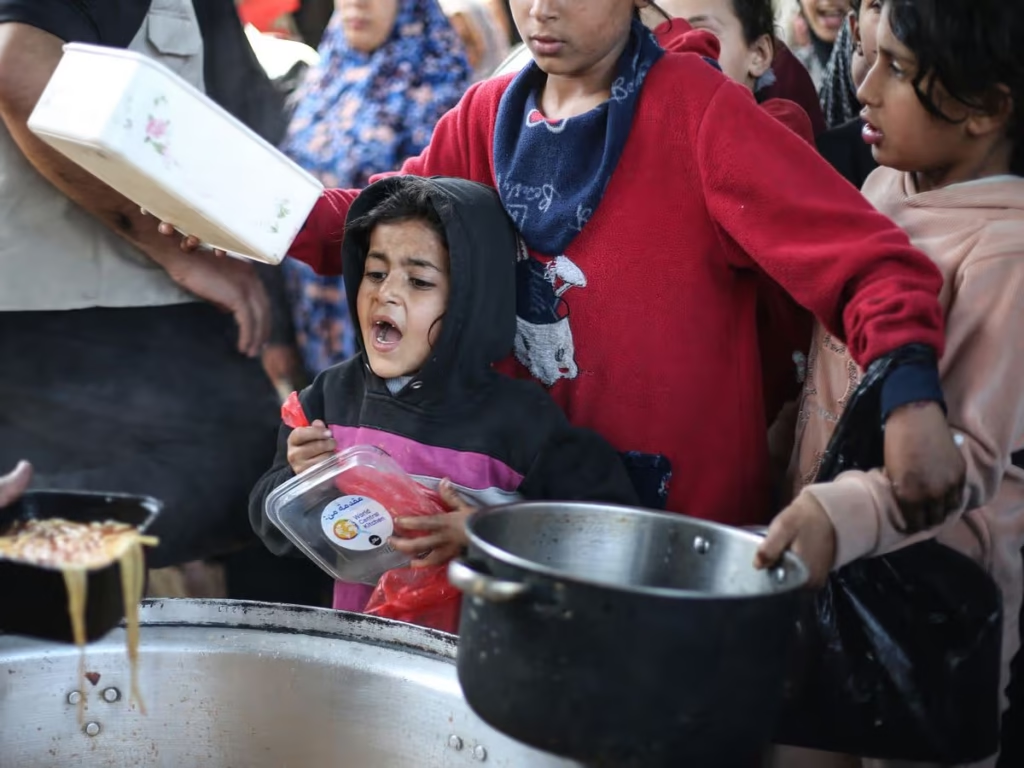
Iran Conflict Threatens to Plunge 30 Million into Extreme Poverty
The specter of a widening war in the Middle East now casts a long shadow far beyond the battlefield. As a critical ceasefire deadline approaches, international agencies are sounding a dire alarm: the ongoing conflict involving Iran risks triggering a global humanitarian catastrophe, potentially pushing an additional 30 million people into the abyss of extreme poverty. This staggering figure underscores how regional instability can rapidly cascade into a worldwide crisis, threatening to undo decades of hard-won progress in the fight against global deprivation.
From Regional Flashpoint to Global Economic Shockwave
While the immediate human tragedy unfolds within the conflict zone, the secondary effects are radiating outward, placing vulnerable populations across Africa, Asia, and the Middle East in grave danger. The mechanism of this impending disaster is brutally straightforward: the disruption of critical trade routes and the volatility of global energy markets.
The Strait of Hormuz, a narrow maritime chokepoint bordering Iran, is one of the world’s most crucial arteries for global oil and gas shipments. Any significant escalation that threatens transit through the Strait sends immediate shockwaves through the global economy. We are already witnessing:
- Skyrocketing Energy Prices: Fears of supply disruption have caused oil and natural gas prices to surge. For developing nations that are net importers of energy, this translates directly into higher costs for transportation, electricity, and agricultural production.
- Food Security Crisis: The cost of fertilizer, which is heavily dependent on natural gas, is climbing in tandem. Combined with increased fuel costs for shipping and farming, this creates a perfect storm for food prices. Many of the nations at highest risk were already grappling with food insecurity; now, basic staples are moving further out of reach for millions.
- Collapse of Critical Remittances: For numerous low-income countries, remittances from citizens working abroad are a vital economic lifeline. Conflict and economic dislocation in the wealthy Gulf states—which employ millions of foreign workers—could sever this flow of income, devastating families and national economies overnight.
The Human Cost: A Regression of a Decade
The projected increase of 30 million individuals into extreme poverty—defined by the World Bank as living on less than $2.15 a day—is not an abstract statistic. It represents a potential decade of lost progress in poverty reduction efforts. The gains painstakingly achieved since the early 2010s are at risk of being wiped out in a matter of months.
The populations most at risk are those already living on a knife’s edge:
- Subsistence farmers facing doubled costs for fuel and fertilizer.
- Urban poor in megacities spending 70% or more of their income on food.
- Nations like Egypt, Pakistan, and Ethiopia, which are heavily reliant on wheat imports and already under severe financial strain.
Humanitarian organizations warn that the fallout will be a severe escalation of malnutrition, child stunting, and preventable disease, as families are forced to make impossible choices between food, medicine, and shelter.
The Looming Ceasefire Deadline: A Crossroads for the Global Poor
The imminent ceasefire deadline presents a pivotal moment. Diplomacy that successfully de-escalates the situation could begin to stabilize markets and reopen predictable channels for trade and aid. Conversely, a breakdown in talks and an expansion of hostilities would signal the opposite, locking in and accelerating the current destructive trends.
The international community faces a dual imperative: pursue every diplomatic avenue to secure peace in the region, while simultaneously preparing for a massive, coordinated humanitarian response. This response must be pre-emptive and focus on the most vulnerable countries before the crisis deepens.
Mitigating the Crisis: A Call for Coordinated Action
Preventing this forecasted surge in poverty requires urgent and concerted action on multiple fronts. Waiting for the full impact to materialize will guarantee a response that is too little, too late.
- Emergency Food and Fuel Financing: International financial institutions must establish rapid-disbursement funds to help the poorest countries subsidize essential imports and support social safety nets.
- Strategic Grain Reserve Releases: Coordinated releases from global and regional grain reserves can help dampen price spikes and ensure food reaches the most critical areas.
- Protection of Maritime Corridors: The global community must unequivocally support the security and freedom of navigation in key international waterways to maintain the flow of energy and goods.
- Scale-Up of Humanitarian Funding: Aid agencies require immediate, flexible funding to expand their operations in anticipation of worsening need, both within and far beyond the conflict’s immediate geography.
A Stark Reminder of Our Interconnected World
The potential for a regional conflict to drive 30 million people into extreme poverty is a grim testament to the profound interconnectedness of the modern world. It demonstrates that in the 21st century, national security and human security are inextricably linked. Economic stability in Berlin, Boston, or Beijing is directly tied to geopolitical stability in the Persian Gulf.
The coming days, as diplomats work against the clock, will determine not only the fate of those in the conflict zone but also the economic survival of millions of the world’s most vulnerable people thousands of miles away. The cost of failure is measured not just in geopolitical terms, but in empty stomachs, shattered livelihoods, and a generation condemned to poverty. The world must recognize that achieving a ceasefire is more than a regional necessity—it is a global humanitarian imperative.