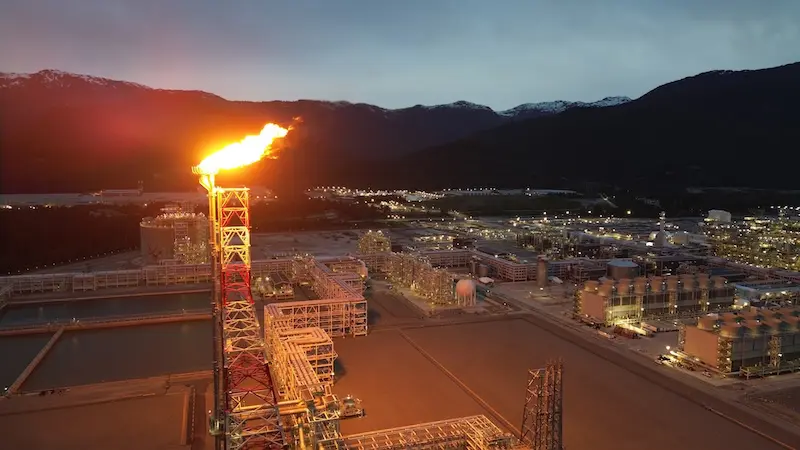
LNG Canada Flaring Violates Permit Limits, Raising Environmental Concerns
The highly anticipated LNG Canada export terminal, a cornerstone of British Columbia’s economic strategy, is facing intense scrutiny after internal documents revealed its gas flaring activities have consistently exceeded the volumes allowed under its environmental permits. This revelation casts a shadow over the project’s operational start-up phase and raises significant questions about its environmental accountability and the regulatory oversight of Canada’s nascent LNG industry.
Permitted vs. Reality: A Startling Discrepancy in Flared Gas
Gas flaring, the controlled burning of natural gas during processing, maintenance, or emergencies, is a standard industrial practice. However, it releases greenhouse gases like carbon dioxide and, if incomplete, methane—a potent climate pollutant. Recognizing this impact, regulators set strict limits.
According to documents obtained and reviewed, LNG Canada’s permit allowed for a total of approximately 678,000 cubic metres of gas to be flared over a 180-day commissioning period. Shockingly, the project reportedly flared over 3.4 million cubic metres in just the first 45 days—a volume nearly five times the total permitted allowance for a period four times longer.
This isn’t a minor overshoot; it’s a substantial breach. The company attributed the excessive flaring to necessary safety and engineering procedures during the complex start-up of its massive systems. While start-up phases are known for unpredictability, the scale of the violation has alarmed environmental groups and communities.
Why Uncontrolled Flaring Is a Major Environmental Issue
The core concern extends beyond simply breaking a rule. Excessive flaring has direct and indirect consequences:
- Greenhouse Gas Emissions: Flaring directly converts methane to CO2, contributing to climate change. Inefficient flares can also leak unburned methane, which has over 80 times the warming power of CO2 in its first 20 years.
- Air Quality & Health Impacts: Flaring releases other pollutants, including nitrogen oxides and black carbon (soot), which can degrade local air quality and pose health risks to nearby communities, including Indigenous groups like the Haisla Nation.
- Resource Waste: Flaring represents the burning of a valuable non-renewable energy resource without any productive use, a practice increasingly viewed as economically and environmentally irresponsible.
Regulatory Response and Company Accountability
In response to the violations, British Columbia’s Energy Regulator (BCER) issued a series of warnings and ultimately a “high-risk” violation ticket to LNG Canada. The company was ordered to submit a detailed plan to prevent future exceedances. LNG Canada has stated it is working closely with the BCER and has implemented technical adjustments to minimize flaring.
However, critics argue the regulatory response has been too lenient. A monetary penalty was not imposed, and the project was allowed to continue operating. This has led to calls for:
- Stronger Enforcement: Advocates demand stricter penalties that act as a true deterrent, not just corrective action plans.
- Transparent Reporting: There are calls for real-time, publicly accessible flaring data so communities and watchdogs can monitor performance independently.
- Preventative Design: Questions are being asked about whether project designs and commissioning plans adequately incorporated strategies to minimize flaring from the outset.
The Bigger Picture: Canada’s LNG Ambitions Under the Microscope
This incident reaches far beyond a single facility’s operational mishap. LNG Canada is the flagship project meant to open the door for a larger Canadian LNG export industry, often marketed as a cleaner alternative to global coal consumption. Proponents argue Canadian LNG can help lower global emissions by displacing dirtier fuels.
Yet, this flaring controversy hands a powerful argument to opponents. It underscores the risk that significant “upstream” emissions—from extraction, processing, and liquefaction—can undermine the climate benefits promised at the “downstream” point of use. If Canada’s LNG facilities cannot reliably meet their own domestic environmental standards during start-up, it damages the credibility of the entire “cleaner LNG” narrative.
Community and Indigenous Stakeholder Concerns
For the Haisla Nation and other communities in the Kitimat region, the flaring issue is immediate and personal. The Haisla have been pivotal partners in the project’s development, anticipating economic benefits. However, their leadership has expressed clear disappointment and concern over the permit violations, emphasizing that the project must operate within all agreed-upon environmental conditions to maintain its social license.
Looking Forward: A Critical Juncture for Responsible Development
The LNG Canada flaring incident represents a critical test case. How it is resolved will set a precedent for the entire sector in Canada. The path forward requires:
A Demonstrated Commitment to Compliance: LNG Canada must not only fix the immediate issue but prove through transparent, verifiable data that it can operate within all environmental limits consistently.
Evolved Regulatory Frameworks: Regulators may need to adapt permitting and monitoring processes for mega-projects in their volatile start-up phases, ensuring robust oversight without compromising safety.
Honest Climate Accounting: The debate must fully account for the entire lifecycle emissions of Canadian LNG, ensuring that the global climate math genuinely adds up.
The promise of Canada’s LNG industry has always been balanced on a knife’s edge between economic opportunity and environmental responsibility. The excessive flaring at LNG Canada’s terminal shows that this balance is not being met in practice. For the project, its regulators, and the government, the task now is to move from damage control to genuine leadership, ensuring that environmental protections are not merely permitted on paper but are fully enforced in reality. The world, and local communities, are watching.