
Decoding Trump’s Bizarre Press Conference on Iran and the Pope
In the annals of modern political communication, few events are as simultaneously bewildering and revealing as a solo Donald Trump press conference. A recent appearance by the former president, ostensibly to discuss international affairs, quickly morphed into a stream-of-consciousness journey through fast-food diplomacy, personal grievances, and theological commentary. While the headlines focused on Iran and the Pope, the real story was a masterclass in Trump’s unique political and rhetorical playbook.
A Conference of Tangents: From Geopolitics to Golden Arches
The setting was familiar: Trump at a podium, fielding questions. But the trajectory was anything but linear. What began with serious inquiries about heightened tensions with Iran soon detoured into an unexpected endorsement.
The McDonald’s Defense Doctrine
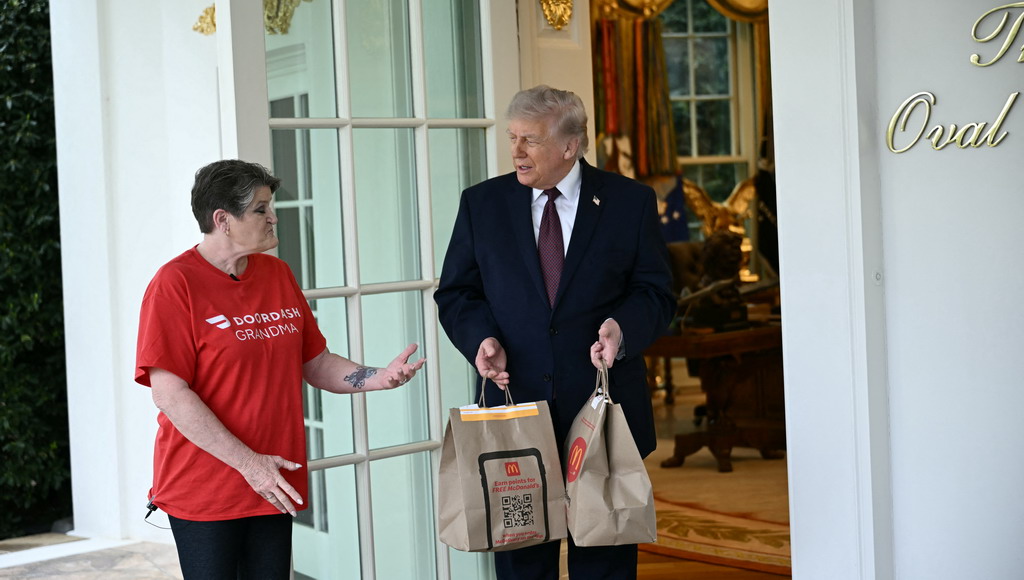
In a moment that left analysts scrambling, Trump pivoted from Middle Eastern strategy to praise for the fast-food giant McDonald’s. He lauded the company’s cleanliness and efficiency, framing it as a paragon of American corporate success. This wasn’t just a random aside; it was a tangible symbol of the “America First” ideology—a recognizable brand representing the kind of industrial prowess he championed. The subtext was clear: in Trump’s worldview, the strength of American burgers and the strength of American foreign policy are part of the same national vitality.
The Personal as Geopolitical
True to form, Trump personalized complex international issues. Discussions about Iran were filtered through the lens of his own administration’s actions, notably the targeted strike on General Qassem Soleimani. He framed the decision in stark, dramatic terms, emphasizing the decisiveness of the move and the weakness he perceived in the current administration’s approach. This reframing serves a dual purpose: it simplifies a multifaceted conflict into a story of strong versus weak action, and it keeps his own record at the center of the narrative.
The Vatican Diversion: Questioning Faith and Loyalty
Perhaps the most startling segment came when Trump turned his attention to the Vatican. He recounted a private conversation with the Pope, casting doubt on the Pontiff’s sincerity. This served several strategic rhetorical purposes:
- Solidifying the Base: By questioning a globally respected liberal figure, Trump reinforces his connection with evangelical and conservative Catholic supporters who may have their own reservations about the Pope’s stances on climate change, immigration, or economic justice.
- The Politics of Distrust: The implication that even the Pope might be “dishonest” extends Trump’s long-standing theme of elite institutions—media, deep state, global organizations—being inherently suspect. It positions him as the only reliable truth-teller in a world of duplicitous figures.
- Narrative Control: Sharing an anecdote about a private chat with one of the world’s most famous people reinforces Trump’s image as an insider to all circles of power, while simultaneously allowing him to control the portrayal of that relationship.
Decoding the Method Behind the Chaos
To dismiss this press conference as mere rambling is to miss its calculated utility. This style is a feature, not a bug, of Trump’s political communication.
Information Overload and Agenda Setting
By rapidly cycling through topics—Iranian militias, McDonald’s hamburgers, the Pope’s integrity—Trump creates a form of information overload. It becomes impossible for the media or opponents to pin down a single narrative. This chaos allows him to set the day’s news agenda on his own eclectic terms, forcing everyone to react to his chosen subjects, no matter how disparate.
Owning the Conversation
Every bizarre tangent is a potential new headline. While a traditional politician might fear being ridiculed for discussing fast food in a foreign policy briefing, Trump understands that controversy and bewilderment drive engagement. They dominate cable news cycles and social media feeds, ensuring his voice remains the loudest in the room, even when out of office.
The Emotional Connection Over Factual Precision
The press conference was light on detailed policy but heavy on emotional resonance. The praise for McDonald’s taps into nostalgia and national pride. The tough talk on Iran appeals to desires for safety and strength. The skepticism of the Pope resonates with feelings of cultural grievance. Trump connects through shared sentiments, not shared spreadsheets, building a bond with his audience that is often impervious to factual counter-argument.
The Lasting Impact: A Blueprint for Disruption
This event was more than a curiosity; it was a stark demonstration of a transformed political landscape. It shows how the lines between serious statesmanship, corporate branding, and personal grievance have been irrevocably blurred. The traditional model of a press conference—a methodical exchange of information—is challenged by a model that prioritizes viral moments, emotional triggers, and narrative dominance.
For supporters, this style is refreshingly authentic and disruptive to a system they disdain. For critics, it’s a dangerous erosion of diplomatic decorum and factual discourse. But for everyone, it is undeniably compelling. As long as this approach continues to command attention and define news cycles, it confirms that in today’s politics, the power to confuse can be as potent as the power to persuade. The bizarre, it seems, is now a formidable strategic tool.

