
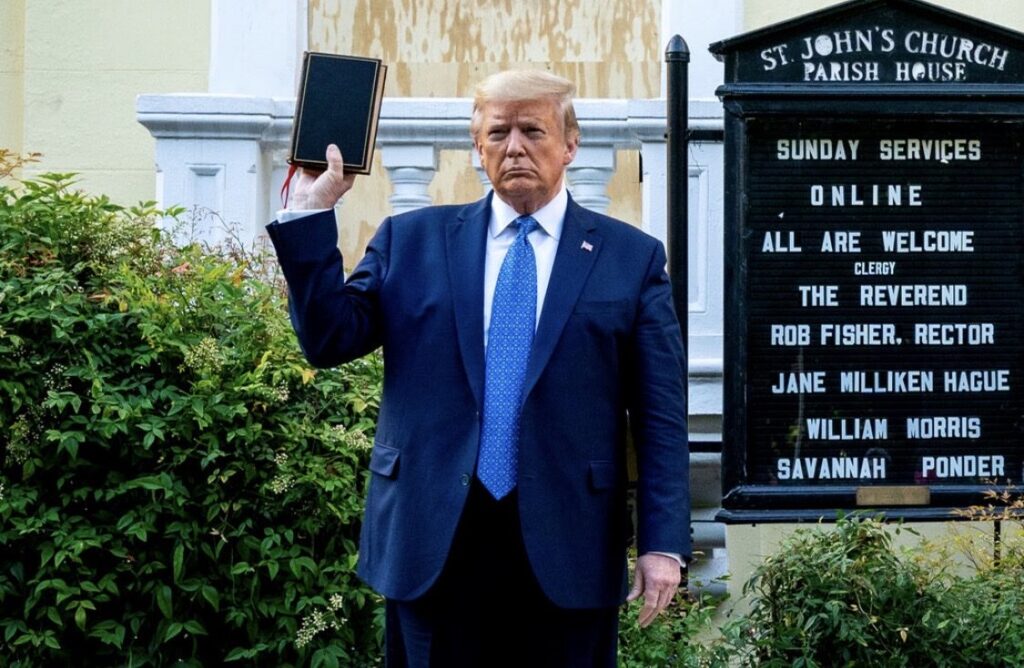
The Potent Power and Politics of Trump’s Biblical 2 Chronicles Reading
When former President Donald Trump stood before a gathering of evangelical supporters and read aloud from 2 Chronicles 7:14, it was far more than a simple scripture reading. It was a calculated political and cultural moment, laden with layers of meaning that resonate deeply within a significant portion of the American electorate. The verse, a cornerstone of modern Christian nationalism, has become a potent symbol, and its invocation by a political figure like Trump demands a closer look at its historical context, theological interpretation, and undeniable political potency.
The Verse Itself: A Covenant Promise with Conditions
At its core, the passage from 2 Chronicles 7:14 states:
“If my people, which are called by my name, shall humble themselves, and pray, and seek my face, and turn from their wicked ways; then will I hear from heaven, and will forgive their sin, and will heal their land.”
In its original biblical context, this verse is part of God’s response to King Solomon after the dedication of the Temple in Jerusalem. It is a specific promise to the ancient nation of Israel, outlining the conditions for divine forgiveness and restoration following a period of national disobedience and resulting calamity, often described as God “shutting up the heavens” or sending pestilence.
Theologians and scholars note that the direct application of this Old Testament covenant to a modern nation-state is a matter of interpretation. For many evangelical Christians, however, the principle is seen as universal: that a nation that turns back to God will receive His blessing and healing.
Why This Verse Resonates So Deeply
The power of 2 Chronicles 7:14 in the American context, particularly within the conservative Christian movement, stems from several key factors:
1. A Narrative of National Decline and Hope for Restoration
The verse perfectly encapsulates a worldview held by many believers: that America was founded as a Christian nation, has fallen into moral decay, and can only be restored through collective repentance and divine intervention. It frames contemporary social and political issues—from religious liberty debates to cultural shifts—as spiritual battles. The verse offers a clear, two-part formula: human repentance leads to divine healing. This provides a powerful sense of agency and hope.
2. A Direct Call to Action
Unlike more abstract theological concepts, this verse is intensely practical. It lists four concrete actions:
- Humbling oneself
- Praying
- Seeking God’s face
- Turning from wicked ways
This creates a roadmap for personal and national renewal that is easy to grasp and mobilize around.
3. The Symbolism of “Healing the Land”
The phrase “heal their land” is profoundly elastic. It can be interpreted spiritually, morally, or even politically. For supporters, it can symbolize healing from:
- Political division and strife
- Economic hardship
- Social fragmentation
- Perceived moral decline
- Or even literal crises like a pandemic
This versatility allows the verse to be applied to almost any national challenge, making it a timeless and urgent rallying cry.
The Political Potency: Trump’s Strategic Alignment
Donald Trump’s use of this scripture is a masterclass in political symbolism. By reading this specific verse, he accomplishes several key objectives:
He Signals Shared Identity: He positions himself not just as a political leader, but as a figure who understands and champions the core concerns of evangelical Christians. He speaks their spiritual language.
He Frames the Political Struggle: The reading implicitly frames the political opposition as part of the “wicked ways” from which the nation must turn. It elevates a political contest to a cosmic struggle between good and evil, redemption and judgment.
He Offers a Promise of Restoration: By invoking the promise of healing, he ties his political project to divine favor and national salvation. It suggests that support for his leadership is intertwined with the path to national healing.
He References a Broader Narrative: The act recalls a long tradition of American leaders using biblical rhetoric, from the Puritans to the Civil Rights Movement, lending a sense of historical legitimacy to his message.
Criticism and Controversy: A Verse of Division?
Unsurprisingly, the use of 2 Chronicles 7:14 in a partisan political context is not without significant controversy. Critics, including some Christian leaders and scholars, raise important objections:
- Theological Concerns: Many argue that applying a covenant specifically made with Israel directly to the United States is a misinterpretation of scripture. They emphasize that the New Testament focuses on the global church, not national entities, as the primary “people of God.”
- Political Co-opting: Critics see the use of the verse as a form of spiritual manipulation, where sacred text is used to sanctify a political agenda and imply that God favors one party or candidate over another.
- Selective Application: The call to “turn from wicked ways” is often applied selectively to the political opposition’s stances on social issues, while ignoring other biblical principles concerning poverty, justice, and care for the marginalized.
- Deepening Divides: Far from unifying, framing politics in such stark spiritual terms can deepen societal divisions, casting opponents not merely as wrong on policy, but as agents of moral decay standing in the way of national redemption.
The Enduring Legacy of a Powerful Passage
The episode of Trump reading 2 Chronicles 7:14 is a vivid case study in the intersection of faith and politics in 21st-century America. It demonstrates that the power of certain biblical passages lies not only in their theological content but in their ability to narrate a national story, define a community, and mobilize action.
Whether viewed as a sincere expression of faith, a shrewd political tactic, or a troubling fusion of the two, its potency is undeniable. It taps into a deep well of belief and anxiety about the nation’s direction, offering a scriptural framework for understanding crisis and a promise of hope contingent on collective return to God.
As long as these cultural and political currents run strong, 2 Chronicles 7:14 will remain a potent and contested symbol—a verse that heals for some, divides for others, and forever underscores the complex, often explosive, relationship between the pulpit and the podium. Its recitation is never just a reading; it is a declaration of identity, a call to arms, and a vision for the soul of a nation.

