
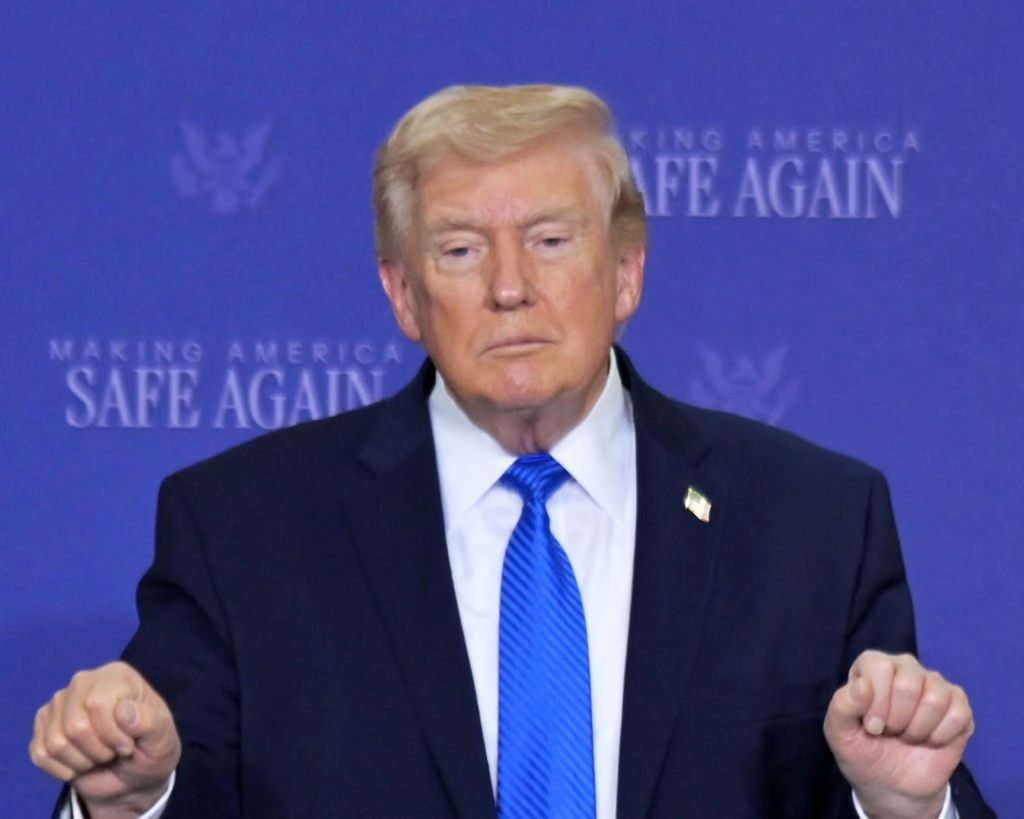
Trump and Iran: Conflicting Claims Over Secret Negotiations Revealed
A new and explosive claim has surfaced, alleging that a backchannel for direct negotiations between the administration of former U.S. President Donald Trump and the Islamic Republic of Iran was established in 2023. This revelation, based on a recent report, paints a picture of clandestine diplomacy that starkly contrasts with the public, maximum-pressure posture of the time, and has been met with immediate and forceful denials from key figures involved.
The Allegation: A Secret Bridge Built Amidst Public Hostility
According to the report, the secret communications channel was initiated in late 2023, a period when Donald Trump was campaigning for a return to the White House. The alleged intermediary was Gérard Araud, a former French ambassador to both the United States and Israel, known for his deep diplomatic experience in Middle Eastern affairs.
The stated goal of this backchannel was reportedly to lay the groundwork for a new and comprehensive deal between the United States and Iran, one that would address not only Iran’s nuclear program but also its ballistic missile development and regional activities. This would be a significant expansion of the 2015 Joint Comprehensive Plan of Action (JCPOA), which the Trump administration unilaterally abandoned in 2018.
Key Figures and Their Contradictory Responses
The report has triggered a wave of denials, creating a classic “he said, she said” scenario that deepens the mystery.
* Donald Trump’s Denial: A spokesperson for the former president issued a categorical statement, saying, “President Trump did not have any backchannel communications with Iran.” This aligns with his public legacy of withdrawing from the JCPOA and imposing crippling sanctions on Tehran.
* Robert O’Brien’s Rebuttal: Perhaps the most significant denial came from Robert O’Brien, who served as Trump’s fourth and final National Security Advisor. O’Brien stated he was “not aware” of any such communications and emphasized that during his tenure, the policy was “no negotiations and maximum pressure” unless Iran came to the table for a deal addressing all U.S. concerns.
* The Intermediary’s Silence: Gérard Araud, the named conduit, has declined to comment on the allegations, neither confirming nor denying his involvement.
* Iran’s Official Stance: An Iranian official, speaking anonymously, denied any “direct or indirect negotiations” with the Trump campaign, though notably did not comment on communications with the broader Trump political sphere.
Analyzing the Motives: Why Engage in Secret Talks?
If the allegations hold any truth, they raise critical questions about the motivations of both sides. For Trump and his allies, potential reasons could include:
* Political Maneuvering: Securing a historic foreign policy win ahead of the 2024 election.
* Contingency Planning: Preparing a viable policy option in case of a second term, moving beyond pure pressure.
* Bypassing Formal Channels: Using an informal, deniable route to gauge possibilities without political blowback.
For Iran, which was suffering under severe “maximum pressure” sanctions, motivations might involve:
* Economic Relief: Exploring any potential avenue to ease the devastating sanctions.
* Strategic Divisions: Testing for fractures within the U.S. political establishment.
* Playing the Long Game: Keeping diplomatic lines open with all potential U.S. administrations.
The Broader Implications for Diplomacy and Trust
This controversy extends beyond the specific individuals involved and touches on fundamental issues of international diplomacy and domestic politics.
Undermining Official Policy and Allies
The existence of a secret channel, if real, would suggest that the official, publicly stated U.S. policy of “maximum pressure” was potentially being undercut by parallel, private diplomacy. This could have caused significant confusion and eroded trust with allies who were upholding the sanctions regime, as well as with regional partners like Israel and Saudi Arabia who opposed any U.S.-Iran rapprochement.
The Shadow Diplomacy of Election Cycles
The timing of the alleged talks highlights the problematic nature of shadow diplomacy during campaign seasons. It raises ethical and legal questions about private citizens or campaign officials conducting foreign policy outside official government channels, a practice that can undermine the sitting administration and send mixed signals to adversarial nations.
A Complicated Legacy for the “Maximum Pressure” Doctrine
This report complicates the historical narrative of the Trump administration’s Iran policy. Instead of a monolithic strategy of unrelenting pressure, it suggests a more nuanced—and some might say contradictory—picture where the door to negotiation was kept ajar, even if secretly. It forces a re-examination of whether the public hawkishness was a genuine end in itself or a tactical position.
Looking Ahead: Ramifications for the Future
The conflicting claims over these secret negotiations have immediate consequences for current U.S.-Iran relations and the geopolitical landscape of the Middle East.
* For the Biden Administration: The allegations may harden the position of critics who argue that Iran cannot be trusted and that any diplomacy is futile. It complicates the already stalled efforts to revive the nuclear deal.
* For Regional Dynamics: Allies in the region who rely on U.S. consistency will view this news with deep concern, fearing that America’s commitments can shift with domestic political winds or hidden agendas.
* For Future Diplomacy: The episode underscores the extreme difficulty of conducting sensitive diplomacy with Iran, where domestic politics in both countries often serve as a veto point for reconciliation.
In conclusion, the revelation of these alleged secret talks between Trump’s circle and Iran, true or not, has successfully injected a new layer of intrigue and distrust into one of the world’s most volatile relationships. It exposes the deep chasm between public posturing and private maneuvering in international affairs. Whether a lost opportunity or a diplomatic fiction, the story underscores a persistent truth: in the high-stakes confrontation between Washington and Tehran, the most significant conversations may sometimes be the ones held in the shadows, leaving the public—and often official channels—to grapple with the conflicting claims left in their wake.

