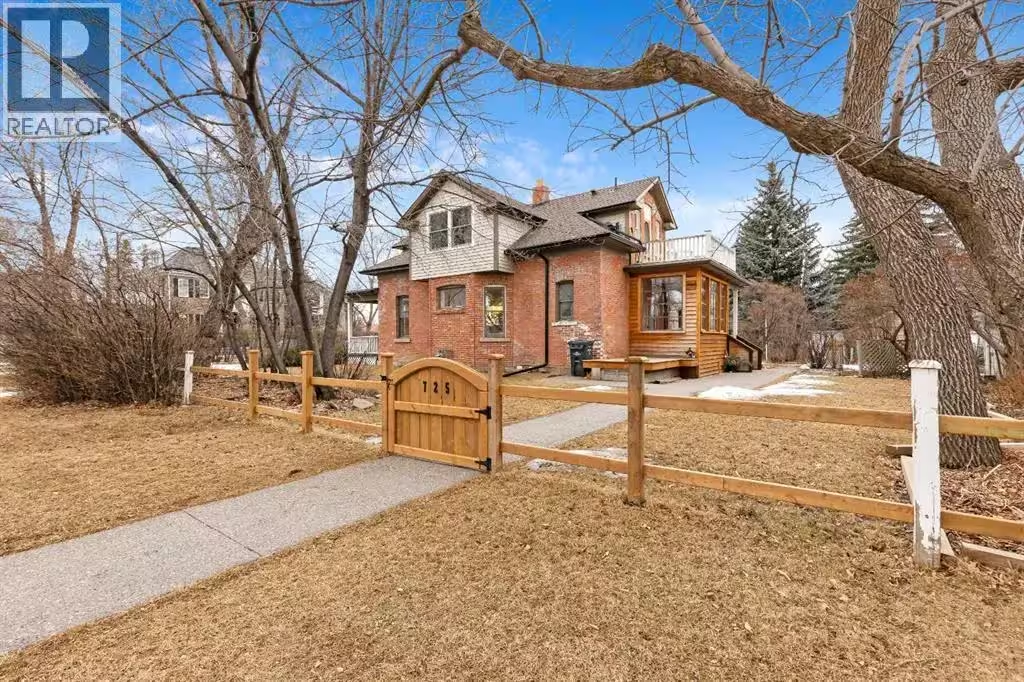
Joe Clark’s Childhood Home in Alberta Lists for Under $1 Million
A piece of Canadian political history has quietly hit the real estate market in rural Alberta. The unassuming farmhouse that served as the childhood home of former Prime Minister **Joe Clark** is now available for purchase, with an asking price that brings a slice of legacy within reach for under one million dollars. Nestled near the town of High River, this property offers more than just acreage and a residence; it’s a tangible connection to the life of Canada’s youngest-ever elected prime minister.
A Humble Beginning for a Prime Minister
The story of Joe Clark’s rise to 24 Sussex Drive is inextricably linked to this Albertan landscape. Charles Joseph Clark was born in 1939 in High River and spent his formative years on this very farm. The home represents the **foundational values** of prairie life—community, hard work, and resilience—that would later define his political persona.
While the political arena often feels distant, this listing grounds Clark’s legacy in a very real, physical place. It was here that a young Joe Clark would have absorbed the rhythms of rural life before embarking on an academic and political journey that would see him lead the Progressive Conservative Party to victory in 1979 at the age of 39. Purchasing this property isn’t just a real estate transaction; it’s an opportunity to become the steward of a chapter in Canada’s national story.
Property Details: A Blend of History and Potential
Listed at **$975,000**, the property presents a unique proposition. It is not a grand estate frozen in time, but a working farm that has evolved while retaining its historical core.
Key features of the listing include:
- The Residence: The main house is described as a 1.5-storey home, likely bearing the architectural hallmarks of its era. It served as the Clark family home during Joe’s youth.
- Land and Outbuildings: Sitting on approximately 160 acres of productive Alberta land, the farm includes essential outbuildings such as a barn and equipment sheds, speaking to its ongoing agricultural utility.
- Location: Its position near High River places it in a region known for its strong sense of community, beautiful foothills scenery, and proximity to Calgary, offering both tranquility and accessibility.
For a buyer, the potential is multifaceted. It can continue as a working farm, be transformed into a private retreat with a remarkable historical backdrop, or even serve as a unique short-term rental or educational site for those interested in political history.
The Significance of Preserving Political Heritage
The sale of a former prime minister’s childhood home raises interesting questions about how Canada preserves its political heritage. Unlike some countries that turn such homes into official museums, many Canadian historical figures’ private residences remain in private hands. This places a unique responsibility on the owners who follow.
Owning a property like this is an act of preservation. It involves maintaining the structural integrity and character of a home that shaped a national leader. While modernizations and renovations are often necessary, thoughtful stewardship can ensure the essence of the place—the very walls that witnessed the early life of a prime minister—endures for future generations to appreciate.
Joe Clark’s Legacy: More Than a Brief Tenure
While Joe Clark’s time as prime minister was short-lived, his impact on Canadian politics was lasting. Often remembered for his minority government and the fall of his ministry after just nine months, Clark’s career was far more extensive. He served with distinction as Secretary of State for External Affairs under Prime Minister Brian Mulroney, where he was a **formidable voice for human rights and Canadian values** on the world stage, particularly in the fight against apartheid in South Africa.
His reputation for integrity, earnestness, and deep intellectual commitment to federalism earned him respect across party lines. This home in Alberta is where that story began—where the principles that guided his long career in public service were first nurtured.
What Potential Buyers Should Consider
For the right person, this is more than a property; it’s a legacy purchase. Here are key considerations for a prospective buyer:
- Historical Stewardship: Are you prepared to be a caretaker of this history? This might involve sensitive renovations or even collaborating with local historical societies.
- Agricultural Commitment: With 160 acres, the land demands management, whether you farm it yourself, lease it, or explore alternative land-use strategies.
- Location Realities: Life in rural Alberta offers incredible beauty and space but comes with the realities of distance from major urban centers and exposure to the elements.
- Investment in Story: Part of the value is intangible. The market for a historically significant property differs from a standard farm, potentially attracting a unique pool of buyers in the future.
A Rare Opportunity to Own a Page From History
The listing of Joe Clark’s childhood home is a rare event. It is uncommon for the early-life homes of Canada’s prime ministers to become available on the open market, especially at a price point that, while significant, remains accessible for a property of its size and historical weight.
This farm is not a monument; it is a lived-in, working piece of land that happens to hold a profound story. It represents the **very Canadian ideal that humble beginnings can lead to the highest offices in the land**. For a buyer with a vision, it offers a chance to write the next chapter for this special property, whether that chapter focuses on agriculture, preservation, or simply enjoying the profound sense of peace and history that emanates from its soil.
As the real estate listing circulates, it serves as a reminder of the deep roots Canada’s leaders have in communities across the nation. The home near High River stands as a quiet testament to the fact that great national journeys often begin in the most unassuming of places.